
Vandaag of morgen in huis

Kwaliteit gegarandeerd

Welkomstaanbiedingen ontgrendelen: GRATIS bezorging | Tot 80% korting | Gratis 30 dagen JoyPlus-proefperiode
Download de app
A good kitchen knife should suit the way you cook, your chopping board and the ingredients you use most often. Yet many home chefs buy a knife set containing pieces they hardly ever use, or choose a knife based on terms such as “extra sharp” without checking the technical details.
This buying guide helps you compare kitchen knives by knife type, blade length, material, handle and maintenance. That way, you can make a more informed choice between a chef’s knife, santoku knife, carving knife or complete knife set.
A product may be marketed as a “sharp kitchen knife”, but sharpness is only one part of ease of use. The cutting angle, type of steel, blade geometry and ability to sharpen the knife are also important. So check whether the product information includes specific details such as blade material, blade length and care instructions.
For example, the Wüsthof Classic Ikon Santoku lists a sharpening angle of 14 degrees. According to the product description, the claim that the knife is 20% sharper than standard knives is based on the manufacturer’s techniques. Treat this as a brand claim rather than a universal measurement.
According to the product information, some kitchen knives are suitable for the dishwasher. At the same time, hand washing may be recommended to keep the knife in good condition for longer. Heat, moisture and contact with other cutlery can put extra strain on the edge and handle.
A stainless steel kitchen knife is generally practical for everyday use, but stainless steel still needs to be dried properly. Do not leave knives soaking for long periods, and store them so that the cutting edge does not come into contact with other metal objects.
A 13-piece knife set can be useful if you need several knife shapes, a knife block and a honing steel. However, for someone who mainly cuts vegetables, herbs and meat, a single 16 to 20 cm chef’s knife may be enough. A set also takes up more space, and each item needs to be maintained.
So start by looking at your regular cooking routine. Do you often use bread knives, steak knives or a cleaver? If so, a set could make sense. Otherwise, buying a single kitchen knife is often more straightforward.
A blade of 16 to 18 cm offers a good balance between control and cutting surface for many home kitchens. A 20 cm chef’s knife is useful when preparing larger vegetables or pieces of meat, but it also requires more space and some adjustment.
Weight is also worth considering. The Wüsthof Gourmet Chef’s Knife has a blade length of 20 cm and a stated knife weight of 184 grams. A lighter knife may feel more manoeuvrable, while a heavier model can feel more stable when working with firmer ingredients. This ultimately depends on your hand size and personal preference.
Check whether the manufacturer clearly identifies the steel. The Wüsthof Classic Ikon Santoku is listed as having X50CrMoV15 high-carbon stainless steel. The Wüsthof Gourmet Chef’s Knife has a stainless steel blade and a plastic handle.
A full-tang construction means that the steel extends through the handle. This can help distribute the weight evenly, but it does not, by itself, indicate how comfortable a knife will be for you. Also consider the shape, grip, finger guard and how the handle is attached.
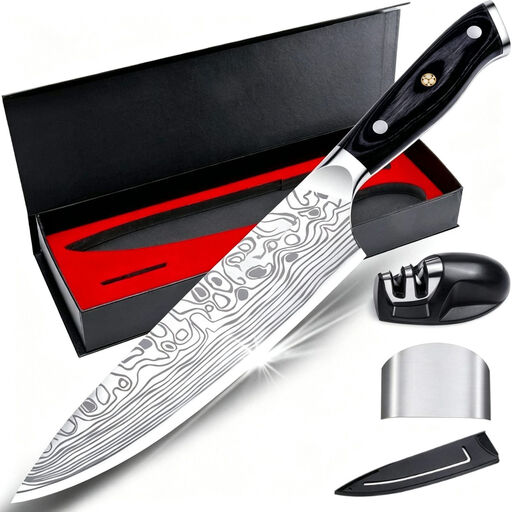
Why it suits this profile: This set combines a 20 cm chef’s knife with a knife sharpener, finger guard and gift box. It gives beginners the essentials for everyday food preparation.
The contents are clearly specified. Before buying, check exactly which dimensions and additional materials are included.
20 cm chef’s knife; knife sharpener and finger guard included.

Why it suits this profile: The knife has a 17 cm blade made from X50CrMoV15 high-carbon stainless steel and a synthetic handle.
The product specification states the type of steel, cutting angle and care instructions. According to Wüsthof’s own information, the claim of 20% extra sharpness should be treated as a brand claim.
17 cm blade; stated sharpening angle of 14 degrees; hand washing recommended.
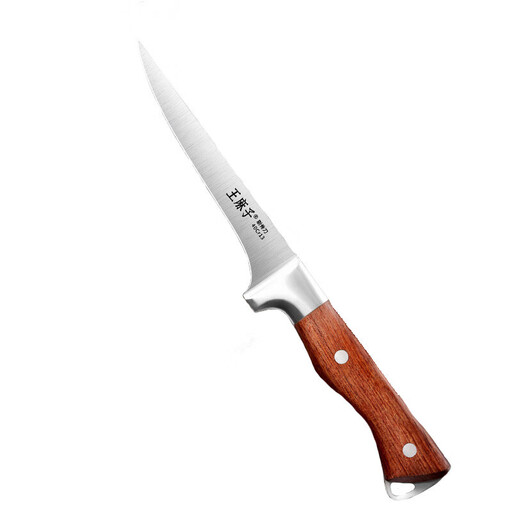
Why it suits this profile: This boning knife is designed for separating meat from the bones of beef, lamb and pork. It is therefore a useful addition to an ordinary chef’s knife, not a replacement for one.
The intended use and 40Cr13 steel are stated in the product name. Do not use a boning knife for chopping bones; choose a suitable cleaver instead.
Purpose-designed for boning; rosewood handle according to the product name.
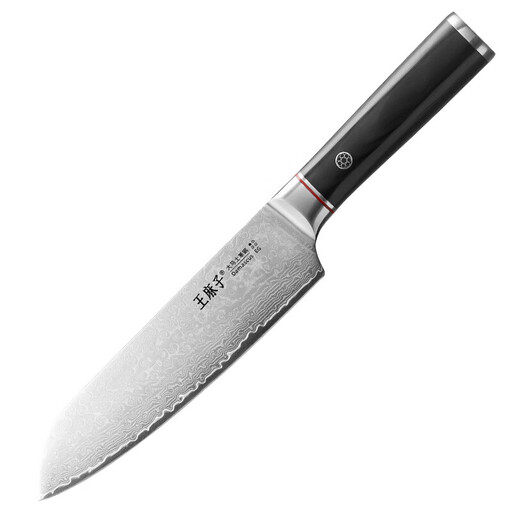
Why it suits this profile: A santoku knife is suitable for cutting vegetables and meat, making it a good choice if you are looking for one compact, versatile knife.
Its intended use is clearly described as cutting meat and vegetables. Before buying, check the exact dimensions and handle specifications on the product page.
Santoku shape; designed for a range of everyday cutting tasks.
We have put together a complete, up-to-date list of products that fully meet these strict selection criteria and the applicable European safety regulations.
A 16 to 20 cm chef’s knife or a santoku knife is a practical starting point for many households. Choose based on your cutting technique, hand size and the ingredients you prepare most often. Add a bread knife, boning knife or cleaver when you regularly need those specific tools.
Its lifespan depends on the steel, use, care and sharpening. A knife can remain useful for a long time if you use it on a suitable board, do not leave it soaking for extended periods and have the edge sharpened in good time. The product information may state that a dishwasher is permitted, but hand washing is often recommended.
That depends on how you use them. A set may offer better value per item and often includes a knife block, scissors or knife sharpener. If you mainly need one chef’s knife and a bread knife, buying individual kitchen knives may leave you with fewer unused pieces. Always check the exact contents before buying kitchen knives.
