
Vandaag of morgen in huis

Kwaliteit gegarandeerd

Welkomstaanbiedingen ontgrendelen: GRATIS bezorging | Tot 80% korting | Gratis 30 dagen JoyPlus-proefperiode
Download de app
A good knife makes everyday preparation easier, but an attractive product photo says little about how it performs in practice. Home cooks often focus mainly on the number of knives or terms such as “professional”, when it is the size, grip and intended use that determine whether a knife is comfortable to work with.
Three common pitfalls:
When choosing stainless steel kitchen knives, it is important to check the exact material description and care instructions. Stainless steel is resistant to corrosion, but rinsing, drying and storing knives safely on a regular basis is still advisable. Also check whether a knife is dishwasher-safe. For example, the product information for the 5five santoku knife states that it can be put in the dishwasher. The 5five 13-piece set, on the other hand, is described as not dishwasher-safe.
A wooden handle can feel comfortable, but it usually requires more care than plastic or aluminium. A knife set with a knife block helps keep knives separate and neatly organised. However, check that the block stands securely and that the slots are suitable for the knives supplied.
The right length depends on the ingredients and your worktop:
A handle should be firmly attached and comfortable to hold. Pay attention to its shape, weight and any non-slip texture. A heavy knife is not automatically more practical; control and balance are more important when cutting for longer periods.
Do not store sharp knives loose in a kitchen drawer. A knife block, protective sheath or safe drawer organiser reduces the risk of damage and contact with the blade. Keep knives out of children’s reach and only use a folding knife with a locking mechanism when the blade has been secured correctly.
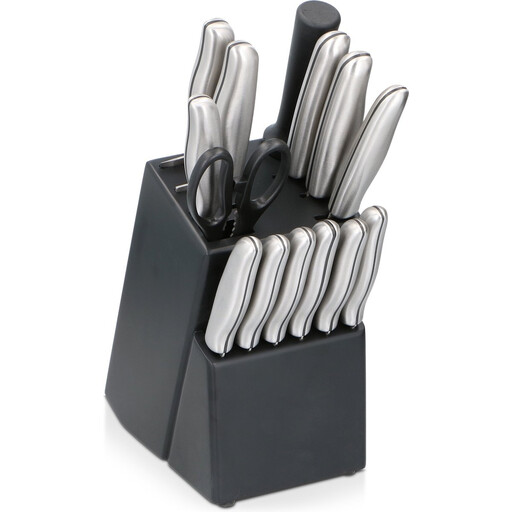
Why it suits this profile: A household looking to buy several kitchen essentials in one go gets a chef’s knife, bread knife, steak knives, santoku knife, scissors and a knife block.
The contents are clearly specified: 13 knives, a block and a pair of scissors. This makes it clear in advance what you are buying.
Stainless steel knives, black storage and a complete 15-piece set.
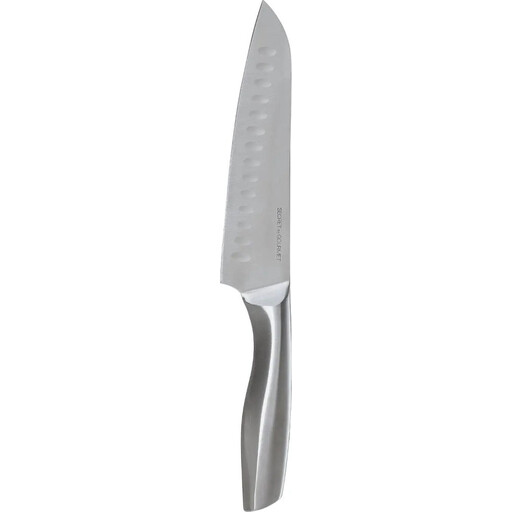
Why it suits this profile: This standalone knife is ideal for cooks who would rather choose one specific knife than buy a complete set.
The stated dimensions and construction make it easier to match the knife to your cutting technique and workspace.
Fully forged from stainless steel according to the product specifications, with an 18 cm blade and dishwasher-safe design.
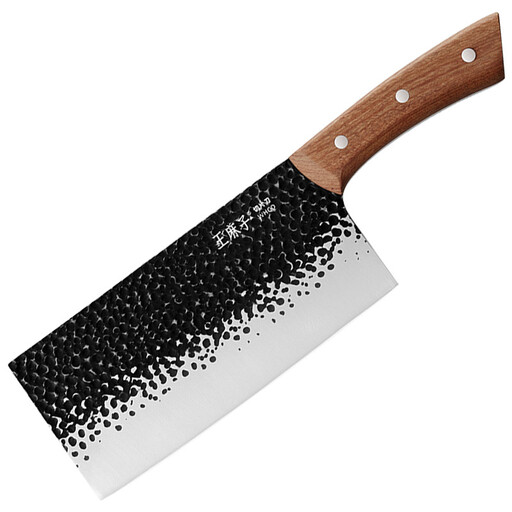
Why it suits this profile: Users specifically looking for a slicing knife or cleaver for preparing meat can compare this model with lighter kitchen knives.
The product name states the type and a blade size of 190 mm, so you will not confuse it with an all-purpose chef’s knife.
Purpose-designed for slicing; before buying, check that the shape suits your ingredients and chopping board.
A vegetable peeler is practical for potatoes and fruit. For several cutting styles, a vegetable slicer with a collection container can be useful, such as the 10-piece 5five set with five cutting techniques. Use the blades carefully and follow the cleaning instructions.
A tin opener is not one of the knives, but it is a useful addition to a basic kitchen set-up. A manual metal model is compact to store. For DIY enthusiasts, a folding knife with a sliding lock is suitable for materials such as cardboard, carpet and plasterboard. Never use this type of knife for food. A putty knife is intended for putty, plaster and joint compound; according to the product information, the ROLLINGDOG model is not suitable for food preparation or electrical work.
We have put together a complete, up-to-date list of products that fully meet these strict selection criteria and the applicable European safety regulations.
Their lifespan depends on the material, use, care and sharpening. Wash knives according to the instructions, dry them immediately and use a suitable chopping board. Do not leave knives loose in a drawer.
It depends on what you need. A set can be practical when you are looking for a chef’s knife, bread knife, steak knives and scissors at the same time. If you mainly use one santoku knife or slicing knife, you may end up paying for pieces that remain unused.
Always check the product specifications. Some stainless steel kitchen knives are dishwasher-safe, while wooden handles, knife blocks and certain sets require hand washing. Cleaning by hand and drying immediately helps keep the knife and handle in good condition for longer.
