
Vandaag of morgen in huis

Kwaliteit gegarandeerd

Welkomstaanbiedingen ontgrendelen: GRATIS bezorging | Tot 80% korting | Gratis 30 dagen JoyPlus-proefperiode
Download de app
A good kitchen knife feels like an extension of your hand. A bad one is a source of frustration. But in the search for the right kitchen knives, it's easy to fall into common traps. Before you buy a chef's knife, it's wise to know what to look for. We often see consumers waste money by:
To make an informed decision, it's helpful to understand three technical aspects. These determine your knife's performance and durability.
Most quality German kitchen knives, like those from Wüsthof, use a stainless steel type called X50CrMoV15. This is a practical choice that offers a good balance between edge retention, rust resistance, and ease of sharpening. The hardness of steel is expressed in Rockwell (HRC).
The way a blade is made has a major impact on its quality.
The 'tang' is the part of the blade that extends into the handle. A full tang runs all the way to the end of the handle and is often secured with rivets. This provides superior balance, control, and durability, which is essential for a meat knife or an all-around chef's knife that you use daily.
Based on these criteria, we have selected a few products that suit different user profiles.
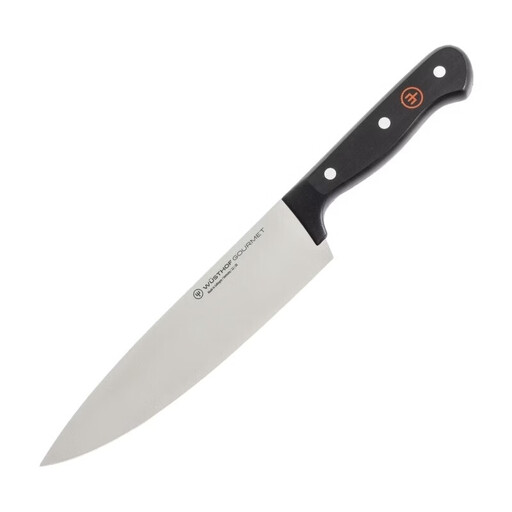
Why This Fits Their Persona: This is a practical entry-level model from a renowned brand. It's a versatile chef's knife for daily tasks, from chopping vegetables to preparing meat. It's affordable without compromising on the basic quality you expect from a German kitchen knife.
Instead of buying a cheap, generic set, you're investing in a single reliable and versatile knife. The stamped construction keeps the price accessible, but the quality of the Wüsthof steel ensures it holds its edge reasonably well and is easy to maintain.
Lightweight and easy to handle. According to the manufacturer, it is dishwasher-safe, although hand washing is recommended for a longer lifespan.

Why This Fits Their Persona: This user values craftsmanship and performance. This santoku knife is fully forged from high-quality steel, has perfect balance thanks to the half-bolster and full tang, and a very comfortable handle. Ideal for those who seek precision and comfort for refined cutting techniques.
This knife proves that one superior, versatile knife offers more value than an entire set of lesser quality. It's an investment in cutting pleasure and durability, not in superfluous extras.
Exceptional balance and ergonomics for prolonged use. The hollow edge (granton) helps prevent food from sticking to the blade.
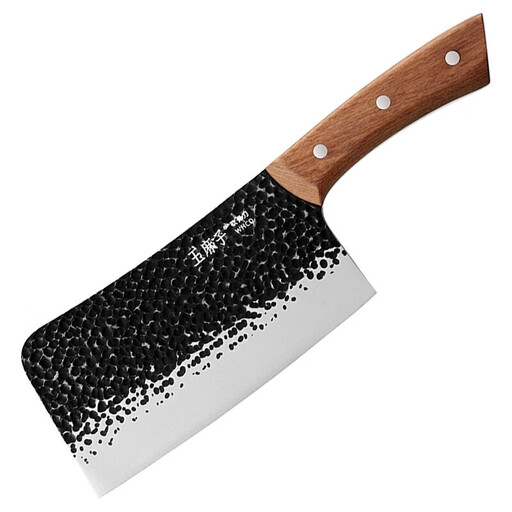
Why This Fits Their Persona: Sometimes a standard chef's knife just doesn't have enough power. This cleaver is specifically designed for the heavy work: chopping through bones, spare ribs, or hard vegetables like pumpkin. Its weight and robust build make these tasks effortless.
This prevents you from damaging your more expensive, finer chef's knife by using it for the wrong task. It's an example of choosing the right tool for the job, which saves money in the long run.
Robust, heavy construction for maximum force transfer. The blade is designed to withstand impact without chipping.
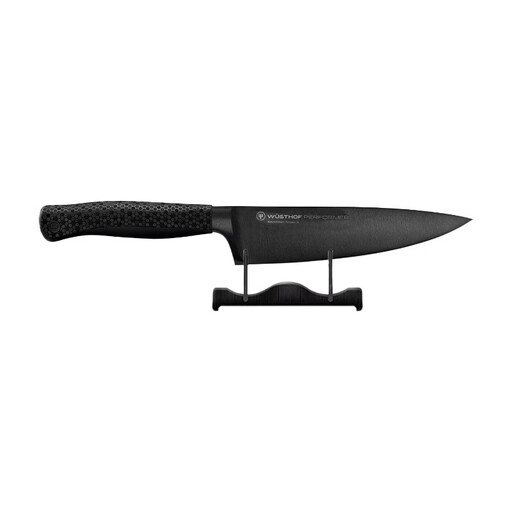
Why This Fits Their Persona: This knife combines traditional forging with modern technology. The black DLC (Diamond-Like Carbon) coating isn't just for looks; it makes the blade extremely hard and scratch-resistant. The unique Hexagon Power Grip offers exceptional control, even with wet hands.
This is not a case of "style over substance." The technological features, like the DLC coating and the special grip, offer real functional benefits and justify its premium positioning. It's a deliberate choice for innovation.
According to Wüsthof, the DLC coating provides an extremely hard surface and non-stick properties. The Hexagon handle offers superior grip.
We have compiled a complete, up-to-date list of products that fully meet these strict selection criteria.
A European chef's knife has a curved blade, making it ideal for the "rocking" cutting motion. A santoku knife has a straighter blade and a rounded 'sheepsfoot' tip. It is designed for a more chopping, up-and-down motion and is an all-rounder for slicing, dicing, and mincing.
This depends on usage and steel quality. A good habit is to hone your knife with a honing steel before or after each use. This realigns the edge. True sharpening, which removes metal, is typically only needed a few times a year, depending on how intensively you use the knife.
For most home cooks, no. A professional knife set often includes specialized knives you will rarely use. It is more practical and often more cost-effective to invest in two or three high-quality knives that you use daily: a good chef's knife (or santoku knife), a small paring knife, and possibly a bread knife.
