
Vandaag of morgen in huis

Kwaliteit gegarandeerd

Welkomstaanbiedingen ontgrendelen: GRATIS bezorging | Tot 80% korting | Gratis 30 dagen JoyPlus-proefperiode
Download de app
A good kitchen knife doesn’t have to be complicated. Yet many households choose a kitchen knife set based on an eye-catching coating, a large number of pieces or promises of “extra sharpness”. In practice, it’s mainly the type of knife, its finish and how you care for it that determine whether it remains comfortable to use.
Compare your options carefully to avoid three common buying mistakes:
Below, you’ll find what to look for when choosing individual kitchen knives or a complete knife set with a block.
For most kitchens, a small collection of essentials is enough:
A kitchen knife set makes sense if you need several knives and a storage solution. If you already own a good chef’s knife, buying one additional knife may be a more affordable option.
Stainless steel is popular because it’s relatively easy to care for and more resistant to rust than untreated carbon steel. However, not all stainless steel knives have the same properties. Check:
For example, stainless steel is specified for the 5five knives. Some models are described in the product information as fully forged from a single piece. These are verifiable product specifications, but they don’t, by themselves, mean that the knife will feel comfortable for everyone.
A chef’s knife of around 18 to 20 cm offers many home cooks a useful balance between cutting surface and control. A shorter knife is easier to manoeuvre when working with small ingredients. A longer blade can be handy for large vegetables or cuts of meat.
Don’t just look at the overall length. The product information may also give the blade length, width and weight. For example, the 5five Santoku Knife has an overall length of 29 cm, a blade length of 17 cm and weighs 140 grams. This helps you compare its size and ease of handling.
An ergonomic handle is only useful if it feels right in your hand. Check that the material is sturdy, whether the handle feels smooth or grippy, and how well balanced the knife feels.
Also check the care instructions. Some product listings specify dishwasher-safe models, including certain 5five knives. However, washing by hand and drying immediately can help keep the blade and surface in good condition for longer. Always follow the manufacturer’s instructions.
A coating, such as titanium or a non-stick coating, doesn’t guarantee a longer lifespan. Check whether the product page also provides information about the steel, handle, cleaning and warranty. According to the product information, the Alpina set listed comes with the minimum statutory two-year guarantee under EU consumer law.
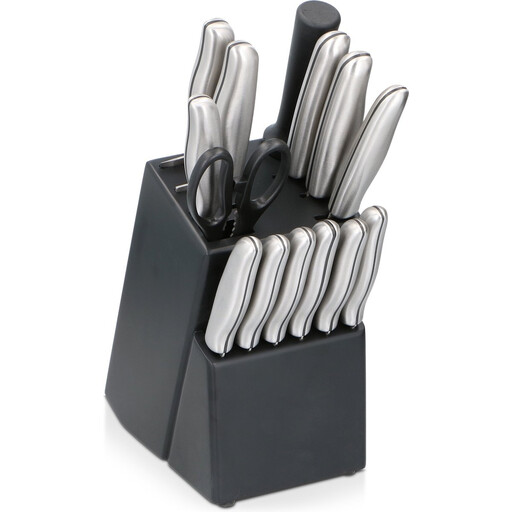
Why it suits this use case: The set includes 13 knives, a knife block and a pair of scissors. That gives you a range of knives for everyday cooking in a single purchase.
The contents are clearly specified: 13 knives, a block and a pair of scissors. You can decide in advance whether the set includes more accessories than you need.
Stainless steel knives, a knife block, chef’s knife, bread knife, paring knife and santoku knife, according to the product description.
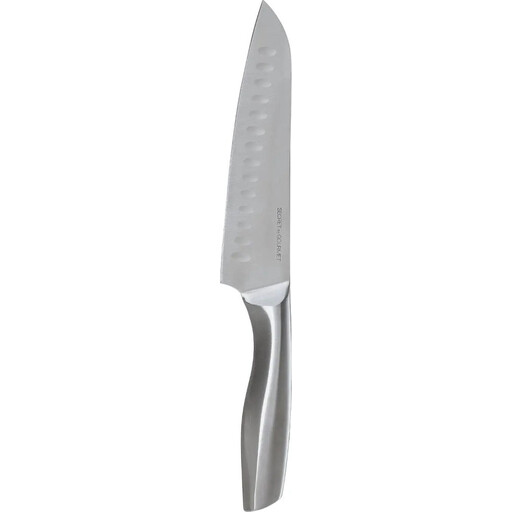
Why it suits this use case: This individual santoku knife is a good choice if you’d rather select one clearly specified knife than buy a large set.
The listed blade length is 18 cm and the knife weighs 180 grams. This gives you a better idea of its size than a claim of “extra sharpness” alone.
Stainless steel, fully forged construction according to the product information, and dishwasher-safe according to the manufacturer.
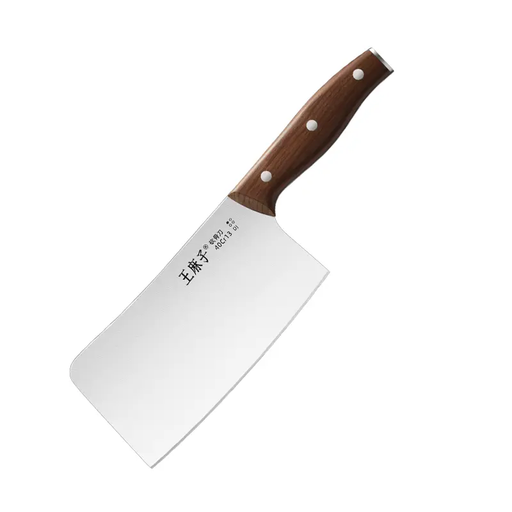
Why it suits this use case: This cleaver is specifically designed for bones, ribs and poultry. It’s a good fit if you regularly prepare these foods.
It means you won’t use a thin chef’s knife for a task that calls for a heavier cleaver. Use it carefully and follow the safety instructions.
Forged construction according to the product description, designed for bones, ribs and poultry.
We’ve put together a full, up-to-date list of products that meet these strict selection criteria and the applicable European safety regulations.
A chef’s knife or santoku knife is a sensible starting point for many households. Choose a size you can handle safely and check that the handle feels comfortable. You’ll need additional knives for bread, small ingredients and bones.
It depends on the specific model. Some product descriptions state that a knife is dishwasher-safe, but always check the product page. Washing by hand and drying immediately are often a gentler way to care for your knives, especially those with a special finish or wooden handle.
Use a suitable wooden or plastic chopping board and avoid hard surfaces such as glass. Store knives in a knife block, protective sheath or magnetic holder. Wash them after use, dry them immediately and use a sharpener or honing steel according to the manufacturer’s instructions. If a knife becomes blunt, don’t try to compensate by using extra force.
