
Vandaag of morgen in huis

Kwaliteit gegarandeerd

Welkomstaanbiedingen ontgrendelen: GRATIS bezorging | Tot 80% korting | Gratis 30 dagen JoyPlus-proefperiode
Download de app
A good kitchen knife can be the difference between a frustrating and an enjoyable cooking experience. Yet, the market is flooded with marketing claims and sets that promise more than they deliver. Many home cooks end up with a drawer full of dull, clumsy knives. As a Joybuy Product Recommendation Officer, I'll help you cut through the noise, so you can make an informed decision that suits your kitchen.
Before we look at specific knives, it's important to recognise the most common pitfalls. This will prevent you from wasting money on tools you'll barely use.
A large, shiny knife set for a low price seems like a great deal. In reality, however, many of these sets contain knives you will rarely, if ever, use. You're paying for a block full of filler, while you probably only reach for two or three knives daily. A better starting point is often a good chef's knife and a small paring knife.
A knife can be razor-sharp, but if it doesn't feel right in your hand, cutting becomes a chore. A common problem is poor balance between the blade and the handle. A knife that is too heavy at the front or back gives you less control and tires your hand more quickly. Pay attention to the construction and how the handle is designed; it should feel like a natural extension of your hand.
You don't need to be a metallurgist to make the right choice. A few basic principles about the specifications of kitchen knives will get you a long way.
Most kitchen knives for home use are made of stainless steel. This material is relatively low-maintenance, highly resistant to rust, and easy to sharpen. A commonly used, reliable alloy is X50CrMoV15, which you often see in German brands like Wüsthof knives.
Carbon steel is another popular option, especially among professional kitchen knives. It can be sharpened to a finer edge and holds that edge longer. The downside is that it requires more maintenance: it is more susceptible to rust and discolouration if you don't clean and dry it immediately after use.
Not every knife is suitable for every job. The three most common types each have their own specialty:
Based on objective specifications and use cases, we have selected a number of products that suit different cooking styles.
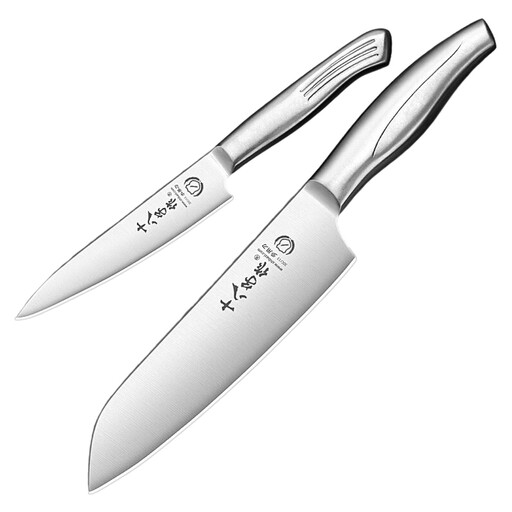
Why This Fits Their Persona: Ideal for those seeking a functional foundation without unnecessary extras. This set offers a versatile knife for general cutting tasks and a smaller fruit knife for more precise work, perfect for daily meals.
This set avoids the pitfall of superfluous knives. You get two versatile knives that you will actually use, instead of a block full of filler.
An affordable and no-nonsense starter set that covers the most essential cutting tasks in the kitchen.

Why This Fits Their Persona: For the cooking enthusiast who values precision and quality. A Santoku knife is perfect for finely slicing vegetables and fish. The quality of Wüsthof knives is a well-known factor for durability and performance.
This knife has an ergonomically designed handle and excellent balance, avoiding the pitfall of an uncomfortable design. It is made for prolonged and comfortable use.
Forged from a single piece of X50CrMoV15 steel for superior balance and sharpness. The hollow edge divots on the blade help prevent food from sticking.
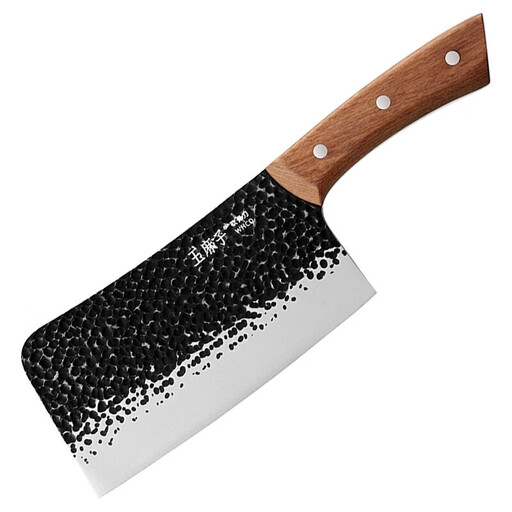
Why This Fits Their Persona: Specifically designed for heavy-duty work. If you regularly process bone-in meats, portion spareribs, or need to split hard vegetables like pumpkin, this is the tool you need.
This is not a jack-of-all-trades. It is a specialist cleaver, designed for pure power and durability, and will not chip or break on tasks where a normal chef's knife would fail.
Heavy and robust, built to chop through bones and hard ingredients with control, without damaging the surrounding meat.
Although they are both all-rounders, the main difference lies in the blade shape and cutting technique. A chef's knife has a more curved belly, making it ideal for a rocking motion. A santoku knife has a flatter blade and a less pointed tip, which works better for a straight chopping motion and making thin slices.
Proper maintenance significantly extends the life of your knives. Follow these simple steps:
That depends on the set and your needs. For most home cooks, it is often wiser to invest in two or three separate, high-quality knives (e.g., a chef's knife, a paring knife, and possibly a bread knife) than in a large, cheap set. However, a knife set can offer good value if the selection of knives, such as a set of steak knives for the dinner table, is exactly what you are looking for.
