
Vandaag of morgen in huis

Kwaliteit gegarandeerd

Welkomstaanbiedingen ontgrendelen: GRATIS bezorging | Tot 80% korting | Gratis 30 dagen JoyPlus-proefperiode
Download de app
A good kitchen knife should suit your chopping board, cooking style and hand. Yet many buyers focus mainly on phrases such as “extra sharp”, “professional” or “Damascus”. These terms mean little when information about the steel, finish or maintenance is missing. With this practical guide, you can compare kitchen knives based on features you can actually check.
Almost every new knife feels sharp. That does not automatically mean that the cutting edge will stay in good condition for a long time. Its lifespan depends, among other things, on the blade material, sharpening angle, chopping board and maintenance.
A knife with a thin cutting edge can be pleasant to use, but it also requires careful handling. Do not use it on glass, metal or stone surfaces. Wood and plastic are generally more suitable for everyday chopping.
A 20 cm blade provides a large cutting surface, but requires more space and control. In a small kitchen or for detailed work, a 16 cm chef’s knife may be more practical. If you regularly cut large vegetables, large pieces of meat or lots of ingredients one after another, 20 cm may be the better choice.
As well as the blade length, look at the overall length. A long handle or broad shape can affect how comfortably you work over a smaller chopping board.
A stainless steel kitchen knife is more resistant to corrosion than many carbon-steel alternatives, but it is not completely immune to stains or damage. Moisture, food residue and prolonged soaking can affect the material. Dry a knife immediately after washing it.
Also check whether the knife is dishwasher-safe. Manufacturers may allow this, but hand-washing is often the safer option for preserving the handle and cutting edge.
Look for the exact material specification, such as X50CrMoV15 stainless steel. This designation appears on several Wüsthof kitchen knives in the range. Also check whether the knife is forged from a single piece of steel, has a full tang and which material has been used for the handle.
A full tang means that the steel continues through the handle. This can contribute to a stable feel, but the fit, weight and grip remain personal preferences. A plastic handle is usually easy to clean; a non-slip texture can provide extra control, particularly during longer chopping sessions.
The Wüsthof Classic product descriptions specify a sharpening angle of 14 degrees per side. According to the product information, this cutting edge is sharpened using laser control and finished by hand. These are the manufacturer’s product specifications, not a guarantee that every use will provide the same cutting experience.
Maintenance consists of:
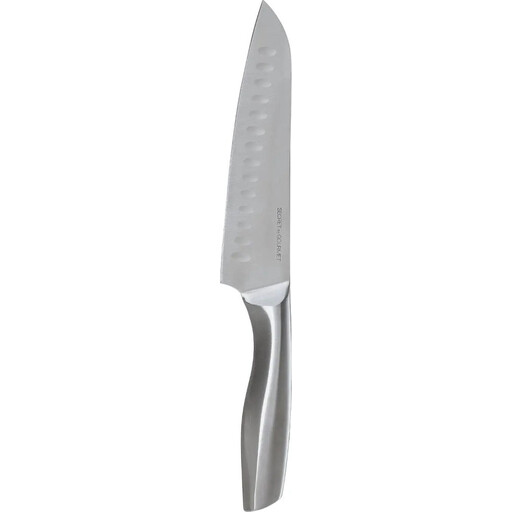
Why it suits this profile: The stainless steel construction has an 18 cm blade and is designed for everyday chopping of vegetables and other ingredients. The product description states that it is dishwasher-safe.
The material and blade length are clearly specified, so you do not have to rely solely on the phrase “extra sharp”.
Stainless steel, forged construction and a handle described as sturdy in the product information.

Why it suits this profile: This santoku knife combines a 17 cm blade with X50CrMoV15 high-carbon stainless steel and a synthetic handle.
The product information specifies the type of steel, hand-washing instructions and the stated sharpening angle of 14 degrees per side.
17 cm blade, suitable for vegetables, herbs, fruit, fish and meat; the manufacturer specifies a laser-controlled sharpening process.
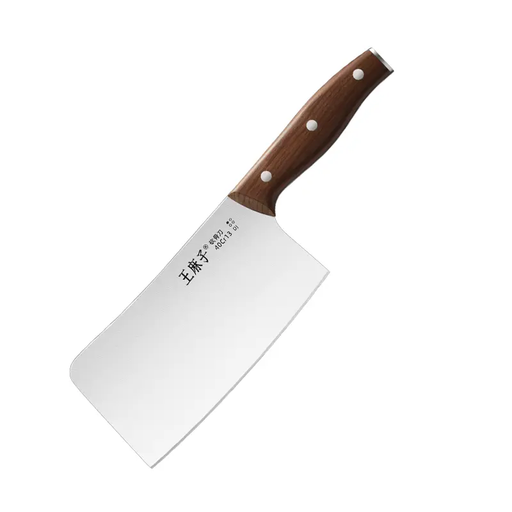
Why it suits this profile: A cleaver for anyone who prepares poultry, ribs or other robust ingredients and is looking for a specialised tool.
The product description presents this as a bone cleaver; do not use it as a substitute for a fine chef’s knife.
Forged construction according to the product description and a design intended for bones, ribs and poultry.
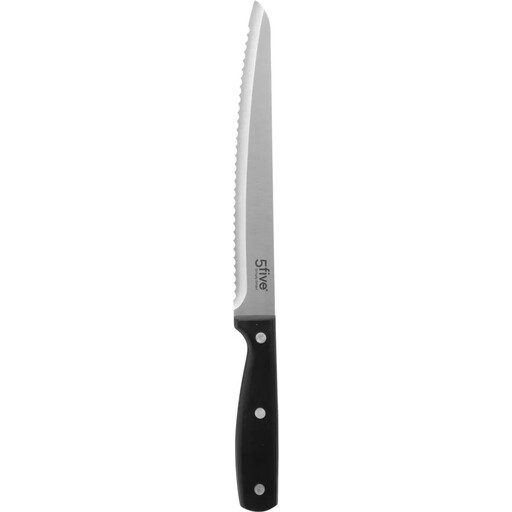
Why it suits this profile: The 33 cm bread knife is designed for bread with a firm crust and suits households that regularly slice homemade or artisan bread.
You choose a serrated bread knife for a specific task rather than using a multi-purpose knife incorrectly.
We have put together a complete, up-to-date list of products that fully meet these strict selection criteria and the applicable European safety regulations.
For everyday chopping, a 16 or 20 cm chef’s knife is usually a sensible starting point. A santoku knife is worth considering if you prepare lots of vegetables, herbs and fish. You should mainly buy a carving knife, bread knife or steak knives when you regularly carry out those specific tasks.
Anyone working in a professional kitchen may choose to combine several kitchen knives: a chef’s knife for preparation, a bread knife for cakes and bread, and a cleaver for heavy-duty tasks. When choosing a set, do not focus only on the number of knives, but particularly on the models you will actually use. A set with steak knives, such as a six-piece set, is mainly suitable for setting the table and not as a replacement for a chef’s knife.
Its lifespan depends on the steel, usage, sharpening angle and maintenance. A kitchen knife can remain useful for a long time if you wash it by hand, store it dry and use it on a suitable chopping board. Wear on the cutting edge does not immediately mean that the knife needs replacing; correct honing or sharpening can restore its cutting performance.
A sharp knife requires less force to push through food, but it is still a cutting tool that must be used carefully. Keep your fingers curled, cut away from your hand and store the knife out of children’s reach. For hard bones, only use a cleaver whose product description supports this use.
This varies by range and product description. For the Wüsthof Classic and Classic Ikon models in this selection, hand-washing is recommended. The Wüsthof Gourmet product description permits dishwasher use, but recommends hand-washing for a longer lifespan. Always check the information for the specific model before putting it in the dishwasher.
