
Vandaag of morgen in huis

Kwaliteit gegarandeerd

Welkomstaanbiedingen ontgrendelen: GRATIS bezorging | Tot 80% korting | Gratis 30 dagen JoyPlus-proefperiode
Download de app
By Joybuy Product Recommendation Officer
A kitchen knife may seem like a straightforward purchase, but you’ll soon notice the difference between a practical tool and a poor choice. A knife may be too heavy for fine work, its handle may become slippery when your hands are damp, and a dishwasher can wear down the blade sooner than you expect. What’s more, if you focus only on claims such as “extra sharp” or “professional”, you may not compare the features that matter in an everyday kitchen.
This buying guide helps home cooks, cooking enthusiasts and professional chefs choose a kitchen knife based on verifiable specifications. We look at the material, size and handle, as well as the type of food preparation you’ll use the knife for.
A sharp kitchen knife is a pleasure to use at first, but how long it stays sharp also depends on the steel, sharpening angle, blade thickness and care. A product description may call a knife “extra sharp”, but it won’t always give the steel’s hardness or the precise sharpening angle. So check which material details are actually available.
Use a kitchen knife only on a suitable chopping board. Glass, stone and ceramic can damage the edge more quickly. Don’t cut through bones with a standard chef’s knife either; that’s what a cleaver or boning knife is designed for.
Some knives are listed as dishwasher-safe. Other manufacturers recommend hand washing to help preserve the edge and finish. Prolonged exposure to hot water and detergent, as well as contact with other cutlery, can also cause stains or damage.
So don’t just look for “dishwasher-safe”; check the recommended care instructions too. A stainless steel kitchen knife is more resistant to moisture than carbon steel, but stainless steel still needs care. Dry the knife straight after washing and don’t leave it in water for long periods.
A longer knife gives you more blade length, but it also needs more space and control. A short paring knife is nimble for small fruit and precision work, while a chef’s knife of around 20 cm can be suitable for vegetables, herbs and meat. A santoku knife usually has a broad, relatively straight blade and is well suited to fine slicing and chopping.
Pay attention to the difference between overall length and blade length. For example, a knife with an overall length of 32 cm may have an 18 cm blade. This is important when choosing a knife block, drawer or protective sheath.
Stainless steel is practical for everyday use and easy to clean. A forged kitchen knife is shaped from a single piece or through a forging process; always check exactly what the product information says. On some models, the metal extends into the handle, which can contribute to a stable feel when cutting.
Treat a brand’s claim about sharpness or durability as product information, not as a guarantee for every user. For example, Wüsthof lists X50CrMoV15 steel, a 14-degree sharpening angle and a laser-assisted sharpening process for its Classic Ikon Santoku knife. According to the product description, the knife is designed for vegetables, herbs, fruit, fish and meat.
A secure grip matters when cutting meat, chopping vegetables and portioning food. Wood feels warm, but usually needs more care when cleaning. Plastic and synthetic materials are often easier to maintain. A metal handle can feel sturdy, but it may not be equally comfortable for everyone.
Look for a non-slip or ergonomic shape, but consider the weight and balance too. A handle that feels comfortable in a large hand may offer less control in a smaller one.
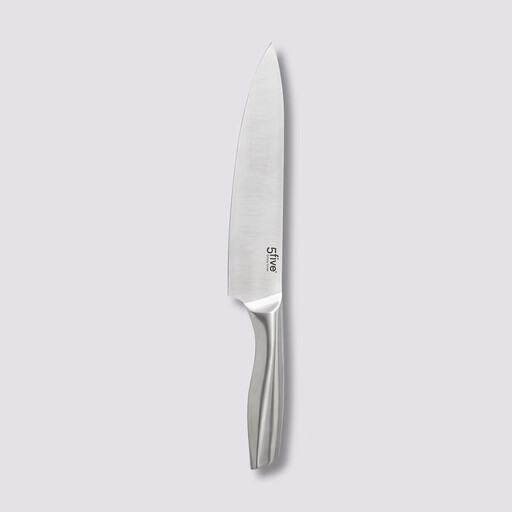
Why it suits this profile: This stainless steel kitchen knife is designed for everyday use. According to the product information, it has an overall length of 34 cm, weighs 180 grams and has a sturdy handle.
The material, dimensions and care advice are clearly stated. The product description says the knife is dishwasher-safe, although hand washing may help keep the edge in good condition for longer.
Stainless steel construction, a weight of 180 grams and, according to the product information, suitability for everyday cutting tasks.

Why it suits this profile: According to the product description, this 17 cm santoku knife has X50CrMoV15 high-carbon stainless steel, a synthetic handle and a one-piece construction.
The stated blade length and sharpening angle make it easier to compare this knife with other santoku knives. Wüsthof recommends hand washing and advises against putting it in the dishwasher.
17 cm blade, a 14° double edge according to the product information, and a synthetic handle.
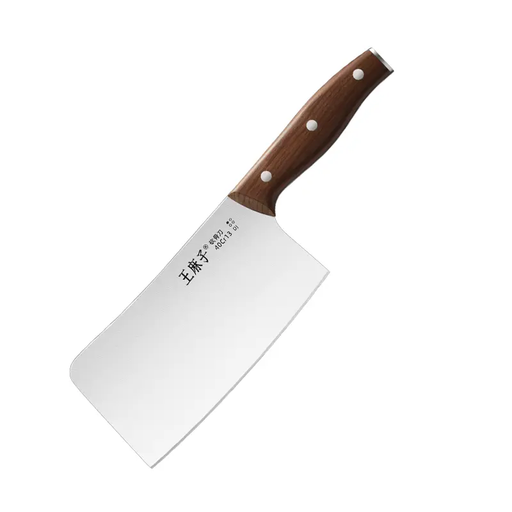
Why it suits this profile: According to the product description, this cleaver is designed for bones, ribs and poultry. Its solid wooden handle has a non-slip design.
Its purpose is clearly defined: use this boning knife for the heavy-duty tasks listed, not as a substitute for a fine chef’s knife.
Forged construction according to the product name, with a solid wooden handle and non-slip grip.
We’ve put together a complete, up-to-date list of products that meet these strict selection criteria and the applicable European safety regulations.
A knife will stay in good condition for longer if you have its edge maintained regularly. Use a honing steel only if it’s suitable for the type of knife and its sharpening angle. If in doubt, professional sharpening is a better choice than removing material from the blade yourself.
A chef’s knife or santoku knife is often practical for cutting meat every day. For poultry, ribs and bones, you’ll need a sturdy cleaver or boning knife. Always check the specific product description; a standard chef’s knife isn’t designed for chopping through hard bones.
It depends on the steel, sharpening angle, use and care. A knife used on a soft chopping board and washed by hand may keep its edge for longer than one that ends up in a cutlery drawer or dishwasher. There’s no set lifespan that applies to every model.
Not necessarily. Some product listings state that a knife is dishwasher-safe, while other brands recommend hand washing. Always check the care instructions for the specific kitchen knife. Hand washing and drying it straight away are generally a careful way to help preserve the edge and handle.
