
Vandaag of morgen in huis

Kwaliteit gegarandeerd

Welkomstaanbiedingen ontgrendelen: GRATIS bezorging | Tot 80% korting | Gratis 30 dagen JoyPlus-proefperiode
Download de app
A kitchen knife set often seems better value than buying individual knives. Yet sometimes you end up paying for components you rarely use, a knife block that takes up too much space, or knives that are difficult to maintain. For everyday cooking in a British kitchen, the choice isn't just about the number of knives – it's about finding the right combination of functions, materials and storage.
This buying guide helps home cooks, beginner chefs and cooking enthusiasts compare a kitchen knife set without being swayed by exaggerated marketing claims.
A set with 13 or 15 pieces sounds comprehensive, but check what's actually in the box. Sometimes multiple steak knives, a pair of scissors and a sharpener are included, while a practical bread knife or a good chef's knife is missing. So look at the individual functions:
A compact set with three well-suited knives can be more useful for daily cooking than a large set with duplicate functions.
With stainless steel kitchen knives, the exact type of steel isn't always clearly stated. Stainless steel is more resistant to stains and corrosion than regular steel, but prolonged contact with water, acids or dishwasher detergent can still affect its appearance and sharpness.
So check whether the product information mentions:
If a manufacturer or seller claims exceptional sharpness or cutting performance, treat this as a product claim. Your practical choice should be based mainly on the stated specifications and care advice.
A loose knife in a kitchen drawer can get damaged and is less organised. A knife set with a knife block provides a dedicated home, but consider the block's dimensions. Wood also requires drying and careful cleaning. A roll or protective case is more practical for a small kitchen or if you want to take your knives with you.
Stainless steel is a common choice for everyday use. It's generally easy to clean and suitable for various preparations. A ceramic knife set can be appealing if you want a lightweight knife with a smooth blade. However, ceramic is less suitable for hard produce, bones or twisting cutting motions. Also check whether the set includes appropriate care advice; not every ceramic knife can be sharpened the same way.
A chef's knife around 20 cm is a common size for general preparation. A paring knife of about 8 to 10 cm is more practical for small tasks. A bread knife usually needs a longer, serrated blade to cut through bread without squashing it.
Bear in mind that the name alone doesn't always give enough information. A "kitchen knife" could be a utility knife, vegetable knife or small slicing knife. So look at the included sizes and intended uses.
A handle should fit securely onto the blade and feel comfortable in your hand. Product information about an ergonomic or non-slip handle comes from the manufacturer or seller; the experience can vary from person to person. Also pay attention to the material. Wood looks warm but usually requires more care than plastic.
For heavy use, construction, weight and maintenance matter more than decorative design. A knife that can only be hand-washed takes more time than a model where the product information allows dishwasher use. Even with dishwasher-safe knives, hand washing can help keep the handle and cutting edge in better condition for longer.
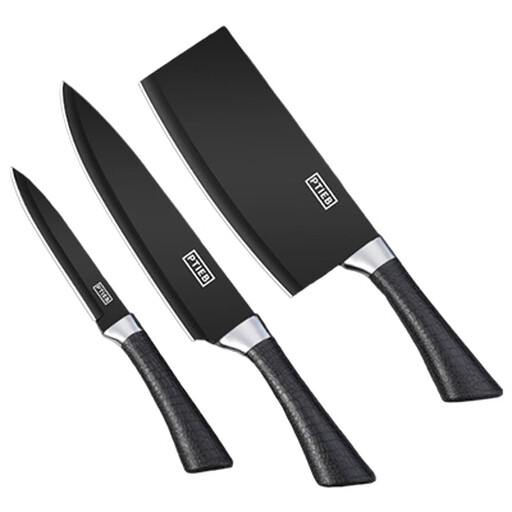
Why this fits the profile: The set includes a paring knife, chef's knife and slicing knife. This gives you a clear, basic selection without paying for lots of extra pieces.
The number of pieces is kept to a minimum, and the three knives listed have clearly different roles.
Compact composition; according to the product name, a free protective case is included.
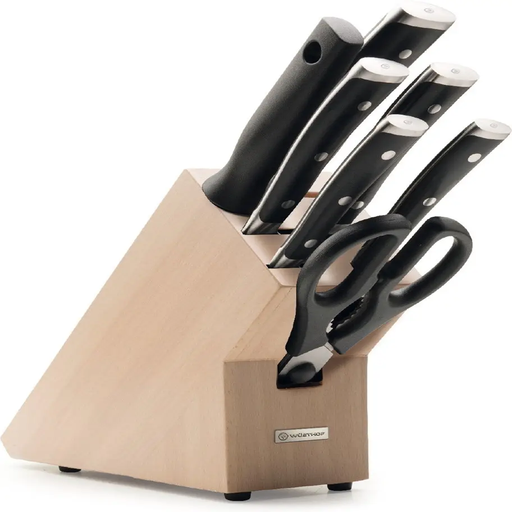
Why this fits the profile: This set combines multiple kitchen functions with a beechwood block for fixed storage on the worktop.
The product information lists individual knives for tasks including paring, chopping, slicing and bread preparation.
Stainless steel knives; beechwood knife block; minimum two-year statutory warranty according to the product information.
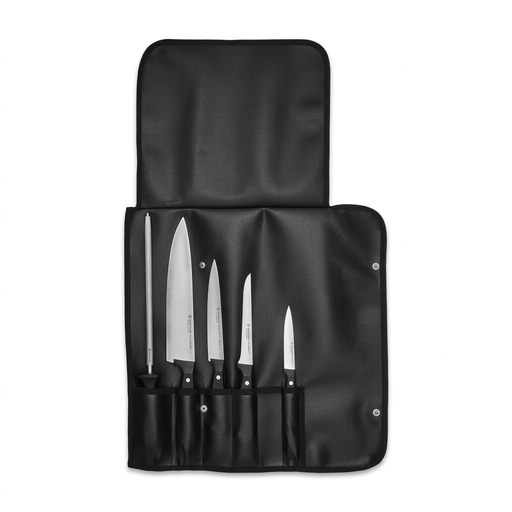
Why this fits the profile: The set is designed as a starter collection and, according to the product details, includes multiple knives, a sharpening steel and a washable roll-up bag.
The included sharpening steel and storage bag make maintenance and safe transport more concrete than with a loose knife collection.
Five listed knives plus sharpening steel; washable bag; hand washing and immediate drying are recommended for care.
We've put together a full, up-to-date list of products that fully meet these strict selection criteria and comply with current European safety regulations.
A kitchen knife set stays usable when you use the knives appropriately and store them carefully. Follow this routine:
A dishwasher can be convenient, but always check the product information. The Wüsthof Classic Ikon 3-piece set, for example, recommends hand washing and no dishwasher, while other models are offered as dishwasher-safe.
For most households, a chef's knife, paring knife and bread knife are sufficient. If you regularly prepare meat, you can add a carving knife or steak knives. A large set is mainly worthwhile when you actually use the extra knives.
Ceramic knives are lightweight and have a smooth blade, but choosing the right product requires care. They are less suitable for bones, hard frozen items and twisting motions. For versatile daily use, many households therefore choose stainless steel.
That depends on use, chopping board and maintenance. Check the sharpness regularly rather than sharpening on a fixed schedule. Where possible, use the maintenance tool that matches the material and product instructions.
