
Vandaag of morgen in huis

Kwaliteit gegarandeerd

Welkomstaanbiedingen ontgrendelen: GRATIS bezorging | Tot 80% korting | Gratis 30 dagen JoyPlus-proefperiode
Download de app
Choosing a kitchen knife seems straightforward. Yet many households buy a knife that soon feels blunt, is difficult to clean or doesn’t suit the way they cook. A chef’s knife for vegetables, for example, works differently from a cleaver for bones. If you focus mainly on a shiny appearance or the words “extra sharp”, you can easily miss the specifications that make a knife comfortable to use.
That’s why the Joybuy Product Recommendation Officer filters out the most important information from product descriptions. This helps you compare kitchen knives based on practical features rather than marketing language.
A multipurpose kitchen knife may be suitable for everyday food preparation, but it isn’t automatically right for bread, bones or large cuts of meat. Use a thin knife for slicing and chopping vegetables; a bread knife has a serrated edge; and a cleaver has a heavier design. Don’t use a standard chef’s knife on bones, frozen foods or hard shells. This can damage the blade.
The description “sharp kitchen knife” says very little on its own about how long the edge will last. Also check the blade material, length and care instructions. A product description may promise a sharp edge, but it doesn’t always provide information about the sharpening angle, hardness or how the knife has been sharpened.
The Wüsthof Classic Ikon Santoku, for example, is described as having a 14° double bevel. According to Wüsthof’s product description, the knife is sharpened using laser-guided technology and finished by hand. This is verifiable product information; however, you should treat the claim of 20% greater sharpness as a Wüsthof brand claim, not a general guarantee.
A stainless steel kitchen knife isn’t always maintenance-free. Some knives are dishwasher-safe, while others retain their finish better if you wash them by hand and dry them straight away. The 5five products in this selection are described as dishwasher-safe, while handwashing is recommended for the Wüsthof Classic Ikon Santoku. So check the specific care instructions for each product.
Stainless steel is popular because it’s relatively easy to clean and more resistant to rust than unprotected carbon steel. That doesn’t mean you can leave a knife wet for a long time. Wash it according to the product instructions, dry it and store it so the blade doesn’t knock against other metal objects.
According to the product information, high-carbon stainless steel such as X50CrMoV15 in the Wüsthof Santoku combines a high carbon content with rust resistance. Also consider the handle. A plastic or synthetic handle can be practical, while a fully forged knife made from a single piece of steel offers a different balance and construction.
For most everyday tasks, a blade length of around 17 to 20 cm is a sensible choice, but the right option depends on your chopping board and what feels comfortable in your hand.
Check not only the blade length but also the overall length and weight. The Wüsthof has a 17 cm blade and weighs around 170 grams according to the product information. The 5five Santoku has an 18 cm blade and a total weight of 180 grams.
A kitchen knife will stay useful when you use it on a suitable surface. A wooden or plastic chopping board is generally a better choice than glass or stone, as hard surfaces can wear down the blade more quickly. Only use a honing steel or sharpener if it’s suitable for the type of knife and its cutting angle.
It’s best to store knives in a knife block, protective sheath or another stable holder. Keep sharp knives out of reach of children, and never pick up a knife by its blade.
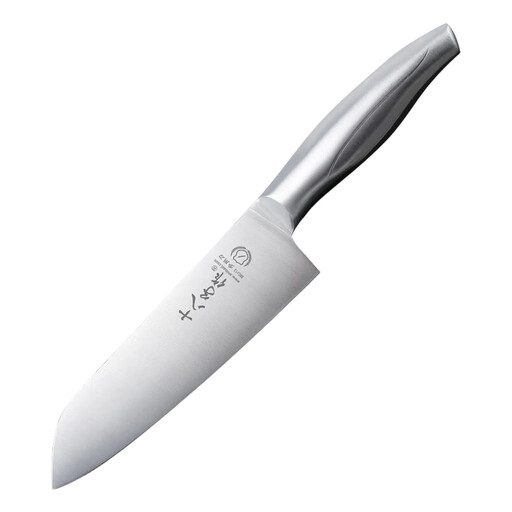
Why it suits this profile: According to its product name, this stainless steel kitchen knife is designed for a range of everyday cooking tasks. It’s a good fit if you’re looking for one practical knife for everyday slicing and chopping.
The material is clearly specified. Before buying, check the exact dimensions and care instructions on the product page.
Stainless steel construction; multipurpose design for household use.

Why it suits this profile: For home cooks and professional chefs who value materials, dimensions and clear care instructions. According to the product description, the knife is suitable for herbs, vegetables, fruit, fish and meat.
The product information specifies X50CrMoV15 steel, a 17 cm blade, a 14° double bevel and handwashing for care.
High-carbon stainless steel; synthetic handle; around 170 grams; handwashing recommended.
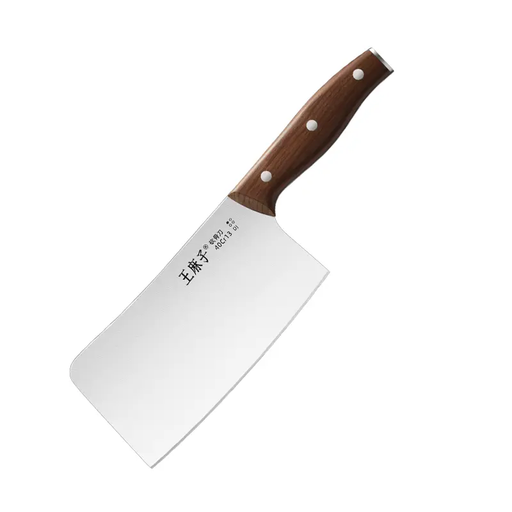
Why it suits this profile: According to the product description, this cleaver is designed for bones, ribs and poultry. It’s a good fit for anyone who regularly tackles heavy-duty food preparation.
The product description specifically mentions bones, ribs and poultry. Even so, use the knife only as directed and not on hard surfaces.
Forged design according to the product description; intended for heavier cutting tasks; an ergonomic, non-slip handle is specified.
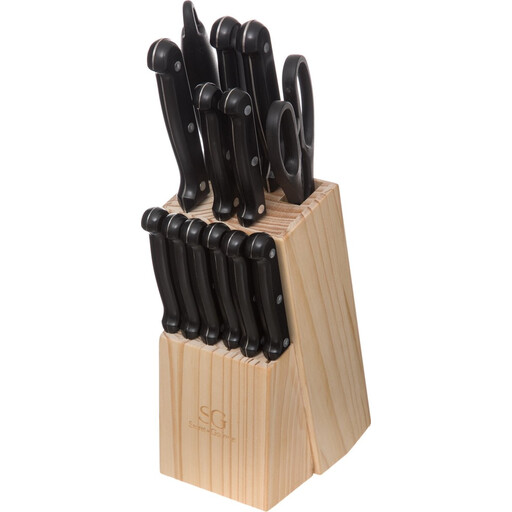
Why it suits this profile: For households looking to keep a chef’s knife, bread knife, steak knives, smaller knives, scissors and a sharpener together in one knife block.
The contents are clearly listed: 11 knives, a pair of kitchen scissors and a knife sharpener. The set isn’t dishwasher-safe, so the care requirements are clear from the outset.
13-piece set; wooden block; includes a bread knife, chef’s knife and six steak knives.
We’ve put together a complete, up-to-date list of products that meet these strict selection criteria and the applicable European safety regulations.
A chef’s knife or Santoku knife is a practical starting point for many households. Both are suitable for general food preparation, including vegetables, fruit and boneless meat. Choose a cleaver only if you’ll actually be doing heavier tasks. Separate knives are more convenient for bread and steaks.
Use a suitable chopping board, avoid glass and stone, and wash the knife according to the product instructions. Dry it straight away and store it separately from other cutlery. A knife sharpener or honing steel can help, but first check that the tool is suitable for your knife’s blade.
A set can be practical if you need knives for several tasks, such as a bread knife, steak knives and a vegetable knife. If you mainly need one chef’s knife, buying it separately means you won’t pay for items you rarely use. Before deciding, compare what’s included, the care requirements and the storage space you have available.
