
Vandaag of morgen in huis

Kwaliteit gegarandeerd

Welkomstaanbiedingen ontgrendelen: GRATIS bezorging | Tot 80% korting | Gratis 30 dagen JoyPlus-proefperiode
Download de app
A kitchen knife might seem like a simple purchase – until you realise just how much blades, handles, maintenance and uses can differ. A knife that works well for vegetables isn’t automatically suitable for bones. What’s more, marketing terms like “extra sharp”, “professional” or “damascus” don’t tell you much on their own if dimensions, steel type and care instructions are missing.
In this guide, you’ll discover what to look for before buying a kitchen knife. That way, you can avoid a bad purchase and choose more wisely between a santoku knife, chef’s knife, cleaver, meat knife or kitchen knife set.
A sharp kitchen knife cuts well, but sharpness isn’t the only factor. A thin blade can be suitable for vegetables and fruit, while a heavy cleaver is needed for hard ingredients. So always check the blade thickness, length and intended use.
A knife for fine slicing and portioning is different from a cleaver for bones. Never use a thin vegetable knife or fruit knife for prising, twisting or cutting through hard bones.
“Stainless steel” doesn’t mean a knife needs no maintenance. A stainless steel kitchen knife can be rust-resistant, but prolonged soaking, harsh dishwasher detergents and damp storage can damage the blade and handle.
Look out for:
Some products state dishwasher safety, yet hand washing is recommended for a longer lifespan. If in doubt, follow the manufacturer’s product information.
A kitchen knife set might seem like good value, but sometimes it mainly contains knives for one specific situation. A set with steak knives, for example, is intended for table use and doesn’t replace a chef’s knife, paring knife or bread knife.
First, decide which tasks you carry out daily. For one household, a single multi-purpose kitchen knife with a small paring knife may be enough. If you often prepare bread, meat and vegetables, you might benefit from several specialised knives.
A blade of around 17 to 20 cm is practical for many everyday cutting tasks. A chef’s knife typically has a curved cutting edge for rocking cuts. A santoku knife usually has a straighter cutting edge and is suitable for slicing vegetables, meat and fish.
Examples of other shapes:
Overall length matters less than the balance between blade, handle and your workspace. In a compact British kitchen, a 17 or 18 cm knife is often easier to handle than a much longer model.
A stainless steel kitchen knife requires little maintenance – but not none. Wash the knife by hand if the product page recommends it. Dry it immediately and store it in a knife block, on a magnetic strip or with a protective sheath.
Also pay attention to your chopping board. Glass, stone and ceramic can dull the edge more quickly. A wooden or plastic chopping board is generally more suitable for daily use. Only use a honing steel or sharpener according to the instructions that match your knife.
An ergonomic handle is only useful if it feels comfortable in your hand. Check whether the material is smooth or non-slip, and whether the transition between handle and blade is neatly finished. A knife weighing 170 g can feel quite different from a heavier model, even if both have the same blade length.
A stable grip helps with control, but doesn’t make a sharp knife risk-free. Always cut on a stable board, keep your fingers out of the cutting line and store knives out of reach of children.
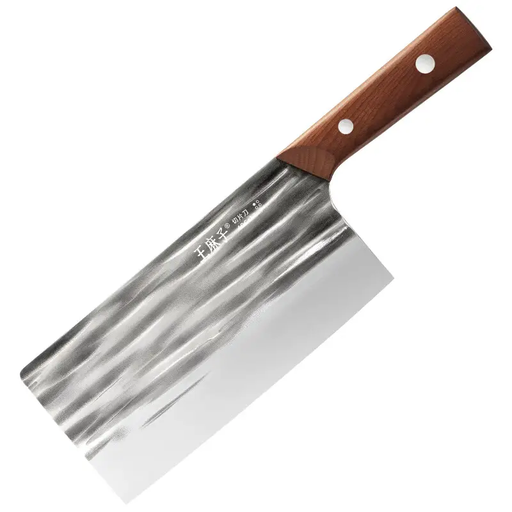
Why this fits the profile: According to the product description, this multi-purpose kitchen knife is intended for meat, vegetables and everyday cooking. The handle is described as ergonomic and no assembly is required.
The intended use and material are clearly stated, so you’re less likely to buy a table knife or specialised cleaver for everyday cutting. Hand washing and immediate drying are recommended.
Stainless steel, multi-purpose design and a handle that, according to the product information, should feel comfortable.

Why this fits the profile: This santoku knife has a 17 cm blade, an X50CrMoV15 steel alloy and a handle made from polyoxymethylene. According to the product description, the knife is suitable for vegetables, fruit, fish and meat.
The steel type, blade length and care preference are all described in detail. According to Wüsthof’s own information, the knife is sharpened at a 14-degree angle; check the current product specifications before purchasing.
17 cm blade, high-carbon stainless steel and a fully forged construction from a single piece of steel, according to the product information.
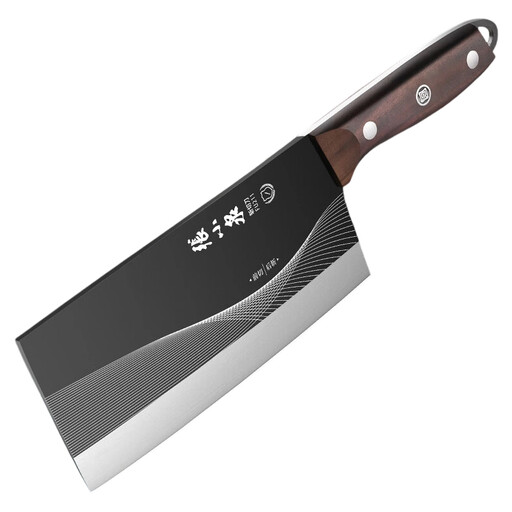
Why this fits the profile: This is a specific bone knife with a total length of 313 mm. It is intended for users who are deliberately looking for a heavy-duty model for bones and hard ingredients, not a universal chef’s knife.
The product name makes the specific use clear. This reduces the chance of using a thin meat knife for bones. Check the full material and care information before use.
Stainless steel construction according to the product name, and a long 313 mm design for targeted chopping and cutting tasks.
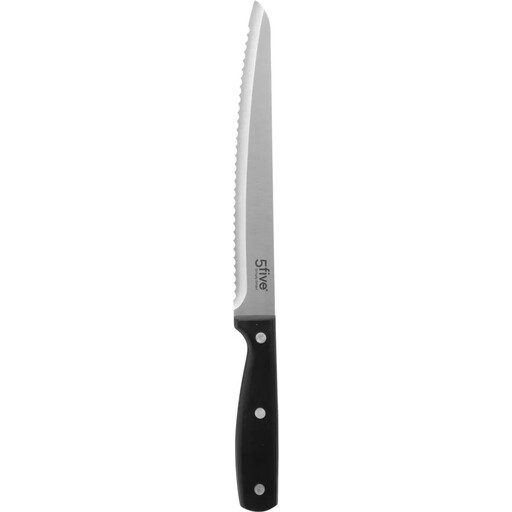
Why this fits the profile: This serrated bread knife has a length of 33 cm and a stainless steel blade. The product information states an ABS handle and dishwasher safety.
The serrated shape is designed for bread and prevents you from using a smooth chef’s knife on hard crusts. The length is clearly stated.
33 cm long, stainless steel blade and an ABS plastic handle according to the product details.
We’ve put together a full, up-to-date list of products that fully meet these strict selection criteria and comply with current European safety regulations.
A kitchen knife set is practical if its contents match your cooking routine. So check beforehand whether the set actually includes a chef’s knife, vegetable knife, paring knife, bread knife or steak knives that you need.
A chef’s knife or santoku knife of around 17 to 20 cm is a practical foundation for many households. Both models can be suitable for vegetables, fruit, meat and herbs. Choose the shape that best suits your cutting technique and hand size.
Use a suitable sharpener or have the knife sharpened when the edge becomes dull. Cut on a suitable board, avoid hard surfaces and store the blade protected. Depending on the model, a dishwasher can cause the edge and handle to wear more quickly.
Not automatically. Look at the steel type, construction, handle, maintenance and warranty terms. A more expensive knife may offer extra specifications, but a simpler stainless steel kitchen knife can be sufficient when it matches your use and is well maintained.
