
Vandaag of morgen in huis

Kwaliteit gegarandeerd

Welkomstaanbiedingen ontgrendelen: GRATIS bezorging | Tot 80% korting | Gratis 30 dagen JoyPlus-proefperiode
Download de app
A sharp kitchen knife makes daily cooking much easier, but not every knife suits every job. A bread knife with a smooth blade, for example, is less practical on a hard crust, while a small paring knife is unsuitable for a pumpkin or a large piece of meat. Similarly, a strikingly low price tells you little about the balance, maintenance or suitability of the knife.
So don't just focus on the looks or the phrase "extra sharp". Instead, check the type of knife, the dimensions, the material and how you intend to use it.
Words like "extra sharp" or "professional" are only useful when accompanied by verifiable information. Think about the blade length, the steel type, the grind angle or the hardness. Some Wüsthof models, for instance, specify X50CrMoV15 steel, a hardness of 58 HRC and a grind angle of 14 degrees. That gives you far more to go on than a vague marketing claim.
According to Wüsthof's own product information, certain laser-guided grinding is said to be up to 20% sharper than average. Take this as a claim from the brand, not as a universal measurement result for every user.
A chef's knife or santoku knife is versatile for vegetables, herbs, fruit and many types of meat. However, every knife has a clear area of application:
Using a knife for a task it wasn't designed for can make it dull more quickly or cause damage.
A dishwasher can be convenient, but heat, detergent and contact with other items can put strain on the blade edge and handle. For many stainless steel kitchen knives, hand washing is recommended, even when a product is described as dishwasher safe.
For a sharp kitchen knife, hand washing with lukewarm water and mild washing-up liquid is usually a simple way to keep the edge usable for longer. Dry the knife immediately and store it in a knife block, a protective sheath or a suitable drawer insert.
For everyday use, a blade of 16 to 20 cm is often practical. A 20 cm chef's knife gives you room for larger vegetables, while a 17 cm santoku knife can be easier to handle in a smaller kitchen.
Also look at the shape:
Stainless steel is popular because it resists rust under normal use and is relatively easy to maintain. However, the composition varies from product to product. X50CrMoV15 is a commonly used steel type in European kitchen knives. A stated hardness of 58 HRC gives a technical indication of the blade's hardness, but doesn't solely determine how long a knife stays sharp. The chopping board, cutting technique and maintenance all play a part.
Also pay attention to the handle. Plastic, ABS and POM are low-maintenance materials. A reinforced handle or a full tang can contribute to a stable feel, but always check the specific product specifications.
A knife should feel comfortable in your hand without you having to grip it tightly. Check whether the handle is suitable for both left- and right-handed use and whether the weight suits your cooking style. A heavier forged knife can be pleasant for intensive use, while a lighter knife is handy for quick slicing.
Don't use kitchen knives on glass, stone or ceramic. A wooden or plastic chopping board is generally more suitable. A honing steel can realign the edge; for truly blunt knives, periodic sharpening with a whetstone or a professional sharpening system is necessary.
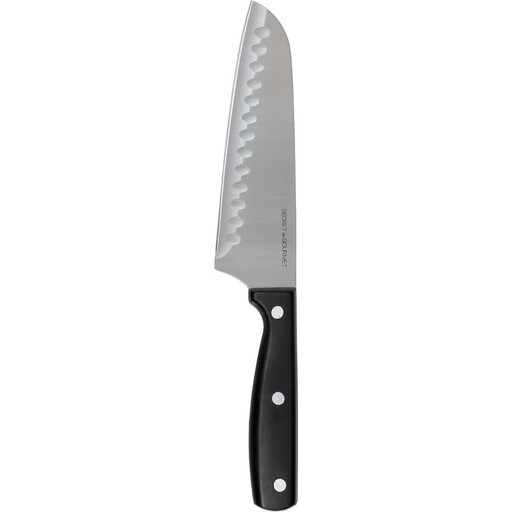
Why this fits the profile: This santoku knife has a total length of 29 cm and a 17 cm blade. That makes it suitable for everyday slicing of vegetables, fruit and other ingredients without needing to buy multiple knives straight away.
The product information specifically states the blade length, the stainless steel material and an ABS handle, rather than just a general sharpness claim.
17 cm blade, stainless steel, sturdy ABS handle and, according to the product description, dishwasher safe.

Why this fits the profile: This 17 cm santoku knife combines X50CrMoV15 high-carbon stainless steel with a synthetic handle. It suits home chefs who prepare lots of vegetables, herbs, fish and meat.
The description mentions the steel type, a 14-degree grind angle, handle material and recommended hand washing. This allows you to compare the features more effectively.
17 cm blade, X50CrMoV15 steel, approx. 14° double edge and a polyoxymethylene handle.
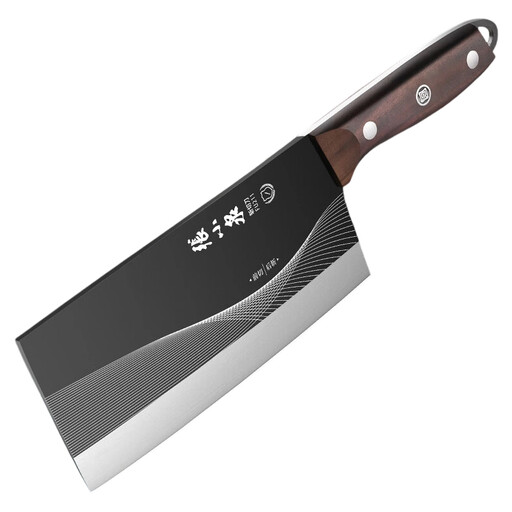
Why this fits the profile: This thick bone cleaver at 313 mm is designed for heavy chopping. It suits users who regularly work with bones or hard pieces and need a specific cleaver for the job.
The clear product name and total length make it obvious that this is not a universal kitchen knife, but a knife for heavy, specific use.
Stainless steel construction, thickened blade and a total length of 313 mm according to the available product information.
We've put together a full, up-to-date list of products that fully meet these strict selection criteria and comply with current European safety regulations.
A santoku knife or chef's knife is generally practical as a first versatile knife. Look for a blade of around 16 to 20 cm, a handle that feels comfortable in your hand and a material description that goes beyond just "stainless steel". For bread and small peeling tasks, you'll need additional knives.
Cut on wood or plastic and avoid glass, stone and ceramic. Preferably wash the knife by hand, dry it immediately and store it safely. Use a honing steel for regular maintenance and have a clearly blunt knife sharpened. A dishwasher may be usable according to some product descriptions, but hand washing is often the safer choice.
The lifespan depends on the steel, the construction, the chopping board, the frequency of use and the maintenance. A stainless steel kitchen knife can last a long time with careful use, but no knife stays permanently sharp without maintenance. Also check the statutory warranty and any additional manufacturer's conditions per product.
