
Vandaag of morgen in huis

Kwaliteit gegarandeerd

Welkomstaanbiedingen ontgrendelen: GRATIS bezorging | Tot 80% korting | Gratis 30 dagen JoyPlus-proefperiode
Download de app
A good kitchen knife doesn’t have to be the most expensive model in the drawer. What matters most is that it suits the way you cook, the ingredients you prepare, and the grip that feels comfortable in your hand. However, if you only look at a sharp product photo or terms like “professional kitchen knife”, you could easily end up with a purchase you regret.
Almost every new kitchen knife feels sharp. That tells you very little about how it will perform after a few weeks of use. The lifespan of the edge depends on factors such as the steel, the grind angle, the surface you cut on, and how you maintain it.
A stainless steel kitchen knife still needs care. Stain resistance does not mean the knife can withstand moisture, harsh dishwasher detergents, or being left to soak in water indefinitely.
A chef’s knife with a 20 cm blade offers a large cutting surface, but it won’t feel comfortable for everyone. In a compact British kitchen, on a small worktop, or when doing fine chopping, a 16 cm knife can be much easier to handle. A cleaver, on the other hand, needs more weight for tougher ingredients, but that doesn’t automatically make it suitable for all cutting tasks.
So pay attention to blade length, weight and balance. A knife that sits well in your hand generally gives you more control than one that only looks impressive.
A knife set may look appealing, but always check which knives are actually included. Sometimes a set is mostly made up of variations of the same knife. For everyday cooking, a chef’s knife, a vegetable knife and possibly a bread knife are often more useful than several knives you rarely use.
Also look at the care instructions. A dishwasher-safe model can be practical, but hand washing is often recommended to keep the edge and handle in good condition for longer.
Most kitchen knives use stainless steel. Check the product information to see if the type of steel is mentioned, such as X50CrMoV15 or another specific grade. Just “high-quality steel” doesn’t give you much to go on.
A forged kitchen knife is shaped from a single piece of steel. With a full-tang construction, the steel runs all the way through the handle. This can contribute to a sturdy connection and a recognisable balance, but how suitable it is in practice also depends on the shape, weight and finish.
Brand specifications should always be verifiable. According to product information from Wüsthof, some models are made in Solingen and feature X50CrMoV15 steel. For Wangmazi products, the available details vary by model. So always check the stated steel type, dimensions and construction for each individual product.
The term “multi-functional” does not mean a knife can safely handle every task. Always check the intended use and the care instructions.
A smooth plastic handle is easy to clean. A handle with a textured or non-slip surface can be more comfortable when your hands are wet, but check that the shape suits your hand.
Use a wooden or plastic chopping board. Glass, stone and metal can dull the edge more quickly. Store the knife in a knife block, protective sheath or drawer insert. A knife sharpener can help with regular maintenance, but choose one that matches the grind angle and type of knife. A three-stage sharpener is practical for household use; for delicate or unusually ground knives, a whetstone may be more suitable.
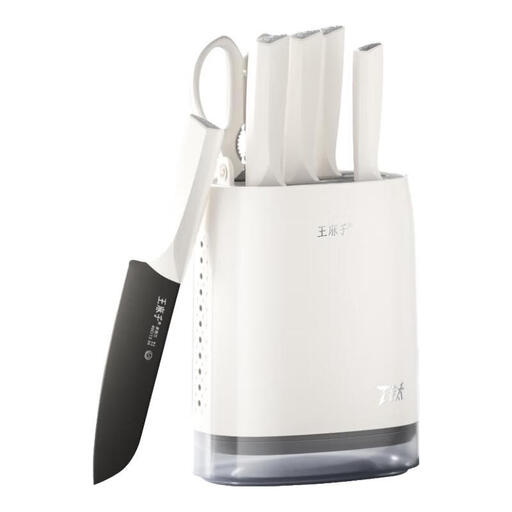
Why this fits the profile: A set can be handy for a new home or when you want to cover several everyday cutting tasks in one go. Check beforehand exactly which knives and accessories are included.
The set saves you from having to search for multiple individual knives. However, do check the specifications, as the available manufacturer details do not list separate information for every component.
A combination for everyday cooking; suitable as a housewarming gift or starter set.
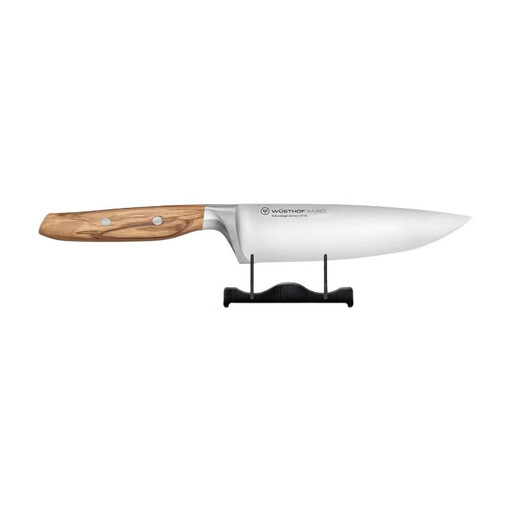
Why this fits the profile: According to the product information, this chef’s knife is designed for a variety of tasks, including chopping vegetables, preparing meat and fine mincing. The broad blade can also be used to scoop ingredients into the pan.
The product information specifies X50CrMoV15 stainless steel, a 14-degree angle and a hardness of 58 HRC. These are far more concrete details than just a general claim about sharpness.
20 cm blade; olive wood handle measuring 9.5 cm; half-bolster for balance and ease of sharpening.
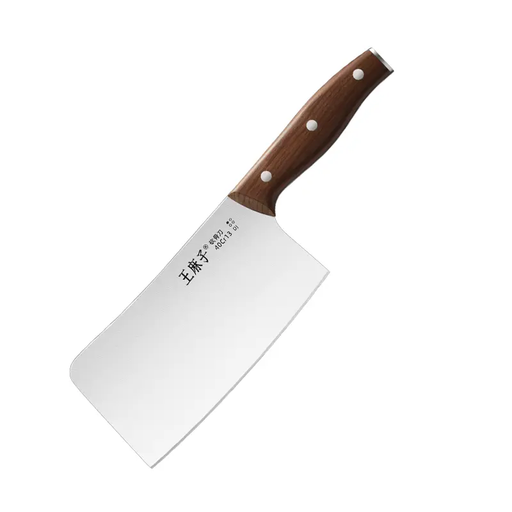
Why this fits the profile: This bone cleaver is designed for tough jobs involving bones, ribs and poultry. It is therefore a more targeted choice than a standard kitchen knife for everyday cutting.
The product is specifically described as a bone cleaver. Do not use it for tasks that require a fine vegetable or carving knife, and check the care instructions before purchasing.
Forged model according to the product description; intended for bones, ribs and poultry.
We’ve put together a full, up-to-date list of products that fully meet these strict selection criteria and comply with current European safety regulations.
For everyday cooking, a chef’s knife with a 16 cm or 20 cm blade is often a sensible starting point. If you chop a lot of vegetables, you could add a santoku knife or a vegetable knife. For preparing meat, a carving knife and a boning knife are more purpose-built. A cleaver is useful for larger pieces, while a bone cleaver should only be chosen if that’s what you intend to use it for.
A Wüsthof kitchen knife could be of interest if you value clearly stated steel types, dimensions and construction details. A Wangmazi kitchen knife or cleaver might suit you if you’re looking for a Chinese-style knife, a set or a specific cleaver. Always compare the full product page rather than just relying on the brand or the look of the knife.
That depends on the steel, how you use it, your chopping board and how you maintain it. Hand washing, drying immediately and regular light sharpening can all help extend its useful life. Replace a knife when the blade is damaged or the handle is no longer securely attached.
Not for every knife, but regular maintenance helps keep the edge usable. A simple three-stage knife sharpener is practical for most household knives. Check that the sharpener is suitable for the grind angle of your knife.
The price varies depending on the steel type, construction, brand and finish. Buying a single knife can be more cost-effective if you only need one chef’s knife. A knife set may make more sense for a new kitchen, provided the contents match your everyday cooking tasks.
