
Vandaag of morgen in huis

Kwaliteit gegarandeerd

Welkomstaanbiedingen ontgrendelen: GRATIS bezorging | Tot 80% korting | Gratis 30 dagen JoyPlus-proefperiode
Download de app
A good kitchen knife should suit the way you cook. If you only look at a low price, a striking design or the claim “extra sharp”, you could end up with a blunt, uncomfortable or difficult-to-maintain knife after just a few months. This applies to home cooks, hobby chefs and professional users alike.
The most important question, therefore, is not which knife looks the most appealing, but which type of kitchen knife suits your ingredients, cutting technique and maintenance routine.
A knife can feel sharp straight out of the packaging, but that tells you little about its long-term upkeep. The lifespan of the edge depends on factors including the steel, the sharpening angle, the chopping board and how you clean the knife.
A very thin edge can cut precisely, but it is not automatically suitable for hard ingredients or careless use. Always check the recommended chopping board and care instructions.
A chef’s knife is versatile, but not ideal for every purpose. A serrated bread knife works differently from a smooth-edged vegetable knife. If you use a smooth blade for bread with a hard crust, the bread can become compressed. Using a bread knife for fine herbs, on the other hand, is awkward.
Think ahead about your most common tasks:
Although some kitchen knives are described as dishwasher-safe in the product description, many manufacturers recommend hand washing. High temperatures, dishwasher detergent and contact with other cutlery can damage the blade and handle.
A stainless steel knife is resistant to corrosion, but not automatically immune to stains or wear. Rinse the knife after use, dry it immediately and store it in a knife block, drawer insert or with suitable protection.
For everyday use, knives around 16 to 20 cm are often practical. A 16 cm blade offers more control with smaller ingredients and more compact work surfaces. A 20 cm chef’s knife is suitable when you are processing larger quantities of vegetables, meat or herbs.
Also pay attention to the shape:
Many kitchen knives are made from stainless steel. Check whether the type of steel is stated, such as X50CrMoV15. The term “high-quality steel” alone gives little concrete information.
A forged kitchen knife is shaped from a single piece of steel. This can contribute to a sturdy construction and good balance, but it does not mean every forged knife cuts the same. Also look at the connection between the blade and handle, the weight and the handle materials used.
A full-tang construction runs all the way through the handle. According to the product information, this can provide extra stability and a balanced weight distribution. Always check the actual product specifications for each model.
A handle should feel stable without you needing to apply much force. Pay attention to the length, shape and surface. A non-slip texture can be practical in a busy kitchen, while a smooth handle may be easier to clean.
The recommended sharpening angle varies per knife. The product information for various Wüsthof models, for example, states 14 degrees per side. For maintenance, use a suitable honing steel, whetstone or knife sharpener. A honing steel mainly corrects the edge; a whetstone removes material and actually changes the edge.
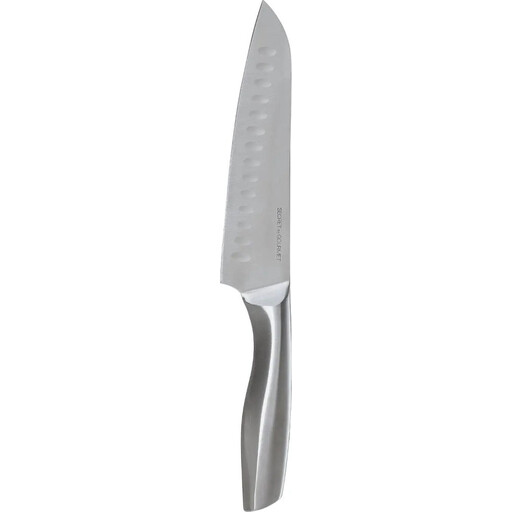
Why this fits the profile: The 18 cm cutting edge is suitable for daily tasks such as vegetables, fruit and herbs. The stainless steel construction and dishwasher-safe product information are practical for a first knife purchase.
The product information states the material, length and weight of approximately 180 grams. This allows you to compare the size and handling rather than relying solely on sharpness claims.
Forged construction according to the product information; 18 cm blade; sturdy handle; suitable for multiple daily cutting tasks.
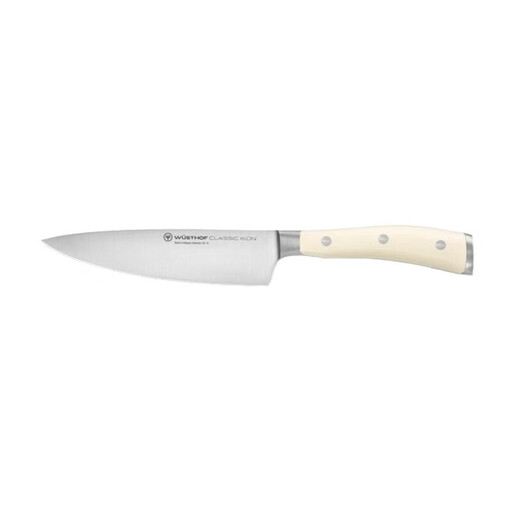
Why this fits the profile: If you value balance and a secure grip, you get a 16 cm chef’s knife with a synthetic handle, three rivets and a full-tang construction according to the product description.
The construction, blade length and handle are clearly stated. The product information recommends hand washing, so you can take the required maintenance into account.
Stainless steel; 16 cm blade; full-tang design; ergonomically shaped handle.
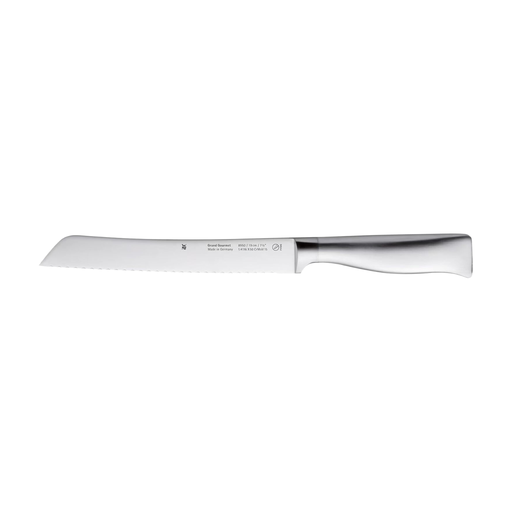
Why this fits the profile: This long bread knife is designed for bread, soft rolls and fruit. The serrated edge is a logical choice for users who bake often or cut different types of bread.
The function is clearly defined: a 32 cm long, serrated blade for bread. The product information also mentions hand washing, which prevents you from overlooking the care requirements.
Double-sided serrated edge according to the product description; long blade; Cromargan 18/10 handle; forged construction.
Don’t just compare the price, but also what you are actually getting:
A Victorinox knife, for example, could be interesting for table use: the Grand Maître steak knife has, according to the product information, a 12 cm long, serrated stainless steel blade and is intended for steak and tomatoes. For a household with several diners, a set of six steak knives, such as the Excellent Houseware set, is more practical than individual knives.
We have compiled a full, up-to-date list of products that fully meet these strict selection criteria and the applicable European safety regulations.
That depends on the steel, use and maintenance. A knife generally remains usable for longer when you cut on wood or plastic, dry it immediately and sharpen it correctly on a regular basis. Do not use it for bones, frozen products or packaging.
Not automatically. A forged knife can offer a sturdy construction and good balance, but the shape, sharpening angle, handle and maintenance are at least as important. Compare these features together.
For most households, a chef’s knife of 16 to 20 cm is a practical starting point. If you often cut bread, an additional bread knife is worthwhile. If you mainly prepare small vegetables and fruit, you could also choose a compact vegetable knife.
