
Vandaag of morgen in huis

Kwaliteit gegarandeerd

Welkomstaanbiedingen ontgrendelen: GRATIS bezorging | Tot 80% korting | Gratis 30 dagen JoyPlus-proefperiode
Download de app
A good kitchen knife doesn't need to be complicated. Yet the choice is vast: from chef's knives and santoku knives to bread knives, steak knives and complete kitchen knife sets. Marketing terms like "extra sharp", "professional" or "durable" don't always tell you how a knife will perform in your own kitchen.
For home chefs, beginner cooks and heavy-duty users, it's the size, steel, handle and maintenance that really matter. Below, you'll discover what to look out for, which pitfalls are common, and which kitchen knives suit different cooking situations.
A razor-sharp kitchen knife cuts beautifully, but sharpness alone isn't a complete measure of quality. The lifespan of the edge also depends on the steel, the grind angle, the chopping board and how you maintain it. A knife used on glass, stone or a hard ceramic board can quickly become blunt, regardless of its original sharpness.
So pay attention to the combination of cutting angle, material and care instructions. According to the product description of some Wüsthof models, a grind angle of 14 degrees per side is used. That's verifiable information, but it's no guarantee that the knife will feel the same for every user.
A set with lots of pieces may look appealing, but some of the knives could end up sitting unused in the block. So check:
According to the product information, the 5five 13-piece set includes a chef's knife, bread knife, six steak knives, a pair of scissors, a sharpener and a wooden block. That could be practical for households serving several people at the table, but the set is not dishwasher-safe.
A knife can be technically suitable and still feel uncomfortable. A heavy handle, slippery material or poor balance can make cutting less enjoyable. Look at:
A full-tang construction, where the steel runs through the handle, can provide a sturdy connection. However, the precise balance varies from model to model and also depends on your hand size and cutting technique.
For everyday use, chef's knives of 16 to 20 cm are a common choice. A 16 cm blade is nimble and works well with smaller chopping boards. A 20 cm knife offers more cutting surface for large vegetables, bunches of herbs and pieces of meat, but also requires more space and control.
Santoku knives often have a wider blade and are suitable for vegetables, fruit, fish and meat. A 17 or 18 cm model is a practical middle ground for many home cooks.
Stainless steel knives are popular because they're relatively easy to clean and less prone to rust than carbon steel. Do check whether the manufacturer states the exact steel type. The Wüsthof Classic Chef's Knife uses X50CrMoV15 stainless steel, according to the product information. With other models, only "stainless steel" is listed; in that case, a direct comparison of hardness and edge retention isn't possible.
Forged knives are shaped from a single piece of steel. A stamped knife is cut from a sheet of steel. Both constructions can be perfectly usable. Alongside the production method, pay particular attention to blade thickness, handle, finish and maintenance.
A smooth edge is suitable for most chef's knives and santoku knives. A serrated edge works better for bread, soft rolls and some tomatoes. A bread knife with a long blade, such as the 32 cm WMF Grand Gourmet, offers enough reach for large loaves.
Wash kitchen knives by hand if the product information advises it. Use a soft wooden or plastic chopping board and dry the knife immediately. Store it in a knife block, drawer insert or with a protective sheath. A dishwasher can, through heat, moisture and contact with other items, damage the edge and handle. Always check the care instructions for each product.
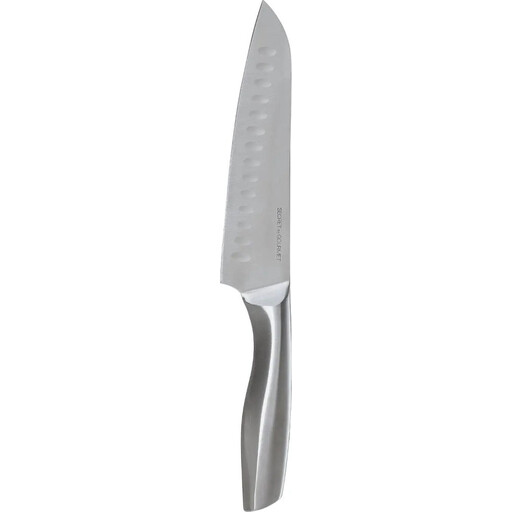
Why this fits the profile: This santoku knife has a stainless steel blade, a sturdy handle and a stated total length of 32 cm. It's suitable for everyday preparation of vegetables, fruit and meat.
The product information states the material, dimensions and dishwasher safety, so you have less guesswork about everyday use.
Stainless steel, a total length of 32 cm and a weight of approximately 180 grams according to the product specifications.

Why this fits the profile: A 17 cm santoku knife with X50CrMoV15 steel, synthetic handle and a stated grind angle of 14 degrees per side suits users who value control and a fixed size.
The product description mentions the steel type, blade length and hand-washing advice. According to Wüsthof's own product information, the knife is laser-controlled sharpened; this remains a manufacturer claim.
17 cm blade, X50CrMoV15 steel, synthetic handle and suitable for vegetables, fruit, fish and meat.
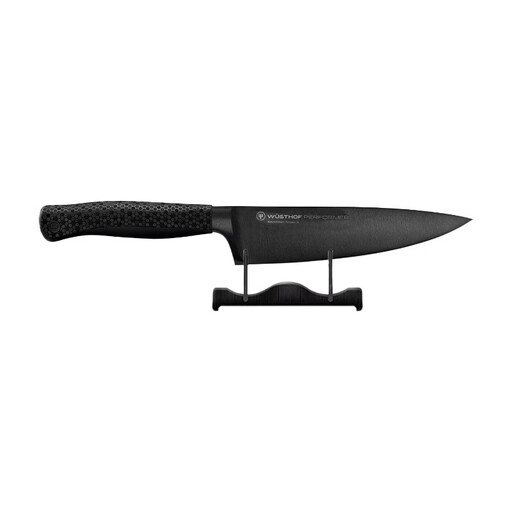
Why this fits the profile: The 20 cm chef's knife offers room for larger ingredients and is described as suitable for vegetables, herbs, fruit and meat. The contoured handle is relevant for longer use.
The product details mention the steel type, blade length and handle material. According to Wüsthof's own information, the blade has a DLC coating; check the care instructions for your version.
20 cm blade, X50CrMoV15 stainless steel, fibre-glass reinforced handle and a hexagonal grip texture.
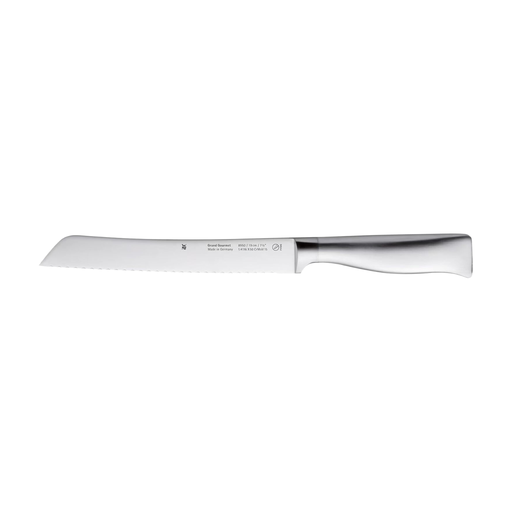
Why this fits the profile: The long, serrated blade is designed for bread, soft rolls and fruit. This is a targeted addition to chef's knives and knives for vegetables and meat.
The serrated edge is tailored to a specific task. The product information also clearly states that hand washing is required.
32 cm blade, stainless steel, serrated edge and Cromargan 18/10 handle according to the product specifications.
We've put together a full, up-to-date list of products that fully meet these strict selection criteria and comply with current European safety regulations.
For most households, a chef's knife, a bread knife and a small paring knife are sufficient. If you prepare vegetables often, you could add a santoku knife. Steak knives are mainly practical at the table and have a different function from a chef's knife.
That depends on the steel, the grind angle, how you use them and your chopping board. Hand washing, drying immediately and regular honing or sharpening can help keep the edge usable for longer. Don't use a kitchen knife to chop bones or open packaging, unless the product is specifically designed for that.
Some models are offered as dishwasher-safe, but hand washing is often the safer choice for preserving the edge and handle. Always check the product specifications. The WMF Grand Gourmet and the Wüsthof Classic models in this overview require hand washing according to their product information; the 5five santoku is listed as dishwasher-safe.
