
Vandaag of morgen in huis

Kwaliteit gegarandeerd

Welkomstaanbiedingen ontgrendelen: GRATIS bezorging | Tot 80% korting | Gratis 30 dagen JoyPlus-proefperiode
Download de app
A kitchen knife should suit your cooking style, not just look good in a product photo. A chef’s knife for everyday chopping, a santoku knife for vegetables, or a cleaver for bones – each demands different qualities. If you buy a kitchen knife without comparing, you can end up paying for claims that say little about how it performs in a real kitchen.
Words like “extra sharp” or “razor-sharp” don’t tell you how long the edge will stay sharp. Instead, check the blade material, length and care instructions. A stainless steel kitchen knife is practical for daily use, but rust resistance doesn’t mean you can leave the knife soaking wet for long periods.
A santoku knife or chef’s knife works well for vegetables, herbs, meat and fruit. For bread, you need a serrated bread knife; a smooth blade will crush the loaf rather than slice it. A paring knife is handy for small, precise work, while a cleaver is designed for heavy chopping. Don’t use a standard vegetable knife on bones, and don’t treat a meat knife like a crowbar.
A knife may be described as dishwasher-safe, but hand washing and drying it straight away will often keep the blade and handle in better condition for longer. Also check whether the handle fits securely, whether the size works with your chopping board, and whether you have enough grip when your hands are damp.
Look for stainless steel, possibly with a specific grade such as X50CrMoV15 or high-carbon steel. The steel type tells you about the composition, but it doesn’t determine performance on its own. The grind angle, hardness, blade thickness and finish all play a part.
A thin blade often cuts smoothly through vegetables and meat. A thicker blade is better for heavier tasks, but may be less precise. Claims about sharpness should be read as information from the brand. According to Wüsthof’s product information, the Classic Ikon santoku knife has a 14° double bevel and a laser-assisted grinding process – that’s a product specification, not a guarantee that the knife will feel equally sharp to every user.
For a daily chef’s knife, a blade of around 18 to 20 cm is a common choice. If you have smaller hands or mainly prepare fruit and vegetables, you might prefer a shorter santoku or vegetable knife. A long bread knife of 33 to 34 cm gives you room for large loaves, but also needs a longer chopping board.
Don’t just look at the total length. The balance between blade and handle affects control. A full-tang construction, where the steel runs through the handle, can provide balance and strength. Always check the specific product description – not every knife has the same construction.
An ergonomically shaped handle should feel sturdy and stable. Plastic is easy to clean; wood can feel nice in the hand but usually needs more care around moisture. Don’t leave knives loose in a full sink, and store them out of reach of children.
Use a suitable chopping board made of wood or plastic. Glass and stone can dull the edge more quickly. Sharpen the knife or have it maintained as soon as you need more force to cut. A honing steel can realign the edge, but it won’t replace a proper sharpening when the blade is truly blunt.
The selection below is linked to specific use cases and verifiable product details. Performance and sharpness claims are based on the product information provided by the brands and sellers.
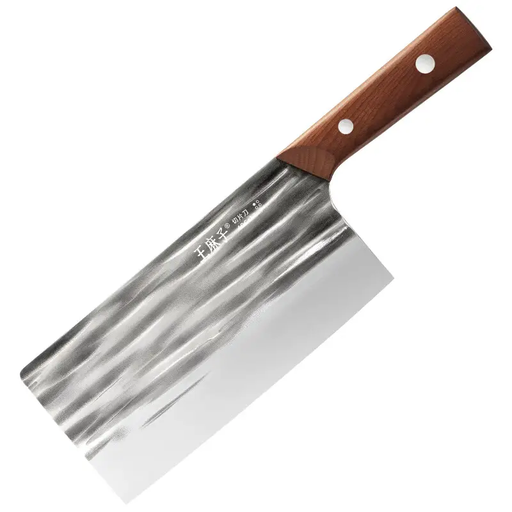
Why this fits the profile: According to the product information, this multi-purpose kitchen knife is designed for meat, vegetables, fruit and everyday preparation. That makes it practical if you’re looking for one knife to get started with.
The functions and material are clearly stated. This means you can compare the knife on use and care, rather than just a vague sharpness claim.
Stainless steel blade according to the product description; suitable for everyday cutting tasks; handle for a stable grip.

Why this fits the profile: This 17 cm santoku knife is designed for fine slicing of vegetables, herbs, fruit, fish and meat. It suits cooking enthusiasts who value material details and hand care.
The product information lists the steel type, blade length, handle material and care instructions. So you get much more to go on than with a knife that only says “sharp”.
X50CrMoV15 high-carbon stainless steel according to the product information; 17 cm blade; hand washing recommended.
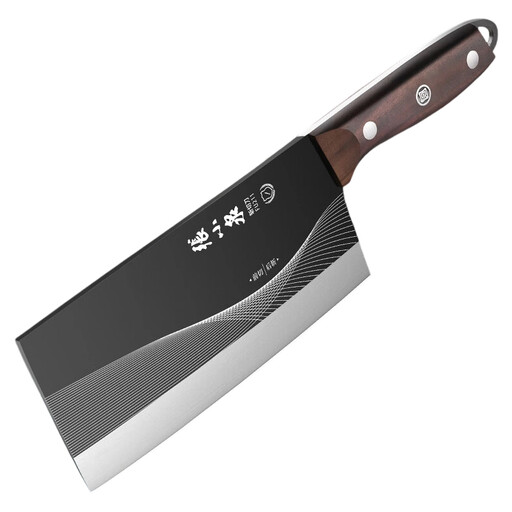
Why this fits the profile: A cleaver for bones, ribs and poultry needs a different design to a fine vegetable knife. This model is therefore intended for a specific, heavier task.
The product name and application make it clear that this is not a universal kitchen knife. This stops you from exposing a fine blade to hard bones.
Stainless steel construction according to the product listing; total length of 313 mm; designed for bones and poultry.
If you have several preparation tasks, you can choose a combination of a chef’s knife, paring knife and bread knife. Add an extra meat knife, steak knives or a cleaver when you regularly do that job. That way, you avoid a large set with knives that end up unused in the drawer.
We’ve put together a full, up-to-date list of products that fully meet these strict selection criteria and comply with current European safety regulations.
Wash the knife by hand if possible, dry it straight away and use a suitable chopping board. A honing steel can correct small imperfections in the edge. When the knife starts to drag or tears food, professional sharpening or replacing the edge is needed.
The lifespan depends on the steel, how often you use it, your chopping board and how you care for it. A knife that isn’t left in the sink, isn’t used on glass and is maintained regularly will stay usable for longer. There’s no fixed lifespan that applies to every model.
No. A more expensive knife may have better material and construction details, but the right type and size are at least as important. A chef’s knife isn’t suitable for bones, and a cleaver is awkward for fine peeling. So compare the preparation task, the blade, the handle and the care requirements before you buy kitchen knives.
