
Vandaag of morgen in huis

Kwaliteit gegarandeerd

Welkomstaanbiedingen ontgrendelen: GRATIS bezorging | Tot 80% korting | Gratis 30 dagen JoyPlus-proefperiode
Download de app
A good kitchen knife should feel comfortable in your hand, suit your cooking style, and be appropriate for the ingredients you use most often. Yet many people buy a knife based solely on a promising product name or an eye-catching appearance. This can lead to a knife that quickly feels blunt, is difficult to clean, or simply isn’t up to the job.
The following three pitfalls are common:
A chef’s knife around 18 to 20 cm is a versatile choice for slicing and chopping vegetables, herbs, meat and fruit. A santoku knife usually has a wider, straighter cutting edge and is suitable for fine slicing and chopping.
For specific tasks, other shapes are more practical:
So don’t automatically use a kitchen knife for meat and vegetables on bones, frozen products or hard materials. That can damage the cutting edge.
With a stainless steel kitchen knife, maintenance is generally straightforward, but “stainless” doesn’t mean that prolonged moisture has no effect. Hand washing and immediate drying help to limit stains and corrosion.
Look out for the following in the product information:
According to the product information from Wüsthof, the Classic Ikon santoku knife has a blade made of X50CrMoV15 steel and a specified cutting edge of 14 degrees. The claim that the knife is 20% sharper than standard knives comes, according to the description, from information provided by Wüsthof itself; therefore, treat this as a brand claim and not as a general measurement standard.
A kitchen knife should feel stable without you having to apply much force. A handle made of plastic, ABS or rubber can be comfortable, while the shape and weight are at least as important. Also check whether the information indicates that the knife is dishwasher-safe.
Dishwasher-safety is practical, but hand washing and drying are often a more cautious choice for knives with a special finish, wooden parts or a sensitive handle. Use a suitable chopping board and store knives so that the cutting edges don’t touch each other. A blunt knife invites extra pressure; regular honing or sharpening can keep it more comfortable to use.
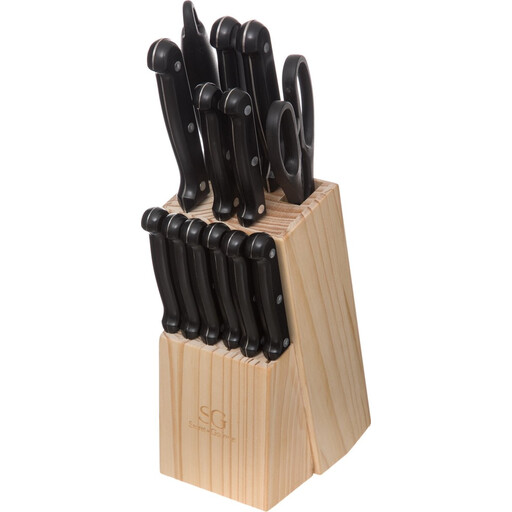
Why this fits the profile: This set includes a chef’s knife, bread knife, six steak knives, three other knives, a pair of scissors and a knife sharpener. That gives beginners multiple functions without having to source each item separately.
The contents are clearly specified, so you don’t have to rely solely on the number of pieces. According to the product information, the set is not dishwasher-safe.
13-piece composition, stainless steel knives and a wooden block for tidy storage.

Why this fits the profile: This santoku knife is designed for daily fine slicing of vegetables, herbs, fish and meat. The blade is 17 cm long and the handle is made of polyoxymethylene.
The product information specifies the steel type, blade length, handle material and maintenance. Hand washing is recommended; dishwasher use is not advised.
X50CrMoV15 high-carbon stainless steel, single-piece steel construction and a specified cutting edge of 14 degrees.
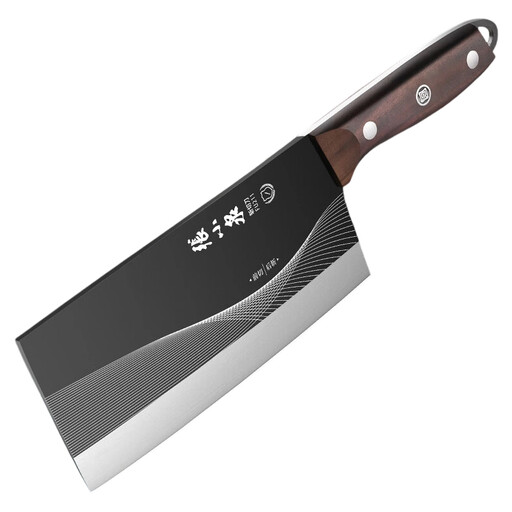
Why this fits the profile: This model is specifically described as a thicker stainless steel bone knife measuring 313 mm. It suits users who are deliberately looking for a knife for heavy chopping work.
The application is clearly stated in the product name, preventing you from using a light chef’s knife for a task it isn’t designed for.
Stainless steel and a specified total length of 313 mm; check before purchase whether this size fits your chopping board and storage.
We’ve put together a full, up-to-date list of products that fully meet these strict selection criteria and comply with current European safety regulations.
A chef’s knife around 18 to 20 cm is a practical starting point for many households. If you mainly slice vegetables and herbs, you could also choose a santoku knife. Pay particular attention to grip, weight and how you intend to maintain the knife.
Use a wooden or plastic chopping board, avoid glass and stone, and don’t cut frozen products with a standard chef’s knife. Wash the knife according to the product instructions and dry it immediately. A honing steel can maintain the cutting edge on some knives; for actual sharpening, a suitable sharpening solution is needed.
That depends on the contents and quality of the set. A set is practical when you need multiple functions, but individual knives can be more cost-effective if you only use a chef’s knife and a bread knife. So don’t just compare the number of pieces, but also the steel type, dimensions, maintenance instructions and warranty information.
