
Vandaag of morgen in huis

Kwaliteit gegarandeerd

Welkomstaanbiedingen ontgrendelen: GRATIS bezorging | Tot 80% korting | Gratis 30 dagen JoyPlus-proefperiode
Download de app
A good kitchen knife makes chopping vegetables, portioning meat and serving bread much easier. Yet it can be tricky to work out online which knife suits your cooking style. Products use terms like “extra sharp”, “Damascus” or “professional”, while important information about maintenance, dimensions and proper use is sometimes less prominently mentioned.
As a Joybuy Product Recommendation Officer, I filter the most important product details and set them alongside practical buying criteria. This way, you can avoid choosing a knife that is too big, too heavy or unsuitable for your daily food preparation.
A sharp kitchen knife cuts well, but sharpness alone doesn’t determine how long the knife will stay usable. The type of steel, hardness, cutting angle, sharpening method and maintenance all play a part. A product description that says “extra sharp” is therefore no guarantee of long-lasting sharpness. Always check the material, dimensions and care instructions instead.
A chef’s knife is multi-purpose, but it isn’t intended for every task. A bread knife has a serrated edge for crusts. A paring knife is compact and nimble. A cleaver can be suitable for tough ingredients, but a thin vegetable knife is better for fine cuts. Don’t automatically use a meat knife for bones, and don’t use a santoku knife as a cleaver for hard bones.
A striking handle or a dark finish tells you little about balance and control. Pay attention to the overall length, weight and shape of the handle. A 32 cm knife with an 18 cm blade requires more space and freedom of movement than a compact kitchen knife. For smaller worktops or everyday chopping, a shorter knife can be more practical.
Stainless steel is popular because it is relatively easy to clean and, with normal use, resistant to corrosion. High-carbon stainless steel can, according to the product description, offer a different balance between hardness and edge retention, but it still requires careful maintenance. Wash a knife when the manufacturer recommends hand washing, and dry it immediately.
Also look out for contradictions in the product information. A knife may be listed as dishwasher-safe, while hand washing is still recommended for a longer lifespan. For the Wüsthof Classic Ikon Santoku, for example, hand washing is recommended and use in the dishwasher is advised against.
For a chef’s knife, a blade of around 18 to 20 cm is a good choice for many home cooks. A santoku knife often has a wider shape and is suitable for cutting vegetables, fruit, fish and meat. A compact vegetable knife or paring knife works better for small ingredients and precision work.
Always check whether the stated length refers to the total length or just the blade length. The 5five Santoku has a total length of 32 cm and a blade length of 18 cm. The Wüsthof Gourmet chef’s knife has a 20 cm blade and a total length of 33.5 cm.
A light knife can be pleasant for fast chopping, while a heavier cleaver has more mass for tough ingredients. Weight is not a guarantee of quality; the balance between handle and blade is more important for control. Also check whether the handle fits securely and whether the instructions specify hand washing, drying or dishwasher use.
Don’t store kitchen knives loose in an overcrowded drawer. A knife block, protective sheath or separate drawer organiser helps limit contact with other cutlery. Also use a suitable chopping board and sharpen the knife or have it maintained when it no longer cuts as smoothly.
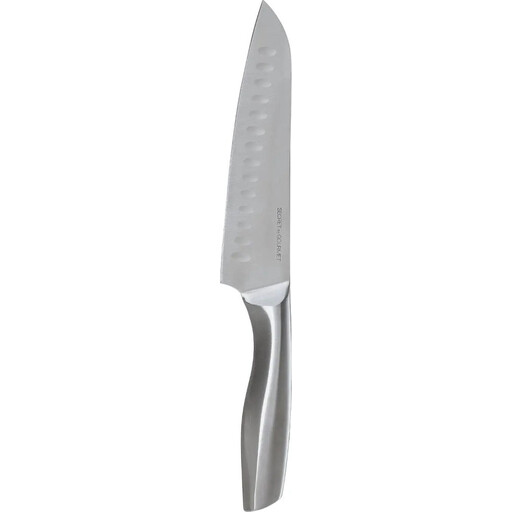
Why this fits the profile: This stainless steel santoku knife has an 18 cm blade, weighs 180 grams and is designed for everyday chopping of vegetables, meat and other ingredients.
The clear blade length and weight make comparison easier than simply relying on a sharpness claim.
Stainless steel, sturdy handle and, according to the product information, suitable for the dishwasher.

Why this fits the profile: For those who value a specific steel type, a compact blade and a hand-finished appearance.
The product information mentions X50CrMoV15 steel, a 17 cm blade and hand washing as the care advice.
High-carbon stainless steel, synthetic handle and a weight of approximately 170 grams.
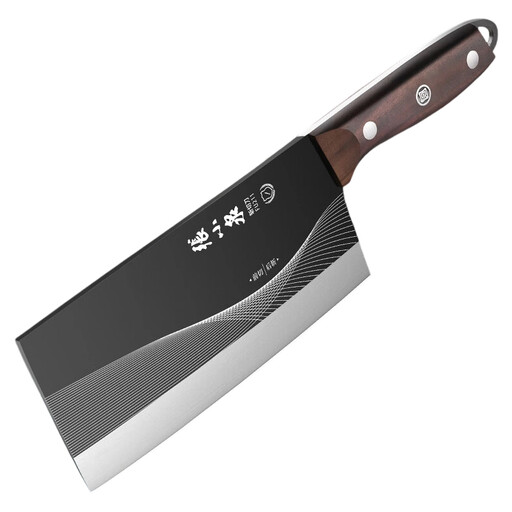
Why this fits the profile: This thicker bone knife is designed for a specific task: processing bones and tough cuts of meat. It is not a replacement for a chef’s knife.
The product name and design make it clear that this is for cutting bone, so you won’t choose it for fine chopping work.
Stainless steel construction and a thickened blade for the described bone-cutting task.
For a basic kit, two or three different types are often enough:
A multi-purpose kitchen knife is handy if you have limited space, but a specialised knife can be safer and more comfortable when you perform that task frequently.
We have compiled a full, up-to-date list of products that fully meet these strict selection criteria and comply with current European safety regulations.
Wash the knife according to the product instructions, dry it immediately and do not leave it soaking in water. Use a suitable chopping board and store the knife protected. Even stainless steel requires maintenance.
That depends on the steel, how often you use it, the ingredients, the chopping board and how you clean it. Cutting on glass or stone and using a dishwasher can dull the edge more quickly. Sharpen the knife when you need more pressure to achieve the same cut.
No. The right choice depends on your hand, cooking style and tasks. For everyday cooking, a chef’s knife or santoku knife may be sufficient. If you often cut bread, a bread knife is more useful; if you process bones, a cleaver or bone knife designed for that purpose is better. So always check the specifications and care instructions before you choose based on price or appearance.
