
Vandaag of morgen in huis

Kwaliteit gegarandeerd

Welkomstaanbiedingen ontgrendelen: GRATIS bezorging | Tot 80% korting | Gratis 30 dagen JoyPlus-proefperiode
Download de app
A kitchen knife may seem like a straightforward purchase, but the difference between a useful tool and a disappointing buy often comes down to the details. A knife may look sturdy in a product photo, yet the handle might not feel comfortable, the edge may become blunt quickly or the shape may not suit the way you cook.
For home chefs, cooking enthusiasts and professional cooks, three potential pitfalls are particularly important:
Marketing claims without clear specifications
Words such as “extra sharp” mean little if the manufacturer provides no information about the steel, sharpening angle or maintenance requirements. A brand’s own research might claim, for example, that a knife offers a certain improvement in sharpness, but this is not a universal guarantee for every user.
Choosing the wrong knife for the task
A chef’s knife is versatile, but it is not automatically suitable for bread. A santoku knife is useful for vegetables, herbs, fish and meat, while a bread knife with a serrated edge is better for cutting through crusts. A carving knife or cleaver has a different shape and balance again.
Ignoring maintenance
Even a stainless-steel kitchen knife can deteriorate more quickly if it is soaked for long periods, used on a hard chopping board or handled carelessly. “Dishwasher-safe” also does not always mean that its lifespan will be the same as with hand washing.
First, consider the type of work you do every day:
A blade measuring 16 to 20 cm is a practical range for many kitchens in the Netherlands. A 20 cm knife offers a larger cutting surface, but a compact 16 or 17 cm knife may be a better fit for a smaller chopping board or limited workspace.
Stainless steel is easy to maintain and less prone to visible corrosion. Some models use X50CrMoV15 high-carbon stainless steel. Always check the full product description, though: “stainless steel” without further details provides less information about hardness, flexibility and edge retention.
The sharpening angle affects how the knife feels when cutting. A smaller angle can produce a fine, sharp edge, but it also requires careful use. The product information for the Wüsthof Classic Ikon Santoku specifies a double bevel of 14 degrees. The manufacturer also states that laser-guided sharpening technology makes the knife 20% sharper than standard knives, according to its own claims. Treat this as a brand specification rather than a guaranteed result for every kitchen and user.
A good handle should fit securely and not feel slippery when your hands are damp. Look out for:
A knife weighing around 170 to 185 grams can feel sturdy without being unnecessarily heavy. Balance is still a personal preference, however: do you prefer a lightweight knife for quick preparation, or extra weight when working with larger ingredients?
Use a suitable wooden or plastic chopping board and avoid glass, stone and ceramic surfaces. Ideally, wash a kitchen knife by hand, dry it immediately and store it safely. Even when a product is described as dishwasher-safe, hand washing can help keep the handle, edge and finish in good condition for longer.
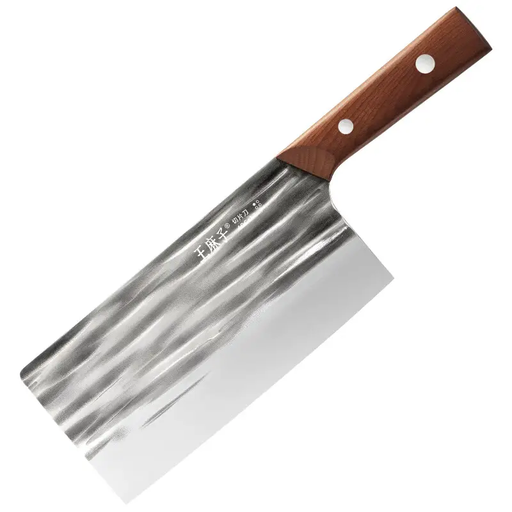
Why it suits this profile: This all-purpose kitchen knife is designed for everyday household use and for cutting meat, vegetables and fruit.
The description specifies the material, applications and hand washing for maintenance. This means you do not have to rely solely on a general sharpness claim.
Stainless-steel blade; ergonomic handle; suitable for a range of everyday kitchen tasks.

Why it suits this profile: A suitable choice for anyone who values a specified steel type, a 17 cm blade and a well-balanced santoku knife for a wide range of preparations.
The product information specifies X50CrMoV15 steel, a 14° double bevel and hand washing as the recommended cleaning method. The claimed improvement in sharpness comes from Wüsthof itself.
17 cm blade; synthetic POM handle; weight of approximately 170 grams; suitable for vegetables, fruit, fish and meat.
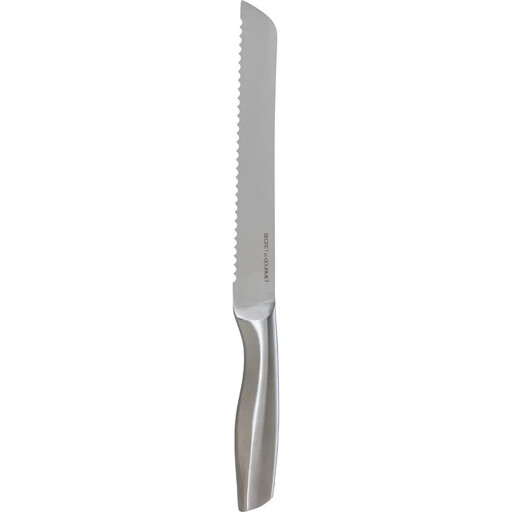
Why it suits this profile: This bread knife is designed for anyone who regularly cuts bread, baguettes or other products with a firm crust.
Choosing a dedicated bread knife prevents you from using a smooth-edged chef’s knife for hard crusts and soft bread, where it may not be suitable.
Stainless-steel construction; length of 34 cm; sturdy handle; described in the product information as dishwasher-safe.
We have put together a complete, up-to-date list of products that fully meet these strict selection criteria and the applicable European safety regulations.
A 16 to 20 cm chef’s knife or a santoku knife of approximately 17 cm is suitable for many everyday tasks. If you mainly cut bread, you will also need a bread knife. The right choice depends on the ingredients, workspace and the type of grip you prefer.
This depends on the steel, how the knife is used, the chopping board and maintenance. A knife will generally remain usable for longer if you do not use it on hard surfaces, do not put it in the dishwasher when hand washing is recommended, and have the edge sharpened in good time.
No. A more expensive model may provide more information about the steel, construction, balance and sharpening angle, but that does not automatically make it suitable for your kitchen. First compare the dimensions, handle, care instructions and intended use.
