
Vandaag of morgen in huis

Kwaliteit gegarandeerd

Welkomstaanbiedingen ontgrendelen: GRATIS bezorging | Tot 80% korting | Gratis 30 dagen JoyPlus-proefperiode
Download de app
A kitchen knife may seem like a straightforward purchase at first. Yet after a few months, many home cooks run into the same problems: a blunt blade, a handle that becomes slippery or a knife that feels too heavy for everyday use. Marketing terms such as “professional”, “Damascus” or “extra sharp” don’t tell you much on their own if the key specifications are missing.
With this buying guide, you’ll discover what to look for in a kitchen knife, chef’s knife, santoku knife or knife set. Then you’ll find some popular options for different cooking styles.
A sharp kitchen knife is a pleasure to use, but sharpness won’t last without proper care. So be sure to check:
A sharp edge can also be damaged more easily if you cut on glass, stone or metal. A wooden or plastic chopping board is usually a more practical choice.
A 20 cm kitchen knife gives you a generous blade for cabbage, vegetables and larger cuts of meat. However, a 16 cm blade may feel more comfortable for smaller hands or precise cutting. The right size depends on your chopping board, hand size and the dishes you make every day.
Pay attention to the weight distribution, too. A heavy cleaver is useful for tough ingredients, but it won’t necessarily be comfortable for finely chopping herbs.
A knife set may seem like good value, but some knives can end up unused in a drawer. So consider which pieces you actually need. A basic set often includes:
A knife block protects the blade better than storing knives loose, but it does take up space on the worktop.
Stainless steel is popular because it’s relatively easy to clean and resistant to rust. For example, the X50CrMoV15 designation appears on various Wüsthof knives. According to Wüsthof’s product description, some knives are forged from a single piece of steel. This can contribute to a sturdy construction, but it doesn’t, by itself, tell you how comfortable or durable a knife will be in your kitchen.
With Damascus steel, the visible pattern isn’t automatically proof of a better edge. Always check which steel is actually specified and whether information about hardness, sharpening angle and care is available.
The sharpening angle affects how a knife feels when cutting and how it needs to be maintained. Product information for various Wüsthof models specifies an angle of 14 degrees per side. A fine angle can make for precise cutting, but it calls for careful use and regular maintenance.
A hardness rating, expressed in HRC, can help when comparing knives. The Wüsthof Amici Chef's Knife, for example, is listed as 58 HRC. Use figures like these as part of your comparison, not as a guarantee of a longer lifespan on their own.
The broad side of a chef’s knife can also be handy for transferring chopped ingredients from the board to the pan. A serrated bread knife, on the other hand, is better suited to bread than a smooth-edged kitchen knife.
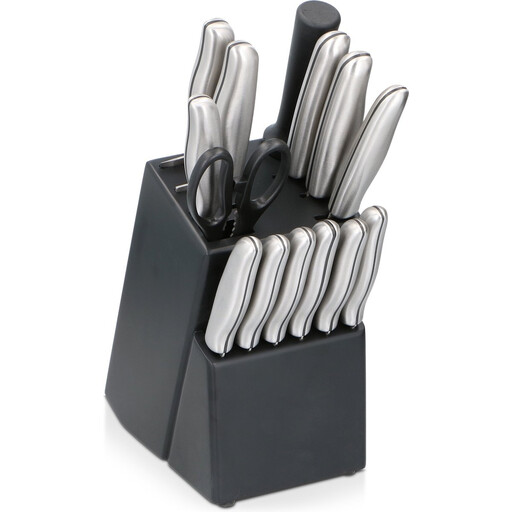
Why it suits this profile: A complete set is practical if you don’t yet own many kitchen knives and want to cover a range of cutting tasks.
The contents are clearly specified: 13 knives, a knife block and a pair of scissors. This lets you decide in advance which pieces you’ll actually use.
15 pieces, including a chef’s knife, bread knife, santoku knife, steak knives and knife block. According to the product information, the knives are made from stainless steel.
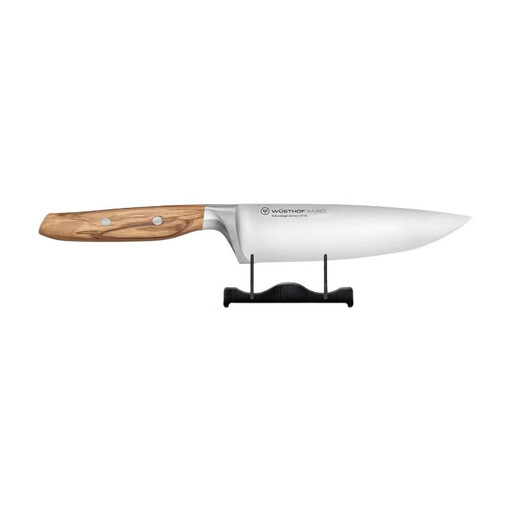
Why it suits this profile: This versatile chef’s knife is ideal if you want one sturdy knife for vegetables, herbs, meat and larger ingredients.
The product information gives specific details: X50CrMoV15 stainless steel, a 20 cm blade, 58 HRC and a 14-degree sharpening angle.
A broad blade for cutting and scooping, a half bolster and an olive wood handle, according to the product description.
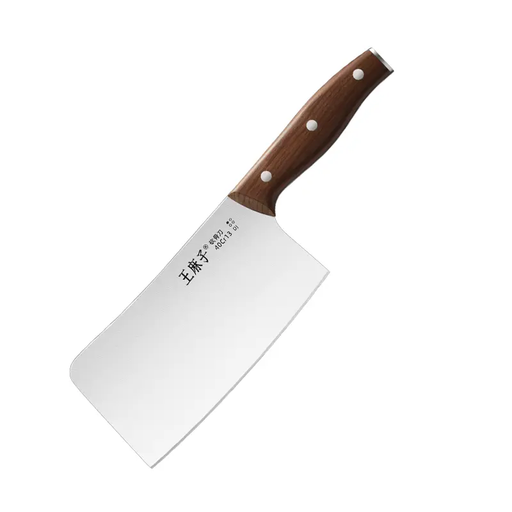
Why it suits this profile: A cleaver is designed for tough cutting tasks such as poultry, ribs and other ingredients that are less suited to a standard chef’s knife.
The product description specifically identifies it as a cleaver for bones, ribs and poultry. So don’t use it as an all-purpose vegetable or filleting knife.
The product information specifies a forged design, full-tang construction and a non-slip handle. Check the exact dimensions and care instructions before buying.
We’ve put together a full, up-to-date list of products that meet these strict selection criteria and current European safety regulations.
For best results, wash your kitchen knife by hand with warm water and mild washing-up liquid. Dry it straight away and don’t leave it soaking in water. For a knife set, always check whether the manufacturer says it’s dishwasher-safe. Hand-washing is explicitly recommended for the Wüsthof Classic Chef's Knife; instructions may vary for other models.
Use a honing rod for regular upkeep and a whetstone when the blade starts to feel noticeably blunt. An electric or manual knife sharpener can be handy, but first check that its sharpening angle is suitable for your knife. Store knives in a knife block, protective sheath or drawer insert, and keep them out of children’s reach.
A 16 to 20 cm chef’s knife is a practical choice for many households. Choose 16 cm for greater manoeuvrability or 20 cm for larger vegetables, cuts of meat and a more generous cutting surface.
It depends on how you use it, your chopping board and how well you maintain it. A knife used every day may need regular honing with a honing rod. Sharpen it with a stone or suitable sharpener only when honing is no longer enough.
Not always. Some product descriptions say that a knife can go in the dishwasher, while hand-washing is recommended to help it last longer. So always check the specific care instructions for the kitchen knife you choose.
