
Vandaag of morgen in huis

Kwaliteit gegarandeerd

Welkomstaanbiedingen ontgrendelen: GRATIS bezorging | Tot 80% korting | Gratis 30 dagen JoyPlus-proefperiode
Download de app
A good kitchen knife doesn't have to be expensive or flashy. What matters most is that it suits what you cook at home, feels comfortable in your hand, and is easy to store safely. However, if you only focus on words like "professional", "extra sharp" or "Damascus", you could end up buying a knife that's less suited to daily use.
A set with lots of pieces looks appealing, but not every knife will get regular use. So check exactly which knives are included. A practical basic set usually consists of a chef's knife, bread knife and vegetable knife. For households that often serve meat, steak knives can be useful.
Also pay attention to the difference between the number of pieces and the number of knives. For example, a set might count a knife block, kitchen scissors and a sharpening steel as separate items. That doesn't automatically tell you anything about how useful the knives themselves are.
According to a brand's product description, a knife can be called sharp, but its actual suitability also depends on the blade shape, balance and intended use. A santoku knife is handy for vegetables, herbs and cutting boneless meat. A bread knife, on the other hand, needs a serrated blade to cut through crusts without squashing the bread.
Also, don't use a kitchen knife for frozen food, bones or packaging. You need different tools for those jobs. A utility knife, such as a WORKPRO model, is designed for paper, cardboard and packaging materials and shouldn't be used for food preparation.
A knife left loose in a kitchen drawer can get damaged and poses a safety risk. A knife block keeps knives neatly together, but you should also take the cleaning instructions into account when choosing one. Not every stainless steel knife is dishwasher-safe. For example, the 5five knife set states that it is not dishwasher-proof, while other individual models may be dishwasher-safe according to the product information.
Stainless steel is popular because it's relatively easy to maintain and less prone to rust than untreated carbon steel. However, the composition, hardness and finish vary from product to product. So don't just look at the term "stainless steel", but also consider:
A Damascus finish can give a decorative pattern. The name alone doesn't prove how long a knife stays sharp or how it feels in the hand.
Choose the type of knife based on your cooking routine:
For baby food, small tools are practical, but always use them under adult supervision. A baby knife is not a toy and should be stored out of reach of children after use.
A handle made of plastic, ABS or rubber can be easy to clean. Wood can feel nice but often requires more careful maintenance. Check that the handle fits securely and that you have enough control when cutting wet vegetables.
A longer knife isn't automatically more convenient. In a smaller kitchen or with a compact chopping board, a blade of around 16 to 18 cm can be more practical than a much longer model.
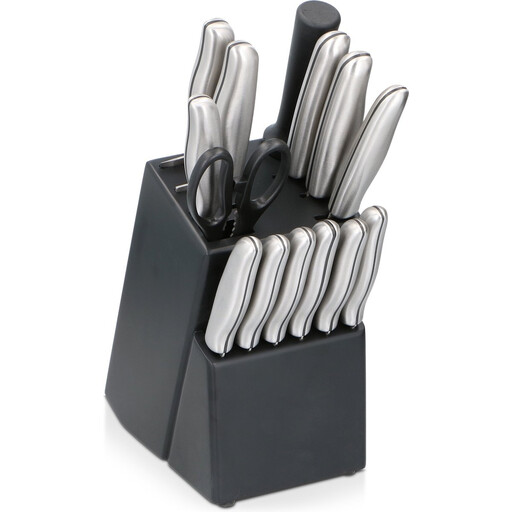
Why this fits the profile: This set offers multiple knife shapes for everyday tasks and includes a knife block for tidy storage.
The contents are clearly described: 13 knives, a knife block and a pair of scissors. So you know exactly what you're getting.
Stainless steel knives; the set includes a chef's knife, bread knife, steak knives and a santoku knife.
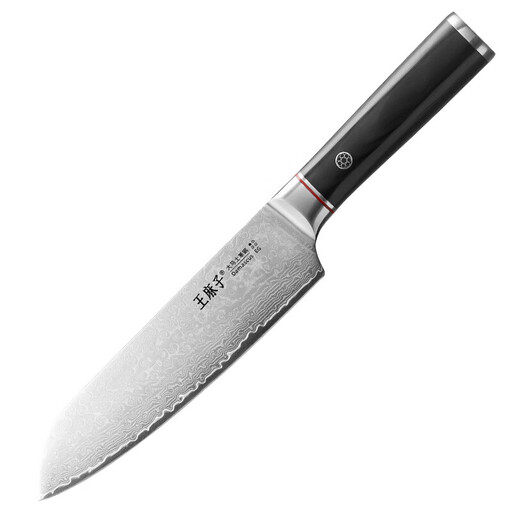
Why this fits the profile: This santoku knife is designed for home cooks who want one versatile knife for vegetables and boneless meat.
The intended use is more specific than that of a full set. So you're not buying unused knives if you mainly need one main knife.
Damascus steel finish according to the product name; suitable as a multi-purpose knife for cutting meat and vegetables.
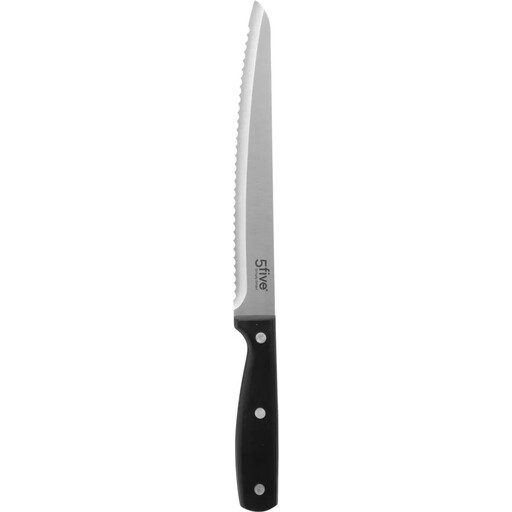
Why this fits the profile: A separate bread knife makes sense for households that often cut bread, baguettes or pastries.
You're choosing a serrated blade for a specific purpose, rather than a general set that might include unused items.
Stainless steel blade; length of 33 cm; according to the product information, it is dishwasher-safe.
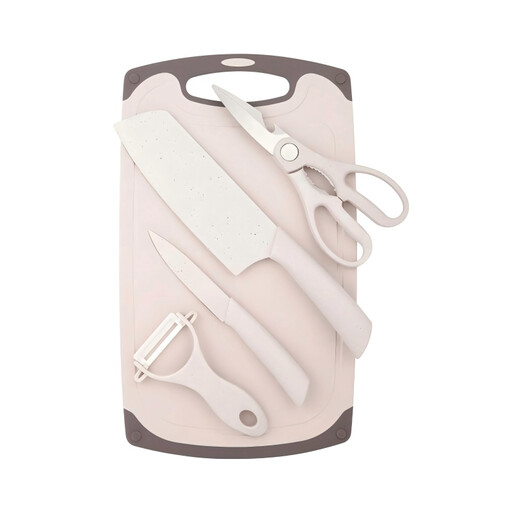
Why this fits the profile: The set combines a small chopping board, knives, a peeler and safety scissors for preparing soft baby food.
The product description mentions the protective sheaths and compact size. Still, store the items securely and use them only under supervision.
The set includes five pieces for food preparation and is made from wheat straw fibre and food-grade PP, according to the product information.
We've put together a full, up-to-date list of products that fully meet these strict selection criteria and comply with current European safety regulations.
For most households, a chef's knife or santoku knife, a bread knife and a small vegetable or paring knife are sufficient. Add steak knives if you often serve meat at the table. A complete kitchen knife set is especially practical when you need multiple knife shapes and a dedicated storage place.
That depends on the steel, the chopping board, usage and maintenance. A knife generally stays usable for longer if you don't cut bones, frozen products or packaging, and you maintain the blade regularly and correctly. The term "sharp" in a product description is not a guarantee of a specific lifespan.
Sometimes. Always check the product information. Some models are offered as dishwasher-safe, while others must be washed by hand. Hand washing and immediate drying can help limit discolouration, dull spots and wear to the handle or blade.
