
Vandaag of morgen in huis

Kwaliteit gegarandeerd

Welkomstaanbiedingen ontgrendelen: GRATIS bezorging | Tot 80% korting | Gratis 30 dagen JoyPlus-proefperiode
Download de app
Choosing a kitchen knife might seem straightforward, but the options vary greatly in size, steel type, handle and maintenance. A cheap knife can turn out to be less suitable for daily use, while an expensive model won't automatically suit your cutting style. For home chefs, hobby cooks and professional chefs, three questions are particularly important: which ingredients do you cut, how often do you use the knife, and how much maintenance are you willing to do?
A sharp kitchen knife cuts well, but sharpness isn't the only criterion. The angle of the edge, the hardness of the steel and how you maintain the knife all help determine how long the edge stays usable. Terms like "Damascus", "professional" or "extra sharp" say very little on their own if the product description doesn't give clear information about material, dimensions or maintenance.
A 20 cm chef's knife offers plenty of cutting surface, but can be awkward on a small worktop or for fine work. A 16 cm chef's knife is often easier to control for smaller hands and everyday preparations. Also pay attention to weight: a knife weighing 184 grams feels very different to a heavy meat knife or cleaver.
Some knives are described as dishwasher-safe in the product description, but hand washing is usually recommended to keep the edge and handle in good condition for longer. Hot water, dishwasher tablets and contact with other cutlery can damage the edge. Always check the care instructions before you buy a kitchen knife.
For general use, these sizes are practical:
A chef's knife typically has a curved edge that allows you to rock while cutting. A Santoku knife often has a straighter edge and a wide blade. This works well for chopping, slicing and moving ingredients. A meat knife is usually longer and narrower, and is mainly intended for portioning cooked or raw meat. Don't automatically use a cleaver for bones; check the specific product information for this.
Stainless steel is practical for daily use because it resists rust with normal care. A frequently mentioned steel type for Wüsthof knives is X50CrMoV15. According to the manufacturer's product descriptions, this steel is used for various chef's knives and Santoku knives.
When looking at a stainless steel kitchen knife, check:
A low cutting angle can, according to the product information, contribute to a fine edge, but also requires careful use. Always cut on wood or plastic and avoid glass, stone and metal.
An ergonomic handle should feel stable and comfortable above all. Plastic is easy to clean; synthetic or glass-fibre reinforced materials can offer extra grip. A non-slip texture is useful when you work a lot or regularly handle wet ingredients.
Also check whether the knife is suitable for left- and right-handed use, how the finger guard is designed, and whether the weight suits your cutting style.
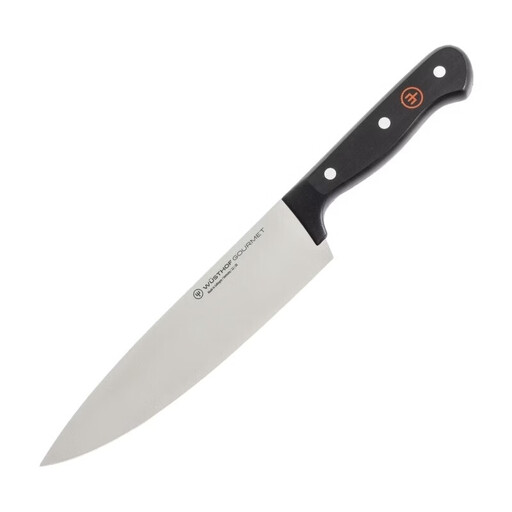
Why this fits the profile: This 20 cm chef's knife is designed for slicing, dicing and chopping. It's a practical choice if you're looking for one versatile kitchen knife for vegetables, herbs, meat and fish.
The product information states blade length, material and weight, so you're not relying solely on marketing terms. Hand washing is recommended despite the stated dishwasher safety.
Stainless steel blade, 20 cm length, plastic handle and a stated knife weight of 184 grams.
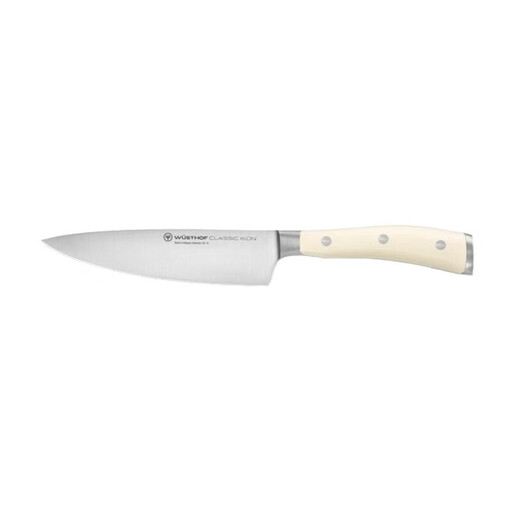
Why this fits the profile: The 16 cm length offers control for fine cutting work. According to the product description, the knife is suitable for herbs, vegetables, fruit, meat and poultry.
The stated full tang and synthetic handle give concrete information about the construction. The shorter length prevents you from automatically choosing a knife that's too large.
Forged from stainless steel, 16 cm blade, full tang and a handle with three rivets according to the product data.
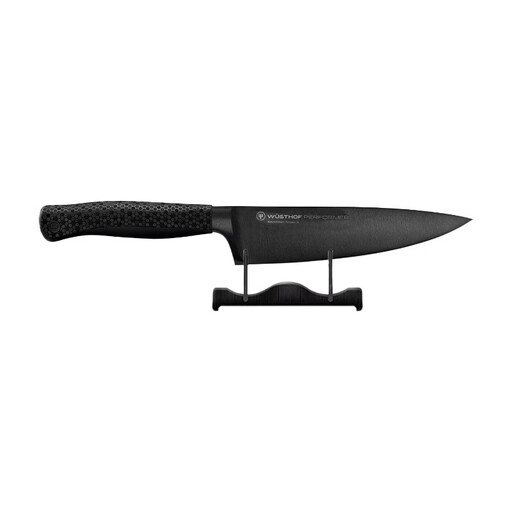
Why this fits the profile: The 20 cm length and ergonomic grip are, according to the product information, aimed at regular use with vegetables, herbs, fruit and meat.
The product description mentions X50CrMoV15 steel, a DLC coating and a handle with a hexagonal grip. This means the material and grip are described more clearly than with a general claim about sharpness.
20 cm blade, X50CrMoV15 stainless steel and a glass-fibre reinforced handle according to the product data.

Why this fits the profile: This 17 cm Santoku knife suits those who prepare lots of vegetables, herbs, fruit, fish and meat and prefer a wide, relatively compact blade shape.
The product data states the steel type, blade length, handle material and hand washing as recommended care. Check these points before choosing a decorative coating or pattern.
17 cm blade, high-carbon stainless steel and a synthetic handle according to the product description.
We've put together a full, up-to-date list of products that fully meet these strict selection criteria and comply with current European safety regulations.
A kitchen knife stays usable when you use and store it properly. Follow this routine:
The statutory guarantee for consumers in the European Union is at least two years. This is separate from normal wear of an edge or damage caused by incorrect use.
A chef's knife of 16 to 20 cm is a practical choice for many households. Choose 16 cm when control is more important than a large cutting surface. A 20 cm knife suits larger vegetables and sweeping cutting motions better. A Santoku knife is an alternative for those who mainly chop and cut ingredients straight down.
That depends on the steel, the chopping board, how often you use it and your cutting technique. As soon as the knife needs more pressure or glides through soft ingredients instead of cutting, maintenance is needed. Regular honing can support the edge, but doesn't replace professional or careful sharpening when the knife is truly blunt.
Some models are described as dishwasher-safe in the product description. However, hand washing is usually a more cautious choice for the blade, the edge and the handle. Always check the care instructions for the specific model before putting it in the dishwasher.
