
Vandaag of morgen in huis

Kwaliteit gegarandeerd

Welkomstaanbiedingen ontgrendelen: GRATIS bezorging | Tot 80% korting | Gratis 30 dagen JoyPlus-proefperiode
Download de app
A kitchen knife has to cope with a lot every day. You use it for vegetables, herbs, fruit, fish and meat, often at the same time. Yet many buyers choose mainly based on a shiny appearance, a low price or a claim such as “extra sharp”. This can result in a knife that becomes blunt quickly, feels uncomfortable or is difficult to maintain.
Pay particular attention to these three common pitfalls:
A chef’s knife measuring 18 to 20 cm is suitable for larger vegetables, herbs and cuts of meat. It gives you room for a smooth cutting motion, but also requires sufficient workspace and control.
A kitchen knife measuring 16 cm is more manoeuvrable. This size suits home cooks who often chop onions, peppers, apples, herbs and smaller cuts of meat. For many everyday tasks, it offers a practical middle ground.
A santoku knife usually has a broader, straighter blade and is designed for chopping and finely slicing. It is a useful knife for vegetables, fruit, fish and meat, but the cutting technique differs from that used with a classic German kitchen knife. According to the product description, dimples in the blade can help prevent slices of food from sticking.
A stainless steel kitchen knife is resistant to rust under normal use, but that does not mean it requires no maintenance. X50CrMoV15 is a type of steel used in several Wüsthof models. With other brands, always check whether the type of steel is actually specified.
The sharpening angle is often given per side. A knife with 14 degrees per side has a fine edge. This can be ideal for precise cutting, but such an edge requires careful use. Use a wooden or plastic chopping board and avoid glass, stone and metal.
According to Wüsthof’s product description, the sharpness of certain models is achieved through laser-controlled sharpening and manual finishing of the edge. This is a claim made in the brand’s product information, not a universal guarantee for every user or application.
A kitchen knife with an ergonomic handle should sit securely in your hand without requiring you to grip it tightly. Consider the shape, material and transition between the handle and blade. A plastic or synthetic handle is generally easy to clean. A wooden handle can feel comfortable, but often requires more care around moisture.
With a full-tang construction, the steel extends through the handle. This can contribute to balance and strength. A half bolster leaves more of the edge accessible for sharpening. Also check whether the knife is suitable for both left- and right-handed use.
The following recommendations are based on verifiable details from the product descriptions, such as blade length, type of steel, handle material and care instructions.
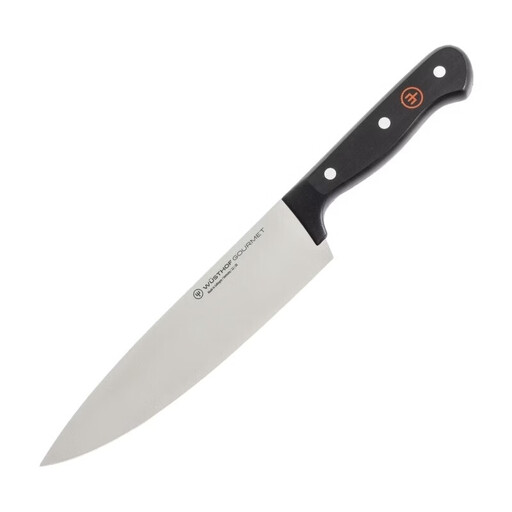
Why it suits this profile: This 20 cm chef’s knife is designed for everyday slicing, chopping and dicing. Its lightweight design and plastic handle may suit anyone looking for a first versatile knife.
The product information specifies the blade material, length and handle material. This means you do not have to rely solely on terms such as “sharp” or “professional”.
20 cm stainless steel blade, plastic handle and full-tang construction according to the product description. Hand washing is recommended for a longer service life.
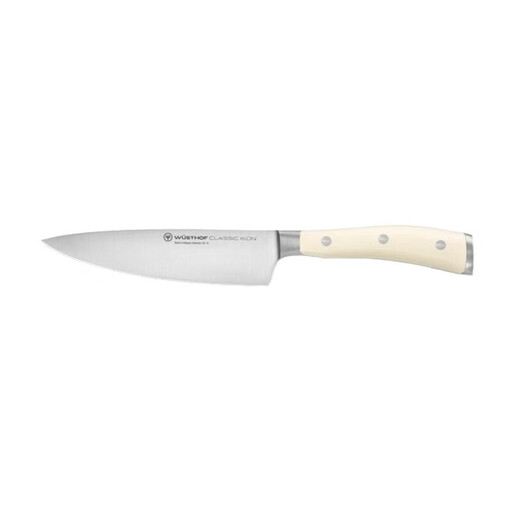
Why it suits this profile: The 16 cm length offers control during everyday food preparation. The synthetic handle with three rivets and finger guard is designed to provide a secure grip.
The description specifies a blade made from a single piece of steel and a full-tang construction. This provides more concrete information than simply referring to a luxurious appearance.
Stainless steel, 16 cm blade, synthetic handle and full tang. According to the product information, the knife is forged in Germany.

Why it suits this profile: The santoku shape suits anyone who prepares lots of vegetables, herbs, fruit and fish, and prefers a short, broad blade.
The description specifies X50CrMoV15 steel, a 17 cm blade and a hand-washing recommendation. This makes the key considerations clear in advance.
17 cm blade, synthetic handle, partially protected heel and double-sided edge. According to Wüsthof’s own product information, the knife has a 14-degree edge per side.
A kitchen knife remains useful for longer when you handle it correctly:
We have put together a complete, up-to-date list of products that fully meet these strict selection criteria and the applicable European safety regulations.
A 16 to 20 cm chef’s knife is generally versatile enough for vegetables, herbs, fruit and meat. Choose 16 cm when control and manoeuvrability are important. A 20 cm blade offers more cutting space for larger ingredients.
This depends on use, the steel, the chopping board and your technique. Use a honing steel when the edge no longer feels as smooth. If honing no longer helps, sharpening is needed. Do not cut on hard surfaces and never use a knife as a lever.
Not necessarily. For most households, a chef’s knife, small paring knife and, optionally, a bread knife are sufficient. A complete set is mainly practical when you regularly use several knife shapes and have enough safe storage space.
