
Vandaag of morgen in huis

Kwaliteit gegarandeerd

Welkomstaanbiedingen ontgrendelen: GRATIS bezorging | Tot 80% korting | Gratis 30 dagen JoyPlus-proefperiode
Download de app
A good set of kitchen knives doesn’t have to be large or expensive. Yet many people buy a knife set based on a shiny appearance, a high number of pieces, or terms like “extra sharp”. As a result, knives end up unused in a drawer, rust faster than expected, or prove difficult to maintain.
With this practical buying guide, you’ll see what to look for in a kitchen knife set, which knives you actually need, and which type suits your cooking style.
A knife set with 13 or 15 pieces may look appealing, but check what’s actually in the box. Sometimes a large portion consists of steak knives, accessories, or knives you rarely use. For everyday cooking, a chef’s knife, bread knife, small paring knife, and possibly a santoku knife are often more important than a long range of specialised knives.
With stainless steel kitchen knives, the exact type of steel isn’t always stated. Stainless steel helps limit corrosion, but that doesn’t mean a knife will never develop stains or rust. Prolonged contact with water, acidic ingredients, and dishwasher detergents can affect its lifespan. Therefore, dry knives immediately after washing.
The sharpness at purchase is just one aspect. The shape of the blade, how you use the knife, and its maintenance all determine how pleasant it remains to cut with. A bread knife with a serrated blade is used differently from a chef’s knife. Also, don’t use a kitchen knife on glass, stone, or any other hard surface that could damage the edge.
Check whether the product description clearly states the blade material. Stainless steel is practical for daily use and relatively easy to clean. Also look at the blade’s finish and the connection between the blade and handle. A sturdy construction and a handle that doesn’t feel loose are more important than a decorative coating.
Also pay attention to brand claims. When a manufacturer talks about long-lasting sharpness or extra durability, treat this as a brand claim rather than a guaranteed result. The concrete material specification and care instructions are easier to verify.
The right length depends on your chopping board, hand, and cooking style.
A longer knife isn’t automatically more convenient. In a compact British kitchen, a knife of around 18 cm may actually be easier to control than a much longer model.
Check before purchase whether the knife is dishwasher safe. This varies by product. The 5five Forged Stainless Steel Santoku Knife is listed as dishwasher safe according to the product information. The 5five Stainless Steel Knife Set is, according to the same information, not suitable for the dishwasher. The Secret de Gourmet Steak Knife Set must be washed by hand.
A knife set with a knife block helps keep knives stored separately and tidily. Do check whether the block offers sufficient ventilation and space, and whether it sits on a stable surface. Don’t soak a knife block in water for long periods; follow the manufacturer’s care instructions.
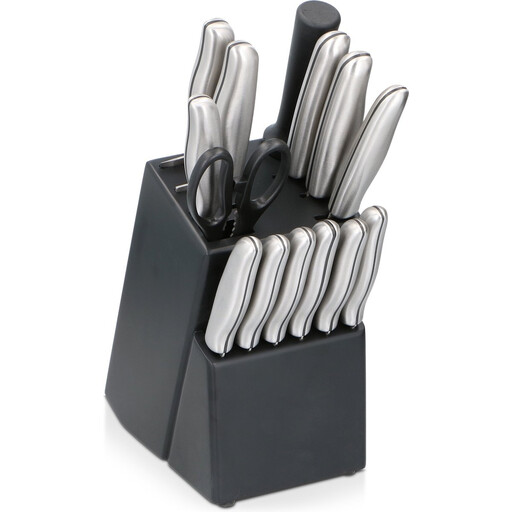
Why this suits the profile: This complete set is practical for anyone wanting to equip their kitchen in one go. The package contains 13 knives, a knife block, and a pair of scissors, including a chef’s knife, bread knife, steak knives, and santoku knife.
The contents are clearly described, so you can check which knives you’re getting beforehand. The block prevents the knives from lying loose in a drawer.
15-piece package, stainless steel knives according to the product information, and a dedicated storage space.
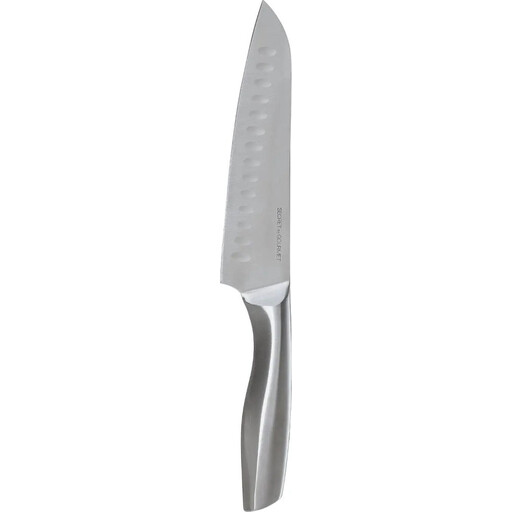
Why this suits the profile: A single santoku knife suits cooks who prefer to choose one specialised main knife rather than a large kitchen knife set. The blade is 18 cm long and the knife weighs 180 grams.
You don’t pay for knives you won’t use. What’s more, the product information states a fully forged, one-piece construction.
18 cm blade, stainless steel, and listed as dishwasher safe according to the product information.
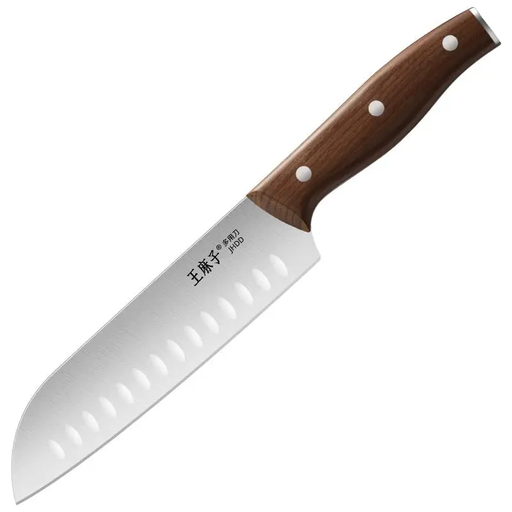
Why this suits the profile: This type of cleaver is intended for users who regularly slice, shred, or chop and want a wider blade than a standard chef’s knife.
The choice is focused on one specific task. Use a cleaver only for what it’s designed for, and check the product information before cutting through bones.
Designed as a multi-purpose kitchen cleaver for slicing, shredding, and chopping; blade size 175 mm according to the product listing.
We’ve put together a full, up-to-date list of products that fully meet these strict selection criteria and comply with current European safety regulations.
For most households, a chef’s knife, bread knife, and a small paring or fruit knife are sufficient. If you often chop vegetables finely, you could add a santoku knife. Steak knives are mainly useful if you regularly serve meat at the table.
This varies by model. Some products are listed as dishwasher safe, while others must only be washed by hand. Always check the product page. Hand washing and drying immediately can help limit discolouration, corrosion, and wear.
That depends on usage, the blade, and your chopping board. Pay attention to how the knife moves through ingredients: if you need more pressure or the blade feels less precise, maintenance may be needed. Sharpening isn’t on a fixed schedule; choose a method that suits the knife and follow the manufacturer’s instructions.
