
Vandaag of morgen in huis

Kwaliteit gegarandeerd

Welkomstaanbiedingen ontgrendelen: GRATIS bezorging | Tot 80% korting | Gratis 30 dagen JoyPlus-proefperiode
Download de app
At first glance, choosing a kitchen knife might seem straightforward. However, knives vary greatly in size, material, balance and maintenance. A budget-friendly model can be perfectly adequate for everyday chopping, while a keen home cook might be better off with a forged chef’s knife or a santoku knife. If you only focus on words like “extra sharp” or “professional”, you risk buying a knife that doesn’t feel comfortable in your hand or quickly loses its cutting edge.
Terms like “ultra-sharp”, “professional” and “stays sharp forever” mean very little without technical details. Instead, check the blade length, the type of steel, the handle and the care instructions. A product description that mentions, for example, X50CrMoV15 steel, a blade length of 16 or 20 cm and a grind angle gives you far more to go on than a vague claim.
Claims about sharpness or long-lasting performance come from the brand itself. For instance, Wüsthof states in its own product information that certain knives with laser-guided sharpening are on average 20% sharper than standard knives. That is a brand claim, not a universal comparison for all kitchen knives.
A chef’s knife is versatile, but it isn’t ideal for every ingredient. A bread knife with a serrated edge is designed for crusts. A steak knife is mainly intended for use at the table. A carving knife often has a longer, narrower blade for slicing. A vegetable knife or santoku knife works well for vegetables, herbs and smaller cutting tasks.
Buying a large knife because it looks impressive can actually be awkward in a compact kitchen. So, consider your chopping board, storage space and the ingredients you typically prepare.
Some stainless steel kitchen knives are described as suitable for the dishwasher. Yet many manufacturers recommend hand washing to keep the edge, coating and handle in good condition for longer. Heat, dishwasher detergent and contact with other cutlery can all put strain on the blade.
A knife that isn’t dishwasher-safe, such as the Secret de Gourmet steak knife set, must be washed by hand. That takes a little more time, but it prevents you from using a purchase incorrectly.
For a general-purpose chef’s knife, a blade of 16 to 20 cm is a good choice for most home cooks. A 16 cm knife is nimble and suitable for smaller chopping boards. A 20 cm chef’s knife offers more length for large vegetables, meat and herbs.
A santoku knife usually has a wider, relatively compact blade and is good for chopping and slicing. A bread knife is longer and has a serrated edge. Also check whether the product information states the total length or just the blade length – these measurements are not the same.
Stainless steel is popular because it is relatively easy to maintain and more resistant to discolouration than some carbon steel varieties. That doesn’t mean a knife needs no care at all. Rinsing, drying and storing it correctly are still important.
Some Wüsthof knives specify X50CrMoV15 steel. The Wüsthof Amici also states a hardness of 58 HRC and a grind angle of 14 degrees per side. Details like these help with comparisons, but a higher hardness isn’t automatically more practical for everyone. A very fine edge requires careful use and regular maintenance.
A sturdy handle should fit your hand well. Pay attention to the material, the grip when your hands are wet, and the transition between the blade and handle. A full-tang construction can contribute to balance and sturdiness; always check whether this is actually stated in the product specifications.
Use a wooden or plastic chopping board and avoid glass, stone and metal. Store a kitchen knife in a block, protective sheath or drawer insert. A honing steel can realign the edge between uses, while a whetstone or professional sharpening service may be needed when the knife becomes blunt.
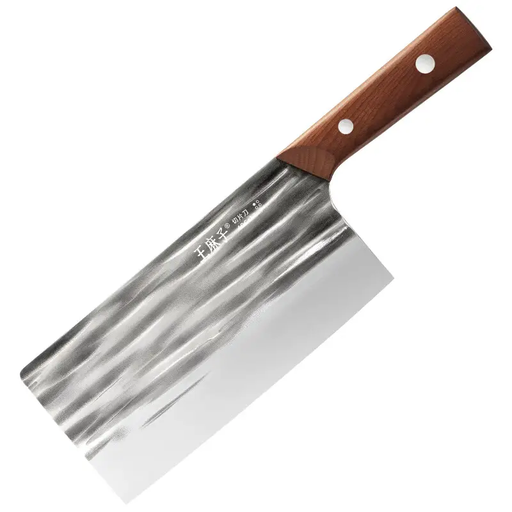
Why this fits the profile: A versatile stainless steel kitchen knife for everyday cutting of meat, vegetables and fruit, without needing a full set straight away.
The product information mentions specific uses and care: hand wash, dry and do not soak for long periods. This makes the usage expectations clear.
Stainless steel blade, ergonomic handle and suitable for meat, vegetables and fruit.
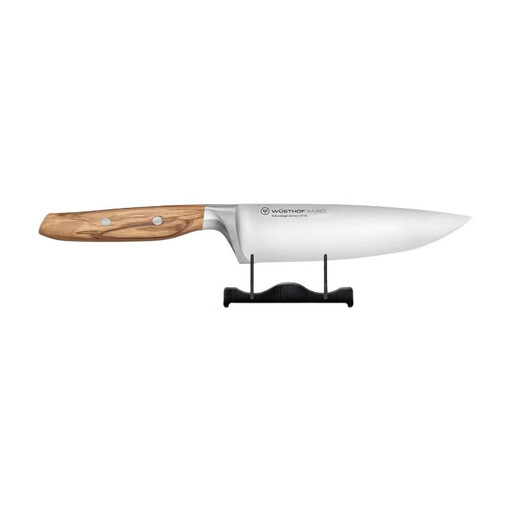
Why this fits the profile: This forged chef’s knife is aimed at users who value steel information, balance and precise cutting during regular cooking.
The specifications list X50CrMoV15 steel, 58 HRC, a 14-degree edge per side and a 20 cm blade.
Forged from one piece, wide blade for transferring ingredients and suitable for vegetables, meat and herbs.
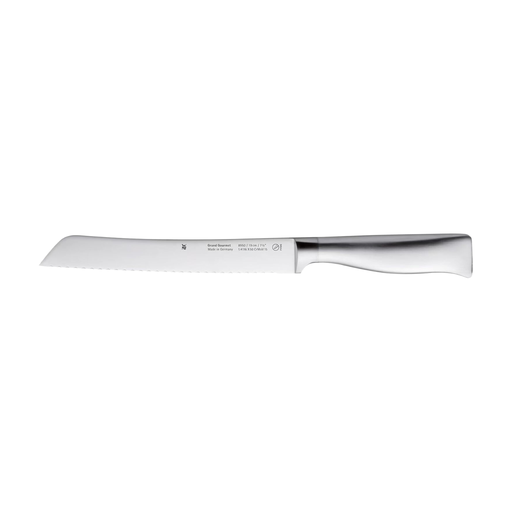
Why this fits the profile: A long bread knife makes sense for households that often cut bread, rolls or baked goods with a crust.
It is clearly specified as a bread knife, with a 32 cm blade and double serration. It is not dishwasher-safe; hand washing is required.
Serrated stainless steel blade, Cromargan 18/10 handle and suitable for different types of bread.
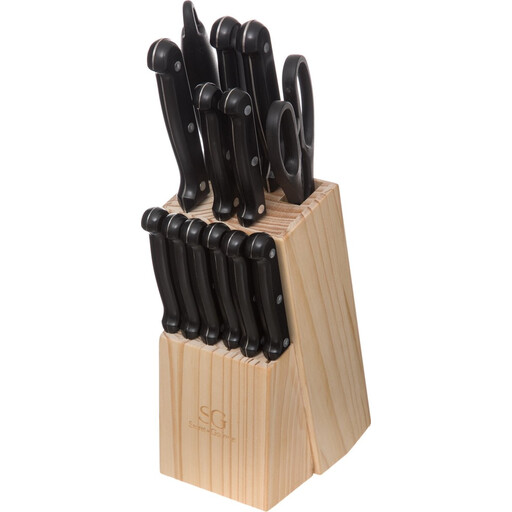
Why this fits the profile: This kitchen knife set includes a chef’s knife, bread knife, six steak knives, smaller knives, scissors and a sharpener.
The contents of the set are clearly described. You know in advance which knives and accessories are included; the set is not dishwasher-safe.
13 pieces, including a wooden block and sharpener; suitable for households that combine different cutting tasks.
We’ve put together a full, up-to-date list of products that fully meet these strict selection criteria and comply with current European safety regulations.
A chef’s knife of 16 to 20 cm is a practical basic choice for many households. You can use it to cut vegetables, herbs, meat and fruit. If you mainly prepare vegetables, you might also consider a santoku knife. For bread and hard crusts, a separate bread knife is more suitable.
That depends on use, the steel, your chopping board and your technique. A honing steel can maintain the edge between uses, but it won’t make a blunt knife sharp again. Sharpen the knife when it no longer glides smoothly through ingredients and you have to apply more force. Follow the manufacturer’s care instructions.
A set can be practical if you need a chef’s knife, bread knife, steak knives and accessories all at once. If you mainly need one type of knife, a single kitchen knife can be better value and more targeted. Always compare the actual contents, materials, dishwasher information and storage before you decide.
