
Vandaag of morgen in huis

Kwaliteit gegarandeerd

Welkomstaanbiedingen ontgrendelen: GRATIS bezorging | Tot 80% korting | Gratis 30 dagen JoyPlus-proefperiode
Download de app
A good kitchen knife makes everyday cooking easier to manage. Yet many people choose a knife based on words such as “razor-sharp”, “professional” or “rust-resistant”. These claims only mean something when you can check the specifications behind them. So look at the material, dimensions, handle and care instructions.
A razor-sharp kitchen knife is a pleasure to use, but sharpness alone doesn’t determine how long a knife will stay in good condition. The hardness of the steel, the sharpening angle and how you use the knife all play a part. A thin knife is handy for vegetables, while a heavy cleaver is designed for different jobs.
A kitchen knife set can look appealing because you get several knives at once. But most households mainly use a chef’s knife, a paring knife, a bread knife and a small fruit knife. So check which knives are actually included before you buy. A set with a carving knife or cleaver is most useful if you regularly prepare meat, poultry or larger ingredients.
Not every stainless steel kitchen knife is dishwasher-safe. Some product descriptions say a knife can go in the dishwasher, while others recommend hand washing and drying it straight away. Wooden handles need extra care: soaking them for too long can damage the material and affect the join.
Stainless steel is practical for everyday use and more resistant to stains and corrosion than ordinary carbon steel. Also check the exact type of steel, if it’s listed. For example, the description of the 5-piece knife set specifies 1.4116 high-carbon steel. That’s a detail you can verify, but the cutting performance also depends on the sharpening and care.
Be wary of marketing claims. If a brand describes a blade as “extremely sharp” or “razor-sharp”, don’t automatically treat this as a guaranteed result. According to the brand’s own product description, the edge is designed for precise cutting. Always check the specifications and care instructions on the product page.
For many households, a chef’s knife measuring around 18 to 20 cm is a versatile choice. It gives you enough cutting space for vegetables, herbs and meat without being so large that it becomes unwieldy.
A Santoku knife usually has a wider, relatively straight blade and is suitable for slicing and finely chopping. A paring knife or fruit knife is smaller and gives you more control with small ingredients. A bread knife has a serrated blade, while a carving knife is mainly designed for long, even slices. Use a heavy cleaver for tough ingredients; don’t use it as an all-purpose knife unless the product description says it’s suitable.
A kitchen knife with a wooden handle can feel comfortable in your hand, but it usually needs to be hand washed and dried thoroughly. A plastic or all-stainless-steel handle is often easier to keep clean. Look for an anti-slip grip, a secure join and good balance between the handle and blade.
Also check whether the product is dishwasher-safe. If hand washing is recommended, wash the knife promptly, dry it straight away and store it safely. Use a suitable wooden or plastic chopping board; glass and stone can wear down the edge more quickly.
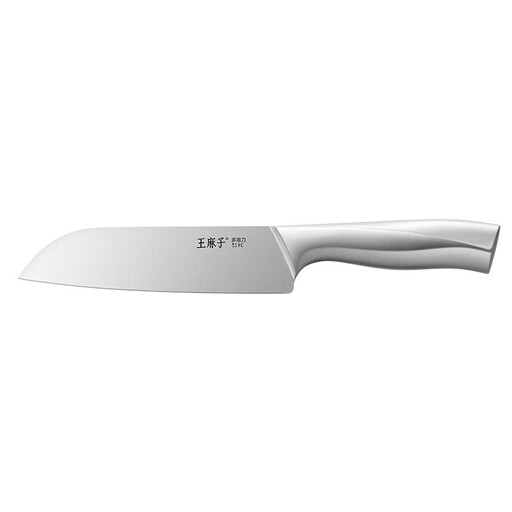
Why it suits this profile: According to its product name, this compact kitchen knife is designed for fruit, vegetables and smaller preparations. It’s a suitable choice for students, first-time buyers and households that don’t yet need an extensive knife set.
Rather than buying a large set that may include knives you never use, you get a small model for familiar everyday tasks.
Compact size; designed for fruit, vegetables and small portions; an easy addition to an existing chef’s knife.
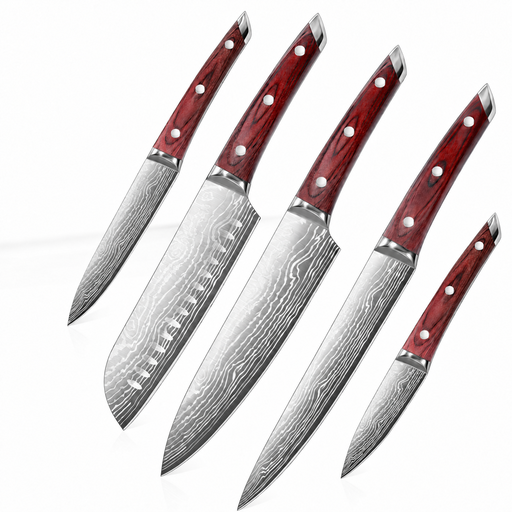
Why it suits this profile: According to the product description, the set includes a chef’s knife, Santoku knife, carving knife, utility knife and paring knife. The stated 15° sharpening angle and 1.4116 steel give buyers concrete specifications to consider.
The contents are clearly listed, so you can check in advance whether the five knife styles suit the way you cook.
Five different knives; high-carbon stainless steel; full tang and a red Pakka wood handle, according to the product information.
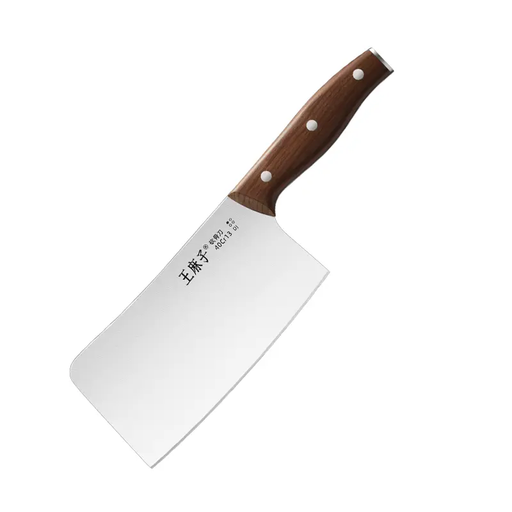
Why it suits this profile: According to the product description, this heavy cleaver is designed for bones, ribs and poultry. It’s a good fit for anyone who regularly prepares tough ingredients and needs a knife made for the job.
You use a cleaver for a task it’s designed for, rather than putting unnecessary strain on a lightweight all-purpose knife.
Forged construction, according to the product description; solid wooden handle with an anti-slip grip; designed for bones, ribs and poultry.
We’ve put together a complete, up-to-date list of products that meet these strict selection criteria and the applicable European safety regulations.
For most households, a chef’s knife, a small paring or fruit knife and a bread knife are enough. Add a Santoku knife if you like finely chopping vegetables and herbs. A carving knife or cleaver is most useful if you regularly prepare large cuts of meat, poultry or bones.
Use a suitable chopping board, avoid cutting on glass or stone, and store the knife safely. Wash it according to the product instructions and dry it straight away. A sharpener or honing steel can help, but first check that the type of sharpener is suitable for the knife’s sharpening angle.
It depends on how you’ll use it. A set can be practical if you need several types of knife. If you mainly need a chef’s knife and a small knife, buying individual kitchen knives can help you avoid waste. Always compare the contents, material, handle construction and care requirements before you order.
