
Vandaag of morgen in huis

Kwaliteit gegarandeerd

Welkomstaanbiedingen ontgrendelen: GRATIS bezorging | Tot 80% korting | Gratis 30 dagen JoyPlus-proefperiode
Download de app
A kitchen knife may seem like a simple purchase at first glance. Yet there are major differences between a chef’s knife, santoku knife, cleaver and knife set. A knife that works well for vegetables is not automatically suitable for meat or bones. If you only look at a low price, a shiny blade or the phrase “extra sharp”, you could quickly end up with an impractical purchase.
In this buying guide from the Joybuy Product Recommendation Officer, you’ll learn what to look out for, which features can be verified and which type of kitchen knife best suits the way you use it.
Words such as “professional”, “razor-sharp” or “Damascus” sound appealing, but on their own they don’t give you the full picture. Always check the material, dimensions, weight, handle and care instructions. According to manufacturers’ own information, features such as durability, sharpness or rust resistance may form part of their product descriptions. Treat these as product claims rather than guaranteed results in every kitchen.
A slim paring knife is useful for apples and small cutting tasks, but not for a pumpkin. A bread knife with a serrated edge is suitable for bread, but less practical for finely chopping onions. A cleaver or boning knife also requires a different cutting technique from a santoku knife.
Think in advance about your main tasks:
A knife set with lots of pieces is not automatically practical. Check which knives are actually included, whether a block or protective cover is supplied and how the set should be maintained. A 13-piece set can be useful for a household, but it also takes up more space and requires a permanent storage area.
A stainless steel kitchen knife is popular because it is relatively easy to clean. However, stainless steel does not mean that the knife will never discolour or need maintenance. Wash the knife according to the product instructions, dry it after use and don’t leave it in water for extended periods.
Also pay attention to the difference between hand washing and dishwasher use. According to the product information, the 5five 13-piece knife set is not dishwasher-safe, while the six-piece Excellent Houseware steak knife set is listed as dishwasher-safe. This difference matters if you have little time for washing up by hand.
The right length depends on your chopping board, hand size and ingredients. A chef’s knife measuring around 18 to 20 cm often provides a useful range for everyday cutting, while a short paring knife gives you more control when working with small ingredients. A santoku knife generally has a broad, relatively straight edge and is designed for cutting and chopping ingredients such as vegetables and meat.
For each product, check whether the stated measurement refers to the total length or the blade alone. For example, the 5five Santoku is listed as having a total length of 32 cm and a blade length of 18 cm.
A good grip is more important than striking looks. Look at the handle material, shape and, where applicable, any non-slip texture. A heavy cleaver handles differently from a lightweight kitchen knife. Never use a knife for a task it was not designed for, and keep it out of children’s reach.
Extra care is needed when using knives for bones. Use a stable chopping board and avoid twisting or levering with the blade. Also check whether the product description provides specific information about the steel, handle and dimensions.
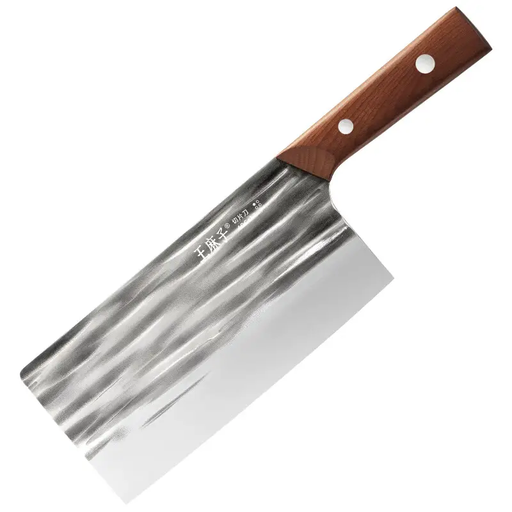
Why it suits this profile: This multi-purpose kitchen knife is designed for everyday cutting of meat, vegetables and fruit. It is a practical starting point for anyone looking for one knife for several basic tasks.
The product information lists specific uses and recommends hand washing followed by immediate drying. This makes it clearer what the knife is designed for and how to care for it.
Stainless steel blade; suitable for meat, vegetables and fruit; ergonomic handle according to the product description.
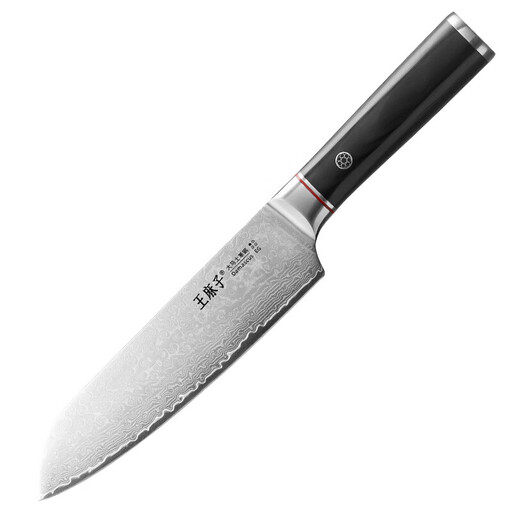
Why it suits this profile: A home cook who regularly prepares vegetables and boneless meat may find the santoku shape appealing. The product name mentions Damascus steel and multi-purpose use.
It is not a universal solution for bones or bread. Choosing it as a santoku knife for meat and vegetables makes the intended use a better match for its shape.
Santoku knife for versatile food preparation; Damascus steel stated in the product name; suitable for home cooking according to the product title.
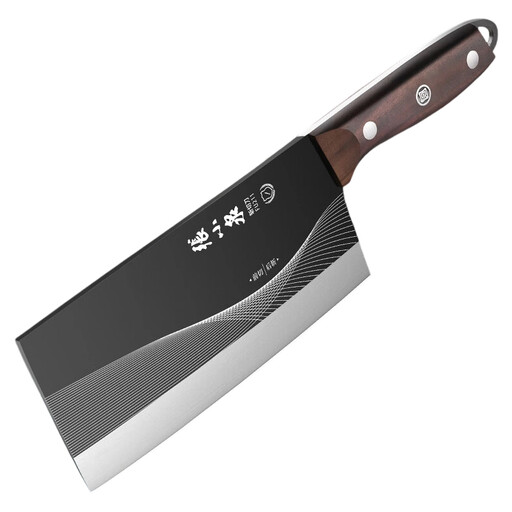
Why it suits this profile: This model is aimed at buyers who regularly process bones, ribs or poultry. The product name states a length of 313 mm and a reinforced design.
Its intended use sets it apart from a standard kitchen knife. Use it only on a suitable surface and not as a vegetable or bread knife.
Stainless steel according to the product name; reinforced boning knife; total length of 313 mm according to the stated specification.
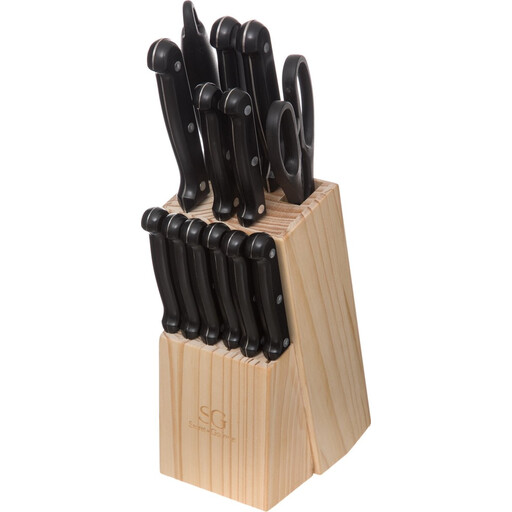
Why it suits this profile: According to the product information, the set contains a chef’s knife, bread knife, three other knives, six steak knives, kitchen scissors and a knife sharpener.
The set contents are specified, so you don’t have to judge it solely by the high number of pieces. Do bear in mind that it requires hand washing and space for the block.
13 pieces; wooden block; six steak knives; according to the product information, not suitable for the dishwasher.
We’ve put together a complete, up-to-date list of products that fully meet these strict selection criteria and the applicable European safety regulations.
For everyday cutting of boneless meat and vegetables, a chef’s knife or santoku knife is generally a more sensible choice than a cleaver. Pay attention to the blade length, handle and balance. If you also process bones, you’ll need a separate boning knife or cleaver.
Use a suitable chopping board, don’t cut on glass or stone, and store the knife safely. A knife sharpener can help when it is suitable for the type of blade. Wash the knife according to the instructions and dry it immediately. A blunt knife requires more pressure, giving you less control while cutting.
That depends on how you use them. A set can be practical if you carry out several tasks and also need steak knives, a bread knife or scissors. If you mainly prepare vegetables and boneless meat, one well-suited kitchen knife may be enough. Compare the contents of the set with your everyday cooking routine, rather than looking only at the number of pieces.
