
Vandaag of morgen in huis

Kwaliteit gegarandeerd

Welkomstaanbiedingen ontgrendelen: GRATIS bezorging | Tot 80% korting | Gratis 30 dagen JoyPlus-proefperiode
Download de app
A good kitchen knife should suit the way you cook, not just the promise on the packaging. A home cook can often manage with one versatile chef’s knife, while a professional cook needs several knives for vegetables, meat, bread and serving. If you buy without comparing options, you can quickly end up paying for features that add little value or choosing a knife that proves awkward in everyday use.
A manufacturer may describe a knife as “extra sharp” or “professional”, but you should focus mainly on the specific details. Look at the blade length, type of steel, sharpening angle and how the knife needs to be maintained. A sharp kitchen knife will not stay sharp by itself, either: the chopping board, cleaning method and regular honing all have a significant impact.
A 13-piece knife set may look appealing, but it can contain several very similar knives. So check exactly what is included. A practical set might contain a chef’s knife, bread knife, smaller vegetable knives, steak knives, scissors and a sharpening tool. If you mainly need one knife for everyday preparation, buying a single kitchen knife may be more affordable and straightforward.
Some stainless-steel kitchen knives are described as dishwasher-safe. However, washing them by hand with warm water and mild washing-up liquid can offer better protection for the edge and handle. A knife with a wooden handle or delicate coating will generally need extra care. Do not leave a kitchen knife loose in an overcrowded cutlery drawer, either: this can damage the edge and increase the risk of cuts.
For many households, a chef’s knife measuring 16 to 20 cm is a useful starting point. A 16 cm blade is easy to manoeuvre on a smaller chopping board and often feels more approachable for beginners. A 20 cm knife offers more cutting surface for large vegetables, meat and herbs, but also requires more space and control.
A Santoku knife usually has a straighter cutting edge and a relatively wide blade. This type of knife is suitable for finely chopping vegetables, herbs, fish and meat. The dimples on some blades can help prevent slices from sticking as easily, but the effect depends on the ingredient and cutting technique.
For bread, choose a bread knife with a serrated blade. The serrations saw through a hard crust without completely flattening the soft bread. Steak knives are designed for portioning cooked meat at the table; they are not a substitute for a chef’s knife during preparation.
Stainless steel is popular because it combines corrosion resistance with relatively easy maintenance. For example, according to the product information, the Wüsthof Classic chef’s knife uses X50CrMoV15 stainless steel. Also check whether the knife is forged from a single piece of steel, has a so-called full-tang construction or uses a partial tang. A full tang can contribute to balance and strength, but the handle and overall weight distribution also determine how comfortable the knife is to use.
Be wary of marketing claims about hardness or sharpness. If a brand claims, for example, that a knife is sharper than a standard model, present this as a brand claim: according to Wüsthof’s own research. Treat this information as a supplement to verifiable details such as the type of steel, sharpening angle and blade length, rather than as a reason to buy on its own.
Hold the knife before making your decision, if possible. The handle should feel secure without requiring you to grip it tightly. An anti-slip texture can be useful when cutting for extended periods, but check that the material remains comfortable when your hands are wet.
Use a wooden or plastic chopping board. Glass, stone and metal can blunt the edge more quickly. Wash a non-dishwasher-safe knife by hand immediately and dry it thoroughly. Store it in a knife block, protective sheath or drawer insert. Do not sharpen only when the knife can barely cut any more; regular honing with a suitable honing steel or whetstone helps keep the edge in shape.
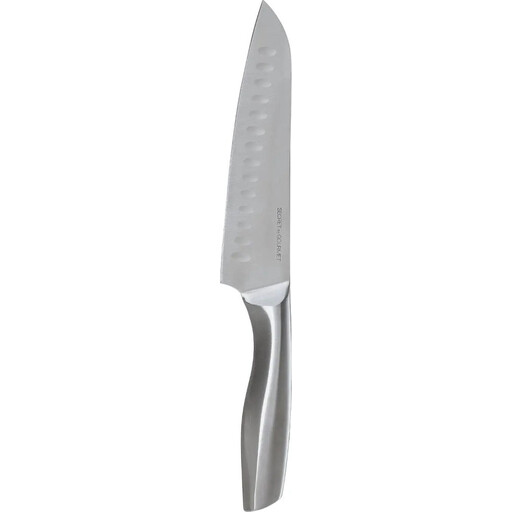
Why it suits this profile: The stainless-steel construction is designed for everyday use and, according to the description, the product comes with a sturdy handle. The total length is approximately 32 cm and the blade measures 18 cm.
The product details clearly specify the material, dimensions and dishwasher suitability, so you do not have to rely solely on the phrase “extra sharp”.
Stainless steel, forged construction according to the product information and an 18 cm blade.
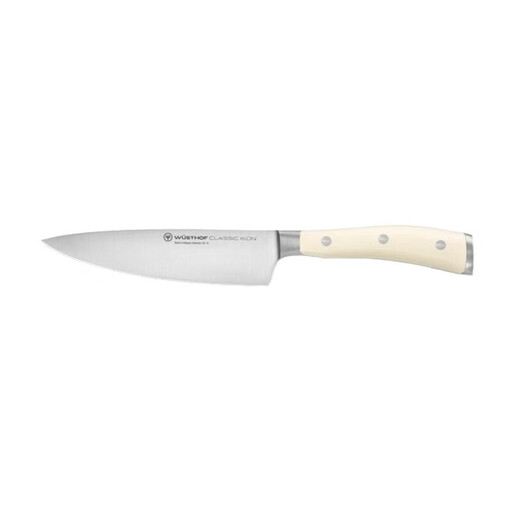
Why it suits this profile: This compact Wüsthof kitchen knife is designed for a wide range of tasks, including cutting vegetables, herbs, poultry and meat. The cream-coloured handle and three rivets give the knife a distinctive appearance.
The 16 cm length means you do not immediately have to choose a large, heavier knife for everyday tasks. The full-tang construction is clearly stated in the product information.
Stainless-steel blade, ergonomic synthetic handle and a compact size for everyday cutting.
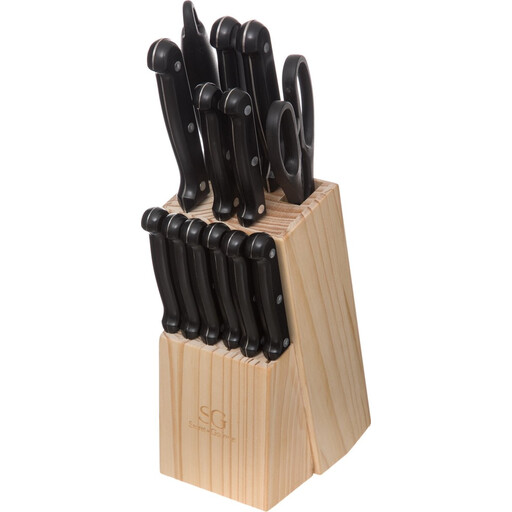
Why it suits this profile: This knife set is suitable for households that need a range of knives. It includes, among other items, a chef’s knife, bread knife, six steak knives, scissors and a knife sharpener.
The complete contents are specified, allowing you to decide in advance whether you will genuinely use the different knives and avoid having to combine separate purchases.
13-piece set, wooden block and individual knives for preparation and serving.

Why it suits this profile: The 17 cm Santoku shape is designed for vegetables, herbs, fish and meat. According to the product description, the knife has an X50CrMoV15 steel blade and a synthetic handle.
The knife shape and length are clearly described. According to the product information, the knife is not dishwasher-safe, so maintenance is an important consideration before you buy.
17 cm blade, X50CrMoV15 steel according to the product description and suitable for a range of cutting tasks.
We’ve put together a complete, up-to-date list of products that fully meet these strict selection criteria and the applicable European safety regulations.
A chef’s knife measuring 16 to 20 cm is practical for many preparations. A Santoku knife is also suitable for vegetables, fish and meat, particularly if you prefer a more compact knife with a straighter cutting edge. Choose based on the handle, weight and available chopping-board space.
Use a wooden or plastic chopping board, avoid glass and stone, and wash the knife according to the manufacturer’s instructions. Store the knife safely and regularly use a suitable honing steel or whetstone. A serrated bread knife should not be sharpened in the same way as a smooth-edged chef’s knife.
That depends on what it contains. A set is practical if you genuinely need a bread knife, chef’s knife, steak knives and accessories. If you mainly cut vegetables and meat every day, one well-matched kitchen knife may be a more focused purchase. So consider your cooking habits first, then look at the number of pieces.
