
Vandaag of morgen in huis

Kwaliteit gegarandeerd

Welkomstaanbiedingen ontgrendelen: GRATIS bezorging | Tot 80% korting | Gratis 30 dagen JoyPlus-proefperiode
Download de app
A sharp kitchen knife makes everyday cooking much easier, but a high price or a flashy product claim doesn’t automatically mean it’s right for you. Many home cooks buy a large kitchen knife set when really they only need one good chef’s knife. Others focus on an “extra sharp” blade, but forget about maintenance, the handle or the right chopping board.
The main pitfalls when it comes to kitchen knives are:
A chef’s knife of around 18 to 20 cm is suitable for most common tasks, such as chopping vegetables, mincing herbs and portioning meat. A shorter knife of 16 or 17 cm often feels more manoeuvrable.
A santoku knife typically has a wider, relatively straight blade. This makes it suitable for vegetables, herbs, fish and meat. Dimples on the blade, also known as a granton edge, can, according to the product description, help prevent slices from sticking to the knife. This is no guarantee of completely trouble-free cutting; the result also depends on the ingredient and your cutting technique.
For specific tasks, a vegetable knife, meat knife, bread knife or cleaver makes more sense than one universal model. Only use a cleaver for its intended purpose and always check the product information for hard bones or frozen food.
A stainless steel kitchen knife is popular because the material is resistant to corrosion under normal use. X50CrMoV15 steel is found in several Wüsthof models. According to Wüsthof’s product information, some knives are sharpened at an angle of 14 degrees per side. A smaller angle can give precise cutting, but the edge requires a suitable chopping board and careful use.
A ceramic kitchen knife can feel light and is less prone to rust, but ceramic is generally more vulnerable to drops, twisting and contact with hard surfaces. So don’t just look at sharpness; also consider the way you cook and the level of maintenance you’re prepared to do.
The handle should feel sturdy and comfortable, without you needing to use much force to hold the knife. Check whether the model is suitable for left- and right-handed use when that’s relevant.
Use a wooden or plastic chopping board. Glass, stone and metal can damage the edge more quickly. Wash kitchen knives by hand if possible, dry them immediately and store them in a knife block, protective sheath or drawer insert. A honing steel helps with regular maintenance, while a whetstone is intended to re-sharpen the edge. Always follow the manufacturer’s instructions.
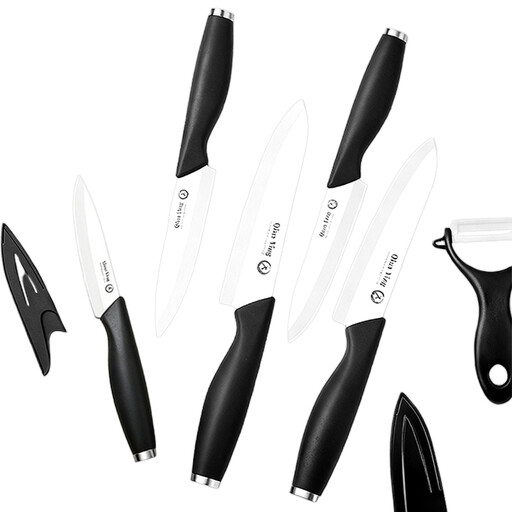
Why this fits the profile: A five-piece set with ceramic kitchen knives and a peeler gives you several basic tools without buying a large knife block straight away. Do check beforehand exactly which knife shapes are included.
The number of pieces is clearly stated. This means you’re not buying a large set with many knives you’re unlikely to use.
Five-piece composition; ceramic construction according to the product listing; suitable as a starter set for everyday preparation.
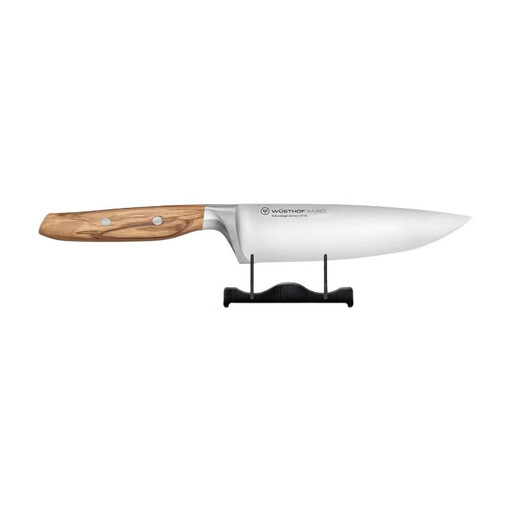
Why this fits the profile: This German kitchen knife from Solingen is aimed at users who want one versatile knife for vegetables, herbs, tomatoes and meat.
The specifications mention a 20 cm blade, X50CrMoV15 stainless steel and an olive wood handle. This lets you assess whether the size and material are right for you.
20 cm blade; according to Wüsthof’s own product information, sharpened at 14 degrees per side and featuring a half bolster.

Why this fits the profile: This santoku knife suits home cooks and chefs who work with lots of vegetables, herbs, fish and meat and prefer a nimble 17 cm knife.
The shorter length stops you automatically buying a large chef’s knife for a small or busy kitchen. Hand washing is recommended in the product information.
17 cm blade; X50CrMoV15 high-carbon stainless steel; synthetic handle and double-edged blade according to the product listing.
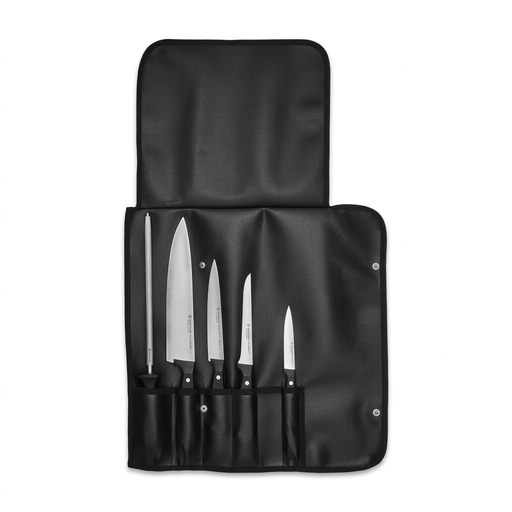
Why this fits the profile: The set is designed as a basic kit for beginners, students and hobby cooks who want to cover several cutting tasks and carry their knives compactly.
The contents are clearly described: five knives, a honing steel and a washable roll pouch. This makes comparing easier than with a set that only boasts a high total number of pieces.
Chef’s knife, paring knife, fish knife, meat knife and honing steel; roll pouch with a width of 43 cm according to the product details.
We’ve put together a full, up-to-date list of products that fully meet these strict selection criteria and comply with current European safety regulations.
The lifespan depends on the steel, usage, maintenance and storage. A knife generally stays usable for longer if you wash it by hand, dry it immediately, don’t use it on glass or stone and maintain the edge regularly. Also check the statutory warranty and any additional terms and conditions for the product.
That depends on how you use it. A set can be practical if you need a chef’s knife, bread knife, vegetable knife and meat knife all at once. If you mainly chop vegetables and herbs, you may be better off with just one chef’s knife and perhaps a smaller paring knife. So don’t just compare the price; also compare the items you actually need.
German kitchen knives, including models produced in Solingen, are often designed for versatile everyday use. Do pay attention to the exact specifications: blade length, steel type, handle, sharpening angle and maintenance advice vary from model to model. A Wüsthof kitchen knife isn’t automatically right for every hand or cutting task; the fit and your own usage habits remain the deciding factors.
