
Vandaag of morgen in huis

Kwaliteit gegarandeerd

Welkomstaanbiedingen ontgrendelen: GRATIS bezorging | Tot 80% korting | Gratis 30 dagen JoyPlus-proefperiode
Download de app
A kitchen accessory may look useful in a product photo, yet prove disappointing in everyday use. A grater that is difficult to clean, a chopping board that warps or a kitchen set containing parts you hardly ever use: these are common reasons for having to buy again.
When comparing kitchen essentials, it is therefore better to look beyond colour, discounts and the number of pieces included. The right choice mainly depends on material, dimensions, maintenance and the type of food preparation you need the tool for.
A large kitchen set may look appealing, but check what it actually contains first. With a set of kitchen knives, scissors and accessories, blade lengths, handles and storage options are more important than simply the total number of pieces.
Ask yourself:
Terms such as “durable”, “professional” or “extra strong” mean little without technical information. For kitchen knives, for example, look for stainless steel, the blade length and the handle. For chopping boards, the material, thickness and maintenance requirements are relevant. A wooden or bamboo board generally requires hand washing and regular drying; using it in the dishwasher can cause it to warp.
Claims about performance or lifespan are not a guarantee for your particular circumstances. Focus instead on the verifiable product specifications and maintenance instructions.
A vegetable slicer, grater or colander must not only work well; it must also fit your worktop, cupboard and sink. Measure the available space beforehand. A kitchen organiser that is too wide for the worktop or a chopping board that does not sit securely will offer little convenience.
For kitchen tools that come into direct contact with food, it is useful to check the material. 304 stainless steel, for example, is listed for the Maxcook spider strainer. Stainless steel is also often specified as the blade material for knives. Plastic parts can be lightweight and easy to clean, while bamboo provides a firm, natural surface.
Also pay attention to differences within a single product. The Alpina Multi Grater 7pc has a plastic housing and stainless-steel blades. This is more specific than a general claim about “high quality”.
A 20 cm chef’s knife is suitable for larger cutting movements, but it also requires enough space on your chopping board. The Wüsthof Gourmet Chef’s Knife has a blade length of 20 cm and a total length of 33.5 cm.
For chopping boards, consider:
Maintenance partly determines how long kitchen tools remain usable. Check whether a product needs to be washed by hand or can go in the dishwasher. According to the product information, the Alpina grater is not recommended for dishwasher use. Bamboo chopping board sets must be washed by hand and allowed to dry thoroughly. Some bamboo products are also recommended to be treated occasionally with food-safe oil.
Do not use wire wool or harsh cleaners on stainless-steel accessories if the product information advises against them. Acids, salt and prolonged exposure to moisture can cause staining or corrosion.
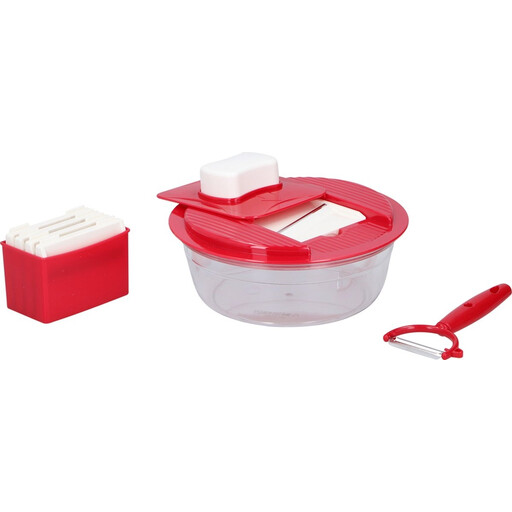
Why it suits this profile: This set combines grating and slicing across seven pieces and includes a collection bowl. It can be useful for everyday food preparation without having to buy several separate kitchen accessories.
The contents are clearly specified: a bowl, holder, safety handle, grater and various slicing blades. Do check beforehand which parts you actually need.
Seven pieces, a collection bowl and options for coarse and fine grating. Dimensions: 19,2 × 19,2 × 8 cm.

Why it suits this profile: For home cooks who regularly slice, dice and chop, a dedicated chef’s knife offers more focus than an extensive kitchen set.
The product information lists the blade length, total length, weight and materials. This allows you to assess the fit and available storage space in advance.
20 cm stainless-steel blade, plastic handle and a weight of 184 grams. Hand washing is recommended for a longer lifespan.
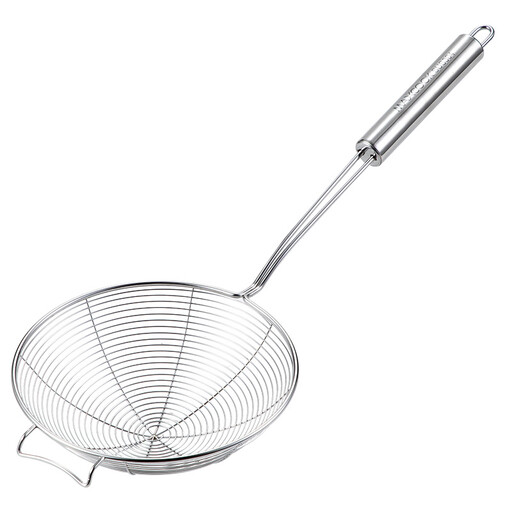
Why it suits this profile: Useful for anyone who regularly removes pasta, noodles, dumplings or fried ingredients from a pan or oil.
The product description specifies the material, pan-rim hook and maintenance requirements. During use, however, bear in mind that the handle may become hot after prolonged heating.
304 stainless steel, deep spoon head, hanging eyelet and hook for placing it on a pan or bowl.
We have put together a complete, up-to-date list of products that fully meet these strict selection criteria and the applicable European safety regulations.
A practical basic collection often consists of a few separate kitchen tools:
Start with a chef’s knife, a sturdy chopping board, a colander, a grater and a vegetable peeler. Add a vegetable slicer or extra kitchen tools later when you use those functions regularly. This prevents unused accessories from taking up space.
Wash the board by hand with mild soap, dry both sides thoroughly and do not store it while it is wet for long periods. Some bamboo products are recommended to be treated periodically with food-safe oil. Only put a board in the dishwasher if the product information explicitly permits it.
Lifespan depends on the material, use and maintenance. Use knives on a suitable chopping board, wash them according to the instructions and sharpen them when necessary. Replace a tool when the blade is damaged, a handle becomes loose or the product can no longer be used safely and securely. For certain products, the statutory guarantee is at least two years; check the terms for each product.
