
Vandaag of morgen in huis

Kwaliteit gegarandeerd

Welkomstaanbiedingen ontgrendelen: GRATIS bezorging | Tot 80% korting | Gratis 30 dagen JoyPlus-proefperiode
Download de app
A kitchen drying rack might seem straightforward, but the wrong choice soon becomes obvious. A rack that’s too small lets plates topple over. A drip tray without proper drainage holds onto water. And a metal frame without clear care instructions can show signs of wear more quickly in a damp kitchen.
For households, students, small flats and campers, these three pitfalls are particularly important:
First, measure your worktop, sink and the space between the tap and your kitchen cabinets. A worktop drying rack that is 42 cm long may fit well in one kitchen, but take up too much workspace in a narrow studio flat.
Pay attention to the stated capacity:
Alongside plate space, also check the room for glasses and the dimensions of the cutlery holder. A deep plate, frying pan or large mug won’t always fit in a standard slot.
A metal drying rack usually has a sturdy frame. With a steel model, it’s important to check whether a coating is present and how to care for any damage. According to the product description, the 5five Dish Drain Rack is made from steel, with a cutlery holder and drip tray made from polypropylene.
A stainless steel drying rack is appealing if you value a damp-resistant environment and easy cleaning. The Maxcook models use 304 stainless steel according to the product specification. That’s a verifiable material claim, but not a guarantee that the rack will never develop marks or residue. Rinse off soap residue and dry the rack regularly.
A plastic drying rack is often lightweight and easy to move. The Curver models are described as being made from durable plastic and feature an integrated cutlery holder or drip tray. Do check whether the product is suitable for boiling water or extreme heat.
A drying rack with a drip tray prevents water from running directly onto the worktop, but the tray needs regular emptying. A drain plug or water spout can be more practical when the rack sits next to the sink.
Look out for these points:
Empty the drip tray regularly to reduce water build-up. Use a mild cleaning agent on plastic and stainless steel, and avoid abrasive sponges if the product information advises against them.
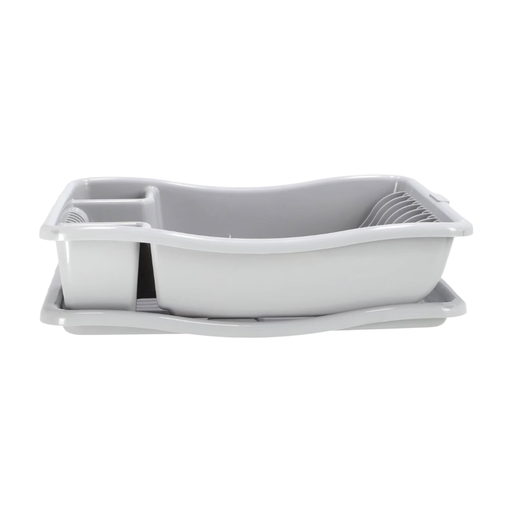
Why this fits the profile: The compact dimensions suit a student room, flat or small worktop. According to the product description, the rack holds up to 12 plates.
The included drip tray prevents dishwater from reaching the worktop directly. The capacity and dimensions are clearly stated.
Plastic construction, two built-in cutlery compartments and a stackable design according to the product specification.

Why this fits the profile: This model is designed for daily use next to the sink, with dimensions of approximately 42 × 29 × 12.7 cm and compartmentalised storage.
The removable PP drip tray and the described water spout make drainage controllable. No assembly is required according to the product information.
Stainless steel body, removable PP drip tray and compartments for plates, bowls, cups and cutlery.

Why this fits the profile: This expandable model is designed for use over the sink and can be adjusted from 29 to 44 cm according to the specification.
According to the product description, water drains directly into the sink, so you don’t need a separate drip tray on the worktop.
304 stainless steel, adjustable length and multi-functional use as a dish drying rack or colander for fruit and vegetables.
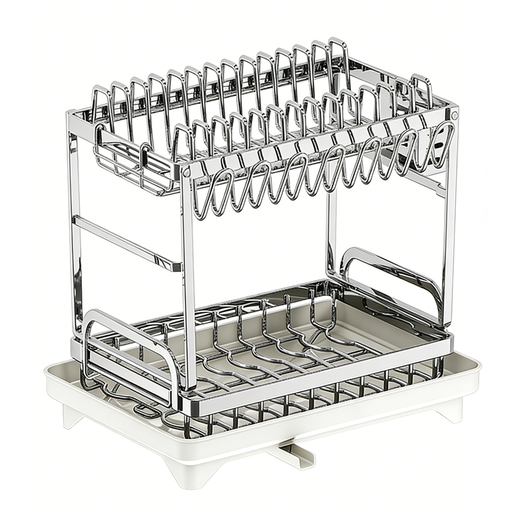
Why this fits the profile: The two levels offer extra vertical storage for plates and kitchen utensils. The dimensions are 42 × 32 × 30 cm according to the specification.
The compartments separate plates and cutlery, while a drain pipe can direct water to the sink. Check the available height before assembly.
Two tiers, stainless steel and PP materials, removable parts and a described drain pipe.
We’ve put together a full, up-to-date list of products that fully meet these strict selection criteria and comply with current European safety regulations.
Choose a drying rack with a drip tray or a model that drains into the sink. Place the rack securely and check that the water spout isn’t blocked by the worktop edge. Empty and clean the drip tray regularly.
The lifespan depends on the material, load and care. Don’t overload the rack beyond its stated capacity, don’t leave water standing for long periods, and check regularly for cracks, loose connections or damaged coating. With plastic, protection from extreme heat is important.
It can be, provided the kitchen has enough vertical space. Measure not only the worktop, but also the distance to wall cabinets and the tap. If the sink area is tight, an expandable stainless steel model may be more efficient than a freestanding rack.
