
Vandaag of morgen in huis

Kwaliteit gegarandeerd

Welkomstaanbiedingen ontgrendelen: GRATIS bezorging | Tot 80% korting | Gratis 30 dagen JoyPlus-proefperiode
Download de app
A kitchen dish rack might seem like a simple purchase, but you’ll soon notice if you choose the wrong one. It may not fit beside the sink, the drip tray may stay full of water, or plates may topple over as soon as you add a pan. Every centimetre counts, especially in student accommodation, a small flat or a busy household.
So don’t just consider the colour and shape. Check the dimensions, drainage, stability and material. Below, you’ll find the main pitfalls to avoid, along with a selection of dish racks to suit different kitchens.
A product may have room for several plates, glasses and cutlery, but that doesn’t necessarily mean everything will fit comfortably at once. Check the width, depth and height of the rack. Also measure the space between the sink, wall and kitchen cupboards.
A 2-tier dish rack makes better use of vertical space than a single-tier model. For a narrow worktop, though, an extendable model that sits over the sink may be more convenient. In either case, check that your everyday washing-up won’t bump against the cupboards or tap.
A dish rack with a drip tray collects water, but the tray needs to be emptied and cleaned regularly. If it’s too shallow, water may still spill onto the worktop. Some models have a drain or plug that lets water run straight into the sink.
Check where the drain is positioned. A drip tray will only work well if the dish rack stands securely and the water can flow towards the right point.
Stainless steel, chrome-plated steel and plastic each have their own considerations. 304 stainless steel is a specific material grade, but even then, drying the rack after use can help reduce limescale build-up. Plastic is often lightweight and easy to clean, but it shouldn’t be exposed to extreme heat.
According to the manufacturer’s product information, the Maxcook model in this selection is made from 304 stainless steel. This is a verifiable product specification, not a guarantee that the rack will remain stain-free in all conditions.
Start by measuring the available space. Remember to consider:
A compact dish rack is suitable for one person or a small kitchen. For a family, a larger dish drainer with several compartments is usually more practical.
Place the rack on a flat surface and distribute heavier items evenly. It’s best to put pans and heavy dishes on the lower level. Check for non-slip feet and make sure the parts fit together securely.
For an extendable model, the minimum and maximum width matter. An extendable dish rack needs to be fully supported by the edges of the sink. So measure the inside of the sink, not just the outside.
Choose a design that doesn’t allow water to collect for long periods. Remove food scraps, empty the drip tray regularly and clean corners and joints with mild washing-up liquid. Don’t use wire wool or abrasive cleaners on coated or chrome-plated metal.
A plastic rack can be practical for everyday use and camping. A metal rack needs extra care to prevent scratches, moisture damage and limescale build-up. Always follow the manufacturer’s care instructions.
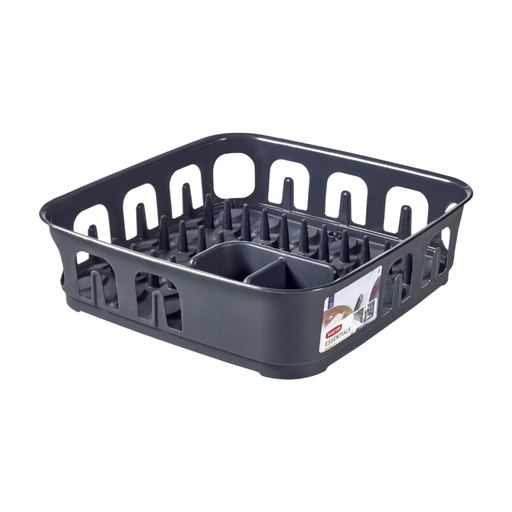
Why it suits this profile: This compact plastic rack is suitable for a small household. It holds up to 12 plates and includes a cutlery tray and hooks for cups.
The drain plug helps excess water run away in a controlled way. The dimensions and layout are clearly listed, so you can measure up before buying.
Plastic construction, compact size, integrated cutlery tray and external hooks for cups.

Why it suits this profile: This over-sink dish rack extends from 29 to 44 cm and keeps crockery above or inside the sink, freeing up worktop space.
Water drains straight into the sink instead of collecting in a separate drip tray. Be sure to check the width of your sink first.
304 stainless steel, adjustable length of 29–44 cm and an open mesh design for drainage.
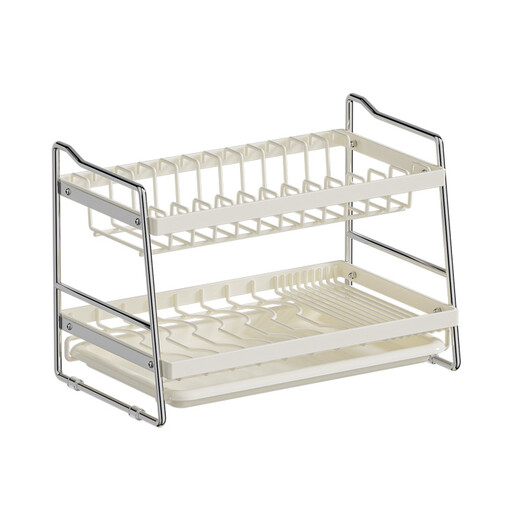
Why it suits this profile: This freestanding rack measures approximately 40 × 23,6 × 28,7 cm and has two tiers for households that dry several types of washing-up every day.
The integrated drip tray catches water as it drains. Measure the depth of your worktop and empty the tray regularly to prevent water from standing in it.
Two tiers, freestanding design, drip tray and space for plates, glasses, cutlery and kitchen utensils.
We’ve put together a full, up-to-date list of products that meet these strict selection criteria and the applicable European safety regulations.
First remove the crockery and any food scraps. Wash the rack and drip tray with warm water and mild washing-up liquid. Rinse them thoroughly and dry any metal parts afterwards. Clean a drain plug or drainage channel particularly carefully, as dirt can build up there.
Its lifespan depends on the material, how heavily it’s used and how well it’s maintained. A plastic dish rack can last a long time with normal use, as long as it isn’t exposed to extreme heat and doesn’t develop any cracks. With metal models, scratches, moisture and limescale build-up are key things to watch out for. Replace the rack if parts become unstable or sharp edges appear.
A dish rack uses no electricity and only needs to be cleaned and emptied regularly. Water consumption mainly depends on how you wash the dishes. A well-positioned drip tray can, however, save you from having to keep drying the worktop. For everyday use, focus on choosing the right size, easy cleaning and reliable drainage.
