
Vandaag of morgen in huis

Kwaliteit gegarandeerd

Welkomstaanbiedingen ontgrendelen: GRATIS bezorging | Tot 80% korting | Gratis 30 dagen JoyPlus-proefperiode
Download de app
A kitchen dish rack may seem like a simple product, but choosing the wrong one can quickly become frustrating. Perhaps it doesn’t quite fit beside the sink, the drip tray leaves water on the worktop or the metal frame is difficult to keep clean. These are all common problems.
For students, families, households and campers, the choice comes down to three main things: space, drainage and capacity. So look beyond terms such as “extra large” or “space-saving”. Always check the exact dimensions, materials and layout.
A worktop dish rack often takes up more space than it appears to in the product photo. Measure the available length and depth beside the sink. Remember to allow for handles, the tap and the space you need to lift plates out of the rack.
A compact dish rack is practical in a student room or small kitchen, but may not have enough capacity for a family. A two-tier dish rack makes better use of height, but needs to be stable and shouldn’t be overloaded.
A dish rack with a drip tray collects water, but the tray needs to be emptied and cleaned regularly. Some models can drain water straight into the sink through a plug or channel. Check that your chosen position will actually allow this.
With a sink-top dish rack, water runs straight into the sink. This saves worktop space, but the adjustable width must match the inside of your sink. A rack that’s too narrow may shift, while one that’s too wide won’t sit securely.
Plastic is usually lightweight and easy to clean with warm water and mild washing-up liquid. Metal can provide a sturdy construction, but check the finish and dry the product thoroughly after cleaning. If a product has a protective coating, it’s best to avoid wire wool and abrasive cleaners.
Also check whether parts such as a cutlery holder, drip tray or glass holders can be removed. Hard-to-reach corners are more likely to collect dirt and limescale.
Before buying, note down:
A small dish drainer with room for around twelve plates may be enough for a one-person household. A household with several people may be better suited to a two-tier model with separate sections for plates, cups and cutlery.
A drip tray is useful when the rack is placed on the worktop. Ideally, choose a model with a tray that can be removed completely or emptied easily. A dish rack over the sink offers another solution: water drains straight into the sink, leaving the worktop clear.
For adjustable models, check the range. According to the product specifications, the Maxcook stainless steel version adjusts from 29 to 44 cm and is designed to sit over the sink. This gives you an exact measurement to compare with your sink.
A multi-tier rack needs to stand on a level surface. It’s best to place heavy pans and bowls on the bottom tier. For wall-mounted or sink-top models, check carefully that all the support points are in full contact with the surface.
Non-slip feet can help reduce movement, but they don’t make it safe to overload the rack. Always follow the assembly instructions and check that all the locks are secure once assembled.
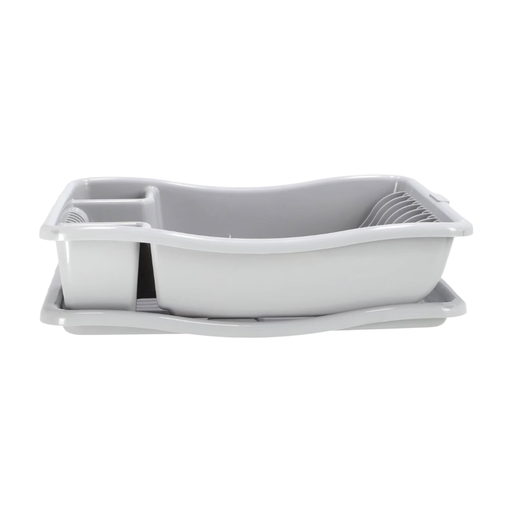
Why it suits this need: This rectangular dish rack has a neat footprint for a smaller worktop and holds up to twelve plates. The two cutlery compartments help keep forks, knives and spoons separate.
The included drip tray catches draining water. Its compact size makes it easy to check in advance whether it will fit beside your sink.
Plastic construction, two cutlery compartments, room for up to twelve plates and a stackable design, according to the product description.

Why it suits this need: This model is ideal if you want to keep the worktop clear and make the most of the space over your sink. The rack is adjustable and can also be used as a colander.
The product specifications state that it’s made from food-grade 304 stainless steel and adjusts from 29 to 44 cm. Be sure to check your sink’s measurements first.
304 stainless steel, direct drainage into the sink and a telescopic length of 29 to 44 cm.
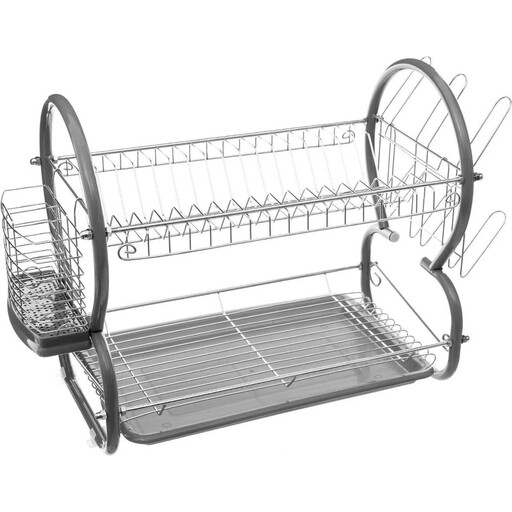
Why it suits this need: This two-tier dish rack is designed for households that dry several types of dishes at once. It has separate sections for plates, bowls, mugs, glasses and cutlery.
The dimensions and maximum load of 1,3 kg are listed, so you can check the available space and capacity against your dishes before buying.
Room for up to 17 items, with separate cutlery and glass holders, a chrome-plated steel frame and a polypropylene drip tray.
We’ve put together a complete, up-to-date list of products that meet these strict selection criteria and the applicable European safety regulations.
Empty the drip tray regularly and rinse away food residue straight away. Clean plastic with warm water and a mild detergent. Don’t use harsh abrasives on metal parts unless the product information specifically says they’re suitable. Dry the rack after cleaning to help prevent limescale marks and prolonged exposure to moisture.
Check from time to time that the frame is still stable and that there are no cracks, loose joints or visible damage to the coating. Replace a part or the whole rack if it can no longer stand safely.
First, measure the free space beside or above the sink. A compact dish rack with a drip tray is suitable for limited worktop space. If you don’t want to lose worktop space, consider an adjustable dish rack over the sink, provided its width matches your sink.
Use a rack with a well-fitting drip tray and place it on a level surface. Check whether the tray needs to be emptied regularly. For a model with a drainage plug, position the opening over the sink or another suitable drain.
It can be, especially if you want to make the most of the height above your worktop. Check the overall dimensions, load capacity and layout of the tiers. Heavy plates and pans belong on the bottom, while glasses and light cutlery are better placed on the top tier or in the separate holder.
