
Vandaag of morgen in huis

Kwaliteit gegarandeerd

Welkomstaanbiedingen ontgrendelen: GRATIS bezorging | Tot 80% korting | Gratis 30 dagen JoyPlus-proefperiode
Download de app
A kitchen dish drying rack may seem like a simple purchase, but you’ll soon notice if you choose the wrong one. It may take up too much space, leave water on the worktop or fail to hold your plates properly. In compact kitchens, it’s especially important to check the dimensions, drainage and material before you buy.
A product description may promise space for lots of crockery, but that doesn’t always tell you how it’s arranged. A rack for plates and glasses may be awkward to use if it doesn’t have separate holders for mugs or cutlery. Check whether the stated capacity covers plates, bowls, glasses and cutlery together, or just one type of crockery.
A dish drying rack with a drip tray keeps your worktop dry, but only if you empty and clean the tray regularly. An overfull or poorly fitting tray can spill water instead. A drainage plug or channel that directs water into the sink is useful if you wash up often.
A plastic dish drying rack is usually lightweight and easy to move. Check it regularly for cracks and limescale, though. A metal dish drying rack can offer a sturdy construction, but check the finish and dry the rack thoroughly after cleaning. If it has a chrome-plated steel or powder-coated finish, it’s best to avoid harsh scouring products.
First, measure the space beside or above your sink. Check not just the length and width, but also the height if you have wall cabinets above. A compact dish drying rack or a model that sits over the sink can free up space on a small worktop.
A freestanding model is easy to position and move. By contrast, an adjustable model that sits in the sink needs to rest securely on its edges. If you’re considering an adjustable dish drying rack, check its minimum and maximum width. According to the product specifications, the MAXCOOK 304 stainless steel version adjusts from 29 to 44 cm.
Check that the holders suit your crockery. Deep bowls need more space than flat dinner plates. A separate cutlery holder stops forks and knives from falling between plates. Glass holders are useful if you’re short on flat space.
A two-tier dish drying rack makes good use of vertical space. This can be handy for families, but measure first to make sure the top tier won’t hit your kitchen cabinets. Check the weight limit too: according to the stated specifications, the 5five version has a maximum load of 1.3 kg.
Good drainage helps prevent puddles on your worktop. Check whether the drip tray is removable, whether it has a drainage plug and whether you can easily reach the corners. An open design helps air circulate around your crockery, but you’ll still need to wash the rack from time to time.
Always follow the manufacturer’s care instructions. For plastic, warm water and mild washing-up liquid are usually suitable. Metal parts may be vulnerable to prolonged exposure to moisture. Also check the rack for sharp edges, loose parts and rust.
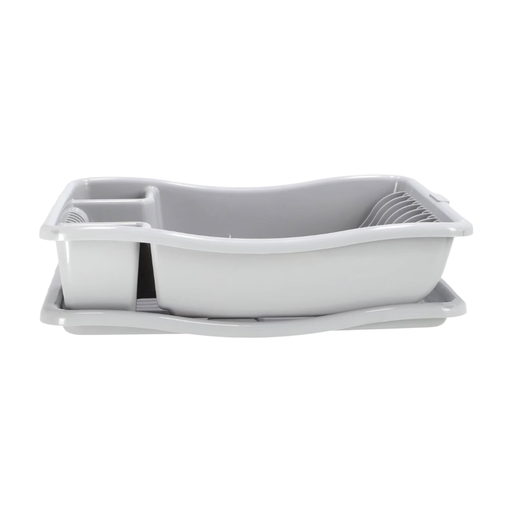
Why it suits this type of buyer: A straightforward plastic model for students, first-time buyers and households with just a few plates. The dimensions are clearly listed, and there’s no installation required.
The included drip tray catches water as it drains. Two cutlery compartments and a separate plate section keep your crockery organised.
Plastic construction, space for up to 12 plates according to the product information, two built-in cutlery compartments and a stackable design.

Why it suits this type of buyer: Ideal if you want to keep your worktop clear and are looking for a rack that sits over or in the sink. Its adjustable length fits sinks of different widths.
Water can drain straight into the sink, so you don’t have to rely as much on a small drip tray on the worktop.
Made from 304 stainless steel according to the product details, adjustable from 29 to 44 cm and also suitable for draining fruit and vegetables.
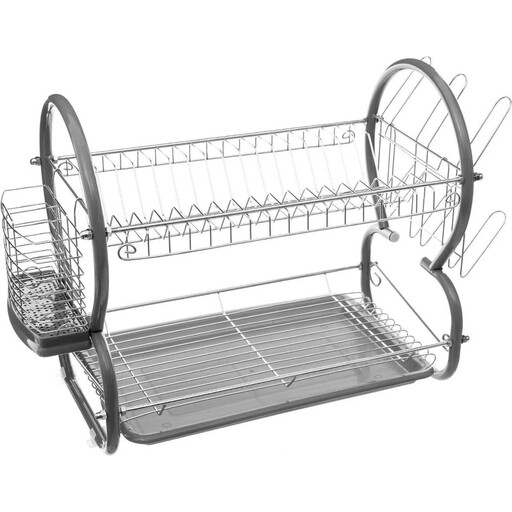
Why it suits this type of buyer: A two-tier dish drying rack for families or anyone who wants to dry plates, bowls, mugs, glasses and cutlery at the same time.
The separate cutlery basket and glass holders keep everything organised. The maximum load of 1.3 kg means you’ll need to load it evenly and avoid overloading it.
Chrome-plated steel with a powder-coated finish, a plastic drip tray, dimensions of 44 x 24 x 38 cm and space for 17 pieces of crockery and cutlery according to the product information.
We’ve put together a complete, up-to-date list of products that meet these strict selection criteria and the applicable European safety requirements.
Measure the available space beside the sink and leave a few centimetres around the rack so you can position and clean it easily. If you’re considering a two-tier model, check the height of your wall cabinets too. For small kitchens, a compact model or a rack that sits over the sink is often more practical than a wide freestanding one.
Plastic is lightweight, easy to clean and suitable for everyday use. Metal can offer an open, sturdy design, but needs more care to protect it from moisture and damage to the finish. As well as the material, consider the drip tray, ventilation, stability and care instructions.
Empty the drip tray regularly and wash the rack with warm water and mild washing-up liquid. Dry metal parts thoroughly. Remove limescale according to the manufacturer’s care instructions, and don’t use harsh products that could damage the plastic or coating. If you use the rack regularly, check it for cracks, loose parts and sharp edges.
