
Vandaag of morgen in huis

Kwaliteit gegarandeerd

Welkomstaanbiedingen ontgrendelen: GRATIS bezorging | Tot 80% korting | Gratis 30 dagen JoyPlus-proefperiode
Download de app
A kitchen dish drainer might seem like a simple product, but the wrong choice can quickly lead to a wet worktop, wobbly plates or rusting parts. In a flat, small kitchen or caravan especially, every centimetre counts. And if you do a lot of washing up every day, a stable drying rack with enough capacity will serve you far better than a model that just looks good.
When comparing options, don't just focus on colour or the phrase "space-saving". Make sure you check the dimensions, the water collection system and how well the rack supports plates and cutlery.
A compact dish drainer can still be too wide for the worktop next to your sink. Always measure the available space in centimetres, including the room you need to load and unload the rack. A model designed to sit in the sink must also fit between the edges and must not completely block the drain.
A dish drainer with a drip tray helps keep water off the worktop, but only if the tray is large enough and can be emptied regularly. A raised lip can help contain spills, but it won't stop overflow when the tray is full. Also check whether the drip tray can be removed for cleaning.
A flat grid doesn't always hold plates upright. This means your crockery takes up more space and glasses can tip over. A separate cutlery basket or a fine-mesh holder also prevents small utensils from slipping through the gaps. When looking at a plate rack, pay attention to the shape of the compartments, not just the number of plates mentioned in the product description.
First, measure the space next to or inside your sink. Then compare the external dimensions of the rack:
A metal dish drainer measuring 39 × 33.5 × 10.5 cm, for example, works quite differently from a taller model at 43.5 × 32.5 × 19 cm. The available height determines whether you can make use of extra compartments or an upper level.
A metal dish drainer usually provides a sturdy base. The Senhoglb model is described as having a metal frame with a rust-resistant powder coating. That's a product specification, but its lifespan also depends on how you use it, how you clean it and how long it's exposed to standing water. Dry metal parts when necessary and check the coating regularly.
A plastic dish drainer is often lighter and easy to move around, for example in a caravan or when camping. Plastic can, however, be more prone to scratches, cracks or warping from high temperatures. So avoid pouring boiling water on parts that aren't recommended for it.
An open structure allows air to circulate between crockery and glasses. According to the Curver product description, the open design promotes air circulation; this is a feature described by the manufacturer and not a guarantee of a specific drying time. Clean the drip tray and rack regularly with mild soapy water and let the parts dry thoroughly.
Do you often have problems with food scraps in the drain? A separate sink strainer can be a useful addition. It doesn't replace the dish drainer, but it helps keep solid bits out of the drain water. Always check that the diameter fits; the set of stainless steel sink strainers mentioned has a diameter of 8 cm.
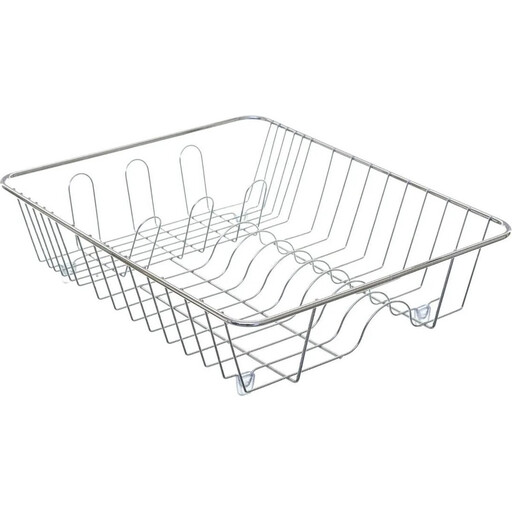
Why this fits the profile: The dimensions are straightforward and, according to the product specification, the rack holds 10 plates and a cutlery basket. That makes it suitable for daily use or camping without opting for a tall model.
The product description mentions a raised edge to prevent leaks and a clear size. Do check whether the edge is high enough for your worktop.
Steel frame, cutlery basket, 39 × 33.5 × 10.5 cm and suitable for kitchen or camping.
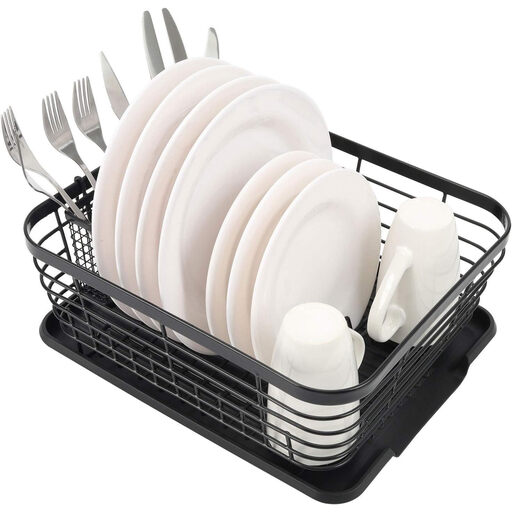
Why this fits the profile: This is a 3-in-1 set with a metal dish drainer, a separate drip tray and a fine-mesh cutlery holder. The parts can be used next to or inside the sink, depending on the space you have available.
The separate parts make cleaning and emptying easier. The stated dimensions are 14.2 × 12.1 × 5.5 inches for the rack; measure this against your kitchen space.
Powder-coated metal, plastic drip tray and fully mesh cutlery holder; no assembly required.
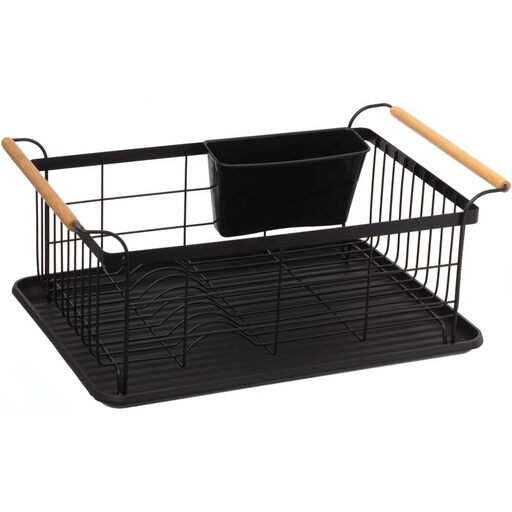
Why this fits the profile: Thanks to its height and width, this model is aimed at households that want to drain multiple glasses and pieces of crockery at once. The product specification mentions space for 10 glasses.
The material specification mentions steel, a polypropylene cutlery holder and a polypropylene tray. Check the positioning and empty the tray regularly to limit water build-up.
Steel rack, drip tray, extra cutlery holder and dimensions of 43.5 × 32.5 × 19 cm.
We've put together a full, up-to-date list of products that fully meet these strict selection criteria and comply with current European safety regulations.
A dish drainer works better when the area around it is laid out logically. A kitchen organiser can free up space for a sponge, washing-up brush and dishcloth. If loose food scraps are your main issue, look for a suitable sink strainer. For a lightweight, portable solution, a plastic rack can be handy; for heavier crockery, a metal frame is often more practical.
Always place the rack on a stable, level surface. Don't overload it and don't put heavy pans on top of glasses or delicate bowls. When using it in the sink, make sure the drain stays clear and the rack doesn't shift when you add crockery.
Not always. On a worktop next to the sink, a drip tray is useful for catching water. If you use the rack directly over or inside the sink, a separate tray may be less important. A loose, removable drip tray is still handy for flexible use.
Empty standing water regularly, clean the rack with a mild detergent and dry any damaged metal areas. A powder coating can offer protection according to the product description, but no rack is immune to long-term moisture exposure or damage.
No. Measure the internal dimensions and the width of the sink rim. Also check that the tap, drain and handles aren't in the way. A rack that fits next to the sink isn't automatically suitable for placing inside it.
