
Vandaag of morgen in huis

Kwaliteit gegarandeerd

Welkomstaanbiedingen ontgrendelen: GRATIS bezorging | Tot 80% korting | Gratis 30 dagen JoyPlus-proefperiode
Download de app
A kitchen dish drainer may seem simple, but small design choices can make a big difference to how useful it is day to day. A rack that’s too large takes up valuable worktop space. A model without effective drainage leaves water standing on the worktop. And a lightweight design can become unstable once you load it with plates, glasses and pans.
As a Joybuy Product Recommendation Officer, I focus on the key product specifications for different uses. That way, you can avoid choosing a dish drainer based on colour or a low price alone.
A product may claim to hold lots of crockery, but that doesn’t necessarily mean there’s room for large dinner plates, mugs and cutlery. So check whether the layout suits your crockery. A rack with a separate cutlery holder, plate holders and glass holders will usually make better use of the space.
A dish drainer with a drip tray collects water, but the tray needs to be emptied and cleaned regularly. Some models have a drain plug or drainage opening to let water run towards the sink. Check in advance that your worktop and sink are suitable.
Measure not only the available width, but also the depth and the clearance beneath your kitchen cupboards. A two-tier dish drainer increases drying capacity by making use of vertical space, but it may not be practical under low cupboards. For a small kitchen, student room or camper van, a compact dish drainer is often a better fit.
First, measure the space beside or above the sink. A rectangular model measuring 29 × 39 × 10 cm takes up a different amount of space from a two-tier rack measuring around 40 × 23,6 × 28,7 cm. Also look for:
A dish drainer over the sink saves worktop space, but it needs to fit the width of the sink bowl properly. An extendable model that adjusts from 29 to 44 cm offers more flexibility. Just check that the edges of your sink provide enough support.
A plastic dish drainer is generally lightweight and easy to move. Check whether the product information includes suitable cleaning advice and whether the material is unsuitable for extreme temperatures. A metal dish drainer can feel sturdy, but pay attention to the combination of steel, coating and plastic parts. Keep the rack dry and follow the care instructions to help prevent residue build-up or damage.
ABS plastic is a common choice for cutlery holders. The 5five model has three compartments and, according to the product information, the holder is dishwasher safe. This also makes it a useful standalone addition to an existing dish-drying rack.
A drip tray is only practical if it’s easy to remove and clean. Check:
A dish drainer with a drip tray is useful when you can’t connect it directly to a drain. If you use it every day, emptying it regularly is important to prevent water from becoming stagnant.
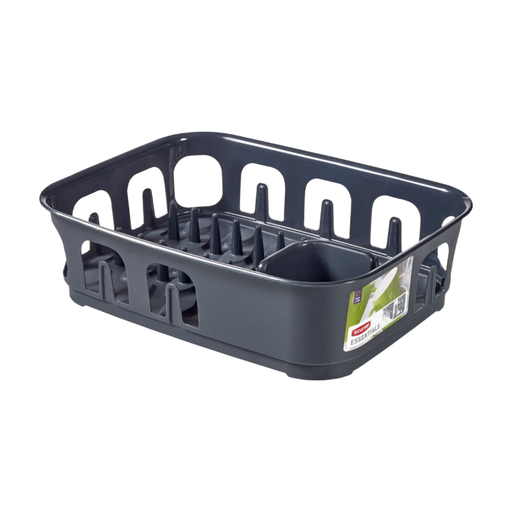
Why it suits this type of buyer: This rectangular model is designed for everyday use beside the sink. It has room for up to 12 plates, an integrated cutlery holder and external hooks for cups.
Its dimensions of 29 × 39 × 10 cm are clearly stated, and the built-in drain plug offers an alternative to a separate drip tray.
Plastic construction, a cutlery holder, cup hooks and room for up to 12 plates, according to the product information.
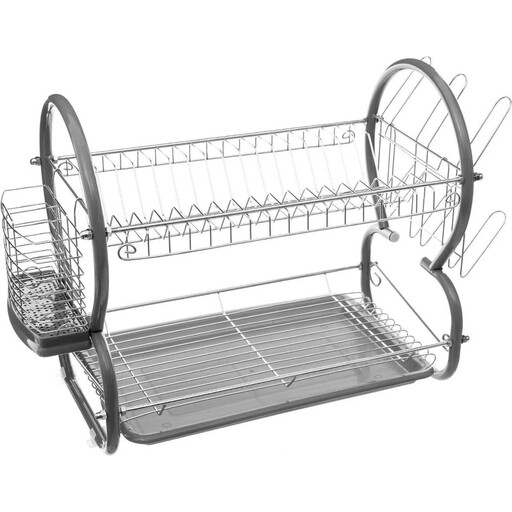
Why it suits this type of buyer: The two-tier layout is ideal for households that need to dry different types of crockery at once and want separate holders for glasses and cutlery.
The product information lists a separate cutlery basket, glass holders and a maximum load of 1,3 kg. This makes it easier to avoid overloading the rack.
Dimensions of 44 × 24 × 38 cm, chrome-plated steel, a powder-coated finish and a polypropylene drip tray.

Why it suits this type of buyer: This model is designed to sit over the sink and extends from 29 to 44 cm, leaving more worktop space free.
According to the product description, water drains straight into the sink. Be sure to measure the inside of your sink and check its support edges first.
304 stainless steel, an adjustable length of 29–44 cm and a mesh base for drainage.
We’ve put together a complete, up-to-date list of products that meet these strict selection criteria and the applicable European safety requirements.
It depends on where you place it. If the rack sits beside the sink without a direct drainage outlet, a drip tray is useful. If you place it over the sink, water can drain straight into the bowl, leaving more worktop space free.
Empty the drip tray regularly and wash the rack with warm water and a mild cleaning product, following the product instructions. Dry all parts thoroughly and check for cracks, loose joints or rust. Don’t use boiling liquids unless the manufacturer says it’s safe to do so.
First, measure the available space beside the sink. A compact plastic model works well when space is limited. A two-tier model makes use of vertical space, while an extendable dish drainer over the sink can free up worktop space. For any model, also check the clearance beneath any kitchen cupboards.
