
Vandaag of morgen in huis

Kwaliteit gegarandeerd

Welkomstaanbiedingen ontgrendelen: GRATIS bezorging | Tot 80% korting | Gratis 30 dagen JoyPlus-proefperiode
Download de app
A kitchen dish drainer may seem like a simple product, but choosing the wrong one can quickly leave you with a wet worktop, toppled glasses or not enough room for your everyday dishes. Every centimetre counts, especially in flats, student rooms and compact kitchens.
When comparing dish drainers, don’t just look at their appearance. Check the dimensions, how the water drains away and whether the layout suits your dishes. A large drainer isn’t automatically practical if it blocks the tap or is difficult to clean.
A drip tray that collects water needs to be emptied and cleaned regularly. Otherwise, the worktop stays damp and dirt can build up. If you’re choosing a dish drainer with a drip tray, check whether the tray can be removed and whether excess water can drain away through a spout or plug.
A sink dish drainer can help solve this problem. The water runs straight into the sink, but the drainer needs to sit securely on the edges and fit the width of your sink.
Some drainers have plenty of space for plates but no separate compartments for knives, forks, mugs or glasses. This can leave your dishes piled up and drying unevenly.
A dish drainer with a cutlery holder, glass holders or external hooks makes it easier to keep everything organised. Check that the cutlery holder is removable, too. This makes it easier to clean.
A 2-tier dish drainer makes use of vertical space and can be handy on a narrow worktop. However, its centre of gravity is higher than that of a single-tier model. A lightweight design may shift when you take a plate from the top tier.
Check the feet, the connections between the tiers and the maximum load. Always place the drainer on a flat surface and avoid putting heavy pans on the top tier.
First, measure the available space next to or above your sink. Make a note of:
A compact dish drainer is suitable for one- or two-person households, but may not have enough capacity for a family. A model advertised as holding, for example, 12 plates won’t necessarily have room for large bowls, saucepans and glasses at the same time. So look at the overall layout, not just one capacity figure.
A plastic dish drainer is often lightweight and easy to clean with warm water and mild washing-up liquid. Check it regularly for cracks, especially around the drainage plug and the edges of the drip tray.
A stainless steel dish drainer may be a good choice if you’re looking for an open design with direct drainage. With steel, it’s a good idea to wipe away any remaining water after cleaning. Limescale builds up more quickly if the drainer stays wet.
Also consider how the materials work together. A metal frame with a plastic drip tray can be practical, while a wooden or stone serving stand isn’t designed for drying washing-up every day. Products such as tiered stands or plate stands may look similar, but often lack a drip tray, cutlery compartment and secure plate slots.
Check whether the product information gives a maximum load. Distribute heavy plates evenly and place knives safely in the cutlery holder. If assembly is required, make sure the screws and connections are secure before using the drainer.
For a drainer that sits over the sink, adjustability is especially important. An extendable width of 29 to 44 cm, as on one of the models below, needs to match the actual internal width of your sink. Don’t just measure the outer edge.
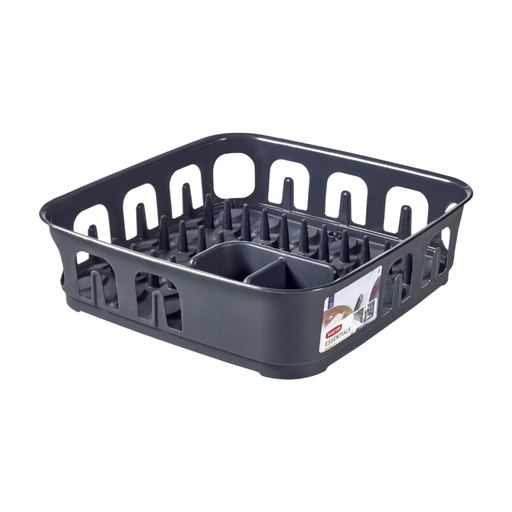
Why it suits this type of user: This plastic dish drainer is a good fit for households looking for a simple solution beside the sink. The product information states that it holds up to 12 plates and has a cutlery holder and external hooks for cups.
The built-in drainage plug helps prevent water from collecting. Separate compartments stop cutlery and cups from getting mixed in with the plates.
Plastic construction, integrated cutlery holder, cup hooks and drainage plug. Place the drainer on a stable, flat surface.

Why it suits this type of user: This model is designed for people who want to free up space on the worktop. It adjusts from 29 to 44 cm and sits over or inside the sink.
According to the product description, water drains straight into the sink. Measure your sink beforehand and check that the drainer is securely supported on both sides.
Stated material: 304 stainless steel. Adjustable length of 29–44 cm and a raised mesh surface to let water drain away.
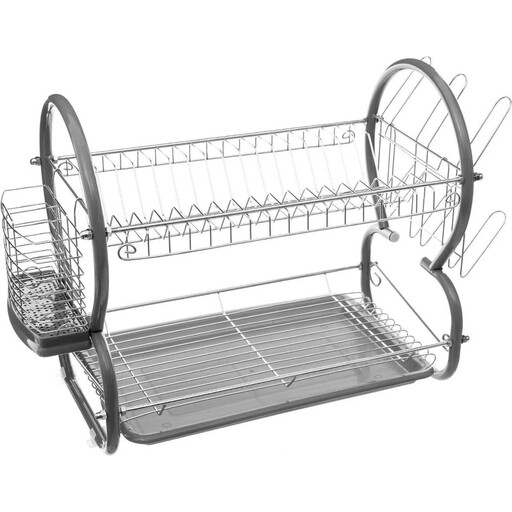
Why it suits this type of user: This 2-tier dish drainer is designed for households that want to organise plates, bowls, glasses and cutlery at the same time. Its stated dimensions are 44 × 24 × 38 cm.
The separate cutlery basket and glass holders help prevent items from piling up. As assembly is required, you can check the connections before use and make sure the drainer is positioned level.
2 tiers, a separate cutlery basket and glass holders. The stated maximum load is 1.3 kg, so place heavy items on the lower tier.
We’ve put together a complete, up-to-date list of products that meet these strict selection criteria and current European safety requirements.
Always place your dish drainer on a stable, flat surface. Keep the drainage plug or drip tray clear, and empty any standing water regularly. Wash plastic parts with warm water and a mild detergent. Wiping metal parts dry helps reduce limescale marks.
If you have a 2-tier model, check the screws and connections from time to time to make sure they’re still secure. Don’t use the drainer if cracks, bent parts or sharp edges appear. Always follow the manufacturer’s care instructions, too; not every material is suitable for the dishwasher.
Measure the available length, depth and height. Remember to allow space to remove the drip tray, too. A compact dish drainer may be enough for a small household, while families usually benefit from multiple tiers or a wider layout.
It can save worktop space and let water drain straight into the sink. However, check the internal width of the sink, the support points and the maximum load. An adjustable dish drainer shouldn’t wobble or slide over the edge.
Its lifespan depends on the material, load and care. Don’t leave water standing for long periods, avoid overloading it and check regularly for rust, cracks or loose connections. A drainer used every day is generally more practical if it’s easy to clean.
