
Vandaag of morgen in huis

Kwaliteit gegarandeerd

Welkomstaanbiedingen ontgrendelen: GRATIS bezorging | Tot 80% korting | Gratis 30 dagen JoyPlus-proefperiode
Download de app
A kitchen dish drainer might seem straightforward, but the wrong size, poor water drainage or an awkward layout can quickly become frustrating. In a flat, student room or small kitchen especially, every centimetre of worktop counts. When camping too, a lightweight, practical drying rack is often more convenient than laying crockery loose next to the sink.
When choosing, don't just focus on the looks. Check the dimensions, how water is drained away, and the space for plates, glasses and cutlery. Below are the key points to consider, along with some popular choices based on objective product data.
A rack that is 40 cm wide won't automatically fit every worktop. So measure the available space next to your sink. Also take into account kitchen cabinets, the tap, and where you'll need to lift the rack to clean underneath it.
A low-level dish drainer for the worktop is suitable when you mainly dry plates and glasses. A two-tier dish drainer makes use of height, but can be less practical under a low wall cabinet.
An open dish drainer without a drip tray lets water run straight onto the work surface. This is particularly awkward with wooden, laminate or delicate worktops. A dish drainer with a drip tray catches the water. Some models also have a drainage opening or a swivel spout that can be directed towards the sink.
Check the product information to see whether it comes with a separate drip tray, a built-in drain, or just a raised edge. These solutions don't work the same way.
A rack may claim to hold a lot of crockery, but plates, bowls and mugs take up more room than you expect. So look at the stated capacity and the layout. An integrated cutlery holder stops knives, forks and spoons from falling in amongst the crockery.
Also pay attention to stability. Place heavy plates at the bottom and avoid overloading the rack. The product information doesn't always give a maximum load weight; in that case, assume an even distribution and a level surface.
Before you buy, note down:
A compact plastic dish drainer is often easy to move. A metal dish drainer can have an open layout, but check that the finish is suitable for daily contact with water. With stainless steel, the type of material is usually stated explicitly, such as 304 stainless steel.
The most common materials are steel, stainless steel, plastic and combinations of these.
A material name doesn't automatically tell you how long a product will last. Clean the rack according to the instructions, don't use harsh scouring pads on delicate surfaces, and don't let water sit for long periods.
A drip tray needs to be emptied and cleaned regularly. With a dish drainer over the sink, water runs straight into the basin, keeping the worktop clear. An expandable model must rest securely on both sides of the sink. So measure the internal width of your sink before ordering.
A dishwasher drying rack is different from a dish drainer: a dish drainer is for hand-washed crockery on or above the sink, whereas a dishwasher drying rack is part of or used with the appliance.
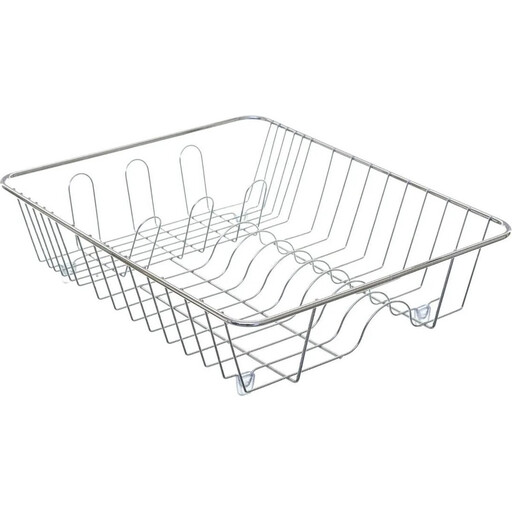
Why this fits the profile: The compact size suits a smaller worktop and the product description mentions space for 10 plates and a cutlery basket. According to the description, the rack can also be used when camping.
The dimensions are clearly stated and the raised edge is designed to limit leaks, according to the product description. Do check where the water ends up.
Steel frame with ABS plastic, 39 × 33.5 × 10.5 cm and a stated capacity of 10 plates.

Why this fits the profile: This model is designed for daily use on the worktop and combines a stainless steel rack with a removable PP drip tray. The layout offers separate zones for plates, bowls, glasses and cutlery.
The water catchment is removable, making it easier to empty than a fixed tray. Check before buying whether 42 × 29 × 12.7 cm fits on your worktop.
No assembly required according to the product description, with stainless steel and a removable PP drip tray.
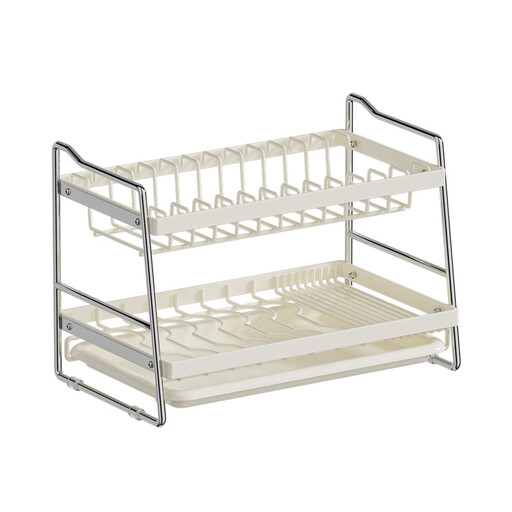
Why this fits the profile: The two-tier design uses height rather than extra worktop space. At roughly 40 × 23.6 × 28.7 cm, this is interesting for households that let several types of crockery drain daily.
The integrated drip trays are designed to channel water towards the sink or a collection point. Assembly is required, so follow the included instructions.
Two levels, a compact footprint and a stated construction of composite material with integrated drip trays.
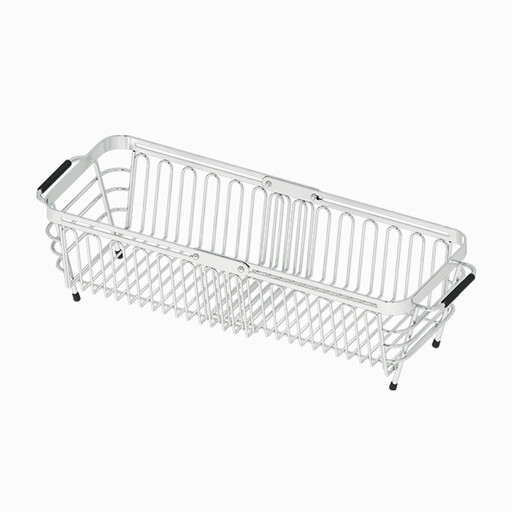
Why this fits the profile: This expandable rack can be adjusted from 29 to 44 cm according to the product description. It sits over the sink, keeping the worktop clear. It can also be used as a colander for fruit and vegetables.
Because water runs straight into the sink, a separate drip tray isn't needed. Measure your sink carefully and only place the rack when it is stable and level.
304 stainless steel, adjustable length from 29–44 cm and a raised mesh base for water drainage into the sink.
We've put together a full, up-to-date list of products that fully meet these strict selection criteria and current European safety regulations.
Place a freestanding rack on a level surface next to the sink, with enough room to remove the drip tray. A rack over the sink must rest securely on both sides and must not block the tap or drain. Also check that the crockery remains easy to reach.
Empty the drip tray regularly and wash the rack with warm water and a mild cleaning agent. Remove food residue from crevices and holders. Dry metal parts if water sits on them for a long time. With plastic, avoid extreme heat if the product description advises against it.
The lifespan depends on the material, load, moisture and maintenance. A metal or stainless steel version can be suitable for daily use, while plastic models are lightweight and easy to replace. Check the rack regularly for cracks, loose parts, damaged coating and instability. Use the product according to the safety instructions and the applicable statutory warranty conditions.
