
Vandaag of morgen in huis

Kwaliteit gegarandeerd

Welkomstaanbiedingen ontgrendelen: GRATIS bezorging | Tot 80% korting | Gratis 30 dagen JoyPlus-proefperiode
Download de app
A kitchen dish drainer needs to do more than temporarily hold wet dishes. It should fit on or above your worktop, drain water effectively and provide enough room for plates, glasses and cutlery. Yet many households choose a dish rack based solely on its colour or an attractive product photo.
Here are some common pitfalls:
Check the available space, how often you wash up and how you want water to drain before you buy to avoid choosing the wrong rack.
Measure the depth and height of the space as well as the worktop’s width. Allow for cupboard doors, the kitchen tap and enough room to take dishes out of the rack.
A compact plastic dish drainer may be enough for a small household or student accommodation. Families may find a 2-tier dish drainer more useful, as it makes use of vertical space without taking up the whole worktop. Also check whether the stated external dimensions include the drip tray.
A worktop dish drainer usually sits next to the sink. A model designed to sit over the sink works differently: it needs to rest securely on the edges and is best if it’s adjustable.
A dish drainer with a drip tray collects water running off plates and glasses. This is useful when the rack isn’t positioned directly over the sink. Then check:
A dish drainer with a drainage plug or integrated drain can help reduce standing water. With a rack over the sink, water drains straight into the bowl, but the rack still needs to fit the available width securely.
A plastic dish drainer is usually lightweight and easy to move. This makes it handy for small kitchens, caravans and campsites. However, check for cracks, heat-related warping and whether the material is easy to clean thoroughly.
A stainless steel dish drainer or a model made from 304 stainless steel is a good option if you’re looking for a sturdy, adjustable rack. The product details should clearly state which material is used. A metallic finish doesn’t necessarily mean the rack is made from solid stainless steel.
A coated or chrome-plated metal dish rack can also be practical. If you choose one, check the maximum load and place it on a flat, stable surface. Don’t overload a tall rack.
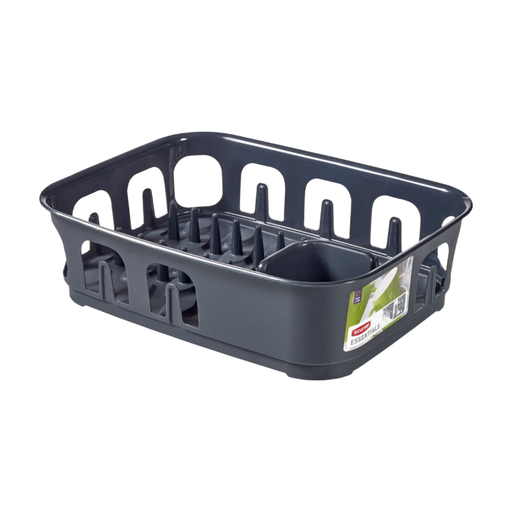
Why it suits this type of user: This rectangular plastic dish drainer measures 29 × 39 × 10 cm and is compact enough for everyday use next to the sink.
The dimensions are clearly stated, and the rack has a cutlery holder, mug hooks and a built-in drainage plug.
Room for up to 12 plates, external mug hooks and an easy-to-clean plastic construction.

Why it suits this type of user: This adjustable stainless steel dish drainer is designed for use over or in the sink, and extends from 29 to 44 cm.
The adjustable length makes it easier to fit the rack to your sink, while water drains straight into the bowl.
Listed as 304 stainless steel, with an adjustable length of 29–44 cm and a fine mesh surface for drainage.
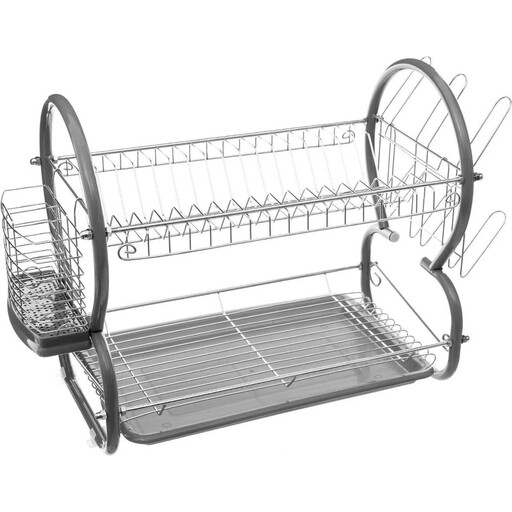
Why it suits this type of user: The 2-tier layout suits households that need to dry several types of crockery, glasses and cutlery every day.
The product details list a separate cutlery basket and glass holders, so different items don’t need to be stacked loosely on top of one another.
Measures 44 × 24 × 38 cm, holds up to 17 pieces of crockery and cutlery according to the product description, and has a maximum load of 1.3 kg.
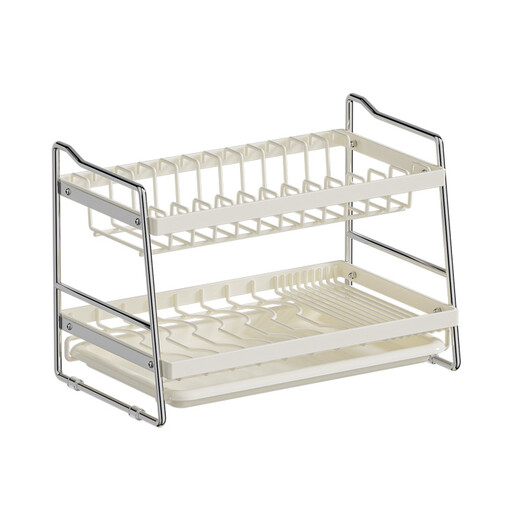
Why it suits this type of user: This freestanding model measures approximately 40 × 23.6 × 28.7 cm. It makes use of vertical space and has an integrated drainage system for the worktop.
The two tiers help keep the footprint small. The integrated drip trays are designed to keep water off the worktop.
Freestanding design with two tiers and space for plates, mugs, cutlery and kitchen utensils. Assembly is required.
We’ve put together a complete, up-to-date list of products that meet these strict selection criteria and the current European safety requirements.
Empty the drip tray regularly, and rinse the cutlery holders and drainage openings clean. A plastic or metal dish rack will stay in good condition for longer if you let it dry after cleaning. Use a mild cleaning product and check metal parts for damage to the coating.
Always place the rack on a flat, stable surface. Don’t place heavy pans all on one side, and don’t exceed the stated maximum load. Keep sharp knives safely in a cutlery holder. If you have an adjustable model, check that both ends are resting securely on the sink before use.
Measure the space next to or above the sink and compare it with the product’s full external dimensions. If you’re placing the rack on the worktop, allow room for the tap and cupboard doors too. For a household with lots of crockery, a 2-tier model may be more practical than a wide, low rack.
A drip tray stops water from running directly onto the worktop. However, you’ll need to empty and clean it regularly. If the rack sits over the sink, a model without a large drip tray may be more convenient, as the water runs straight into the sink.
Its lifespan depends on the material, load, moisture and care. Don’t leave the rack in standing water for long periods, avoid overloading it and replace it if the plastic cracks or the metal becomes damaged. Always check the latest warranty and product terms too.
