
Vandaag of morgen in huis

Kwaliteit gegarandeerd

Welkomstaanbiedingen ontgrendelen: GRATIS bezorging | Tot 80% korting | Gratis 30 dagen JoyPlus-proefperiode
Download de app
A kitchen dish drainer may seem like a simple household item, but choosing the wrong one can quickly leave you with a wet worktop, wobbly stacks of crockery or a rack that won’t fit beside the sink. Every centimetre counts, especially in Dutch kitchens with narrow worktops.
When choosing one, don’t just look at the number of tiers or an attractive product photo. Check the dimensions, drainage, load capacity and material. This will help you avoid ending up with a dish drainer that takes up more space than it saves after just a few weeks.
A 2-tier dish drainer may look compact in a photo, but not every worktop can accommodate one that’s 40 to 44 cm wide. Measure the available space beside the sink. Also consider the height of your kitchen cupboards and whether you’ll have enough room to take plates out of the plate rack.
For an over-sink rack, check the minimum and maximum length too. An adjustable dish drainer that extends from 29 to 44 cm won’t necessarily fit every sink.
With metal racks, it’s important to check which metal has been used and how it has been finished. 304 stainless steel is a specific material description. If you choose a dish drainer made from chrome-plated steel or powder-coated carbon steel, remove water residue regularly and dry the surface thoroughly.
A plastic dish drainer is generally lightweight and easy to clean. However, check that the drip tray sits securely and that water won’t collect in any corners or grooves.
“Suitable for lots of crockery” doesn’t mean the rack can take a heavy load. Check the stated maximum weight if one is available. For example, the 5five Dish Rack can hold up to 17 pieces of crockery and cutlery, but it also has a maximum load capacity of 1,3 kg. That’s not the same as a rack designed for heavy pans.
Use a dish rack for plates, bowls, cups and glasses. For cast-iron pans or heavy lids, a pan rack or cupboard organiser for pans is a better choice.
Before buying, make a note of:
A compact rack measuring 29 x 39 x 10 cm may be more practical for a small student kitchen than a larger model with greater capacity.
A dish drainer with a drip tray collects water and protects your worktop. Check that you can remove and clean the tray easily. Some models have a drainage plug that lets water run towards the sink. This is useful if the rack sits directly beside or above the sink.
With an over-sink rack, the water runs straight into the bowl. Position it securely on the edges of the sink and check that the adjustable sections won’t shift.
Plastic is lightweight, easy to move and requires little maintenance. Metal may feel sturdy, but the construction, coating and joints determine how stable the rack really is. Place any dish drainer on a flat surface and don’t exceed its stated load capacity.
Adjustable supports or hooks are useful for pans and lids. If you’re fitting a rack inside a cupboard, check the available depth and whether fixings are included.
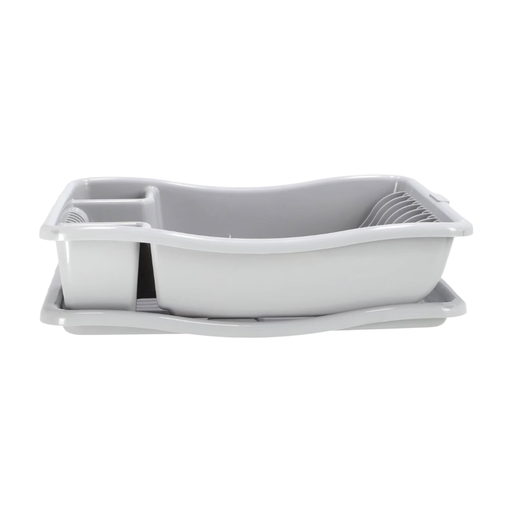
Why it suits this profile: This plastic dish drainer has a compact rectangular shape, a drip tray and two separate cutlery compartments. It can hold up to 12 plates.
The dimensions are clearly stated, and the drip tray stops water from running straight onto the worktop. No assembly is required.
Compact size, plastic construction, two cutlery compartments and space for up to 12 plates.

Why it suits this profile: This adjustable dish drainer is designed to sit over or in the sink, and extends from 29 to 44 cm.
Water drains straight into the sink. Before buying, check that your sink falls within the adjustable range.
304 stainless steel, an adjustable length of 29–44 cm and versatile use as a dish drainer or colander.
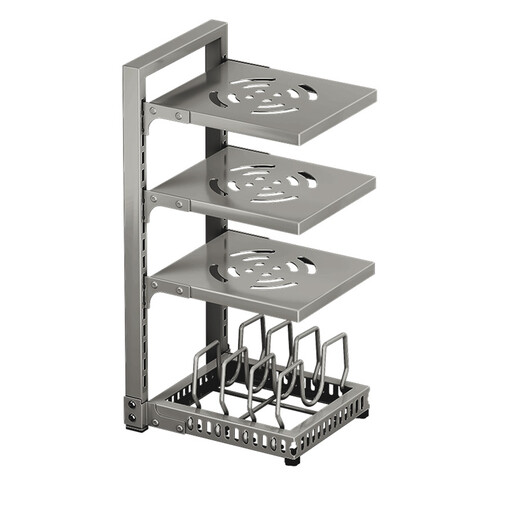
Why it suits this profile: This 4-tier pan rack is designed to be fitted inside a kitchen cupboard or placed in a deep drawer. It measures approximately 23 x 28 x 53 cm.
The adjustable tiers and hooks help keep pans, lids and handles separate. Assembly is required, and you’ll need a cupboard of the right size.
Powder-coated carbon steel, four tiers, adjustable parts, and suitable for pans and lids.
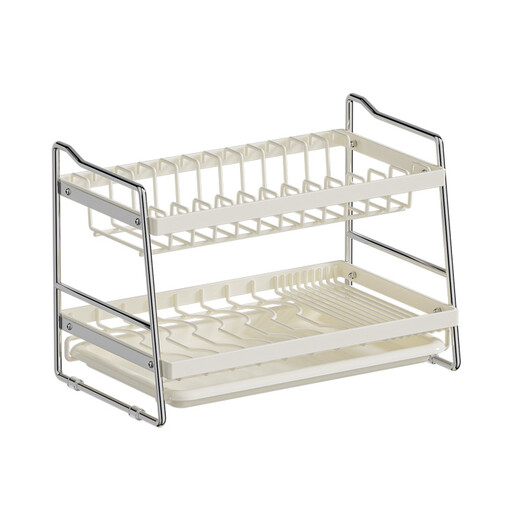
Why it suits this profile: The 2-tier design makes use of vertical space and holds crockery, cups, cutlery and kitchen utensils on a worktop measuring around 40 x 23,6 cm.
The integrated drainboards are designed to direct water towards a sink or collection point. The parts need to be assembled.
Two tiers, freestanding design, integrated water collection and a stated size of approximately 40 x 23,6 x 28,7 cm.
We’ve put together a complete, up-to-date list of products that meet these strict selection criteria and the applicable European safety regulations.
Choose a dish drainer with a drip tray or a model that sits over the sink. Empty and clean the drip tray regularly. If the rack has a drainage plug, position it so that the water can run into the sink.
Its lifespan depends on the material, load and maintenance. Dry metal parts after use, remove limescale carefully and check plastic parts for cracks. Don’t overload the rack, and replace it if the joints come loose or it no longer stands securely.
It can be, as long as the height and width fit. A 2-tier model uses less worktop space per item of crockery, but it must stand securely. Measure the space beside the sink and check that cupboard doors and wall cupboards can still be opened freely.
