
Vandaag of morgen in huis

Kwaliteit gegarandeerd

Welkomstaanbiedingen ontgrendelen: GRATIS bezorging | Tot 80% korting | Gratis 30 dagen JoyPlus-proefperiode
Download de app
A kitchen dish drainer might seem like a simple product, but the differences in size, water drainage and layout have a big impact on how well it works day to day. A small rack can fill up quickly, while a large model takes up unnecessary worktop space. What’s more, some racks hold onto water, meaning you have to clean them more often.
For households, students, families and campers, there are three main pitfalls to watch out for:
Only looking at capacity
A rack that can hold lots of plates doesn’t automatically give you enough room for glasses, bowls and cutlery. So always check whether it has a cutlery basket, glass holders or separate compartments.
Skipping the worktop measurements
Measure the available space next to your sink. Don’t just look at length and width – consider the height too. A two-tier dish drainer can hold plenty of crockery, but it might not fit under a wall cupboard.
Choosing a drip tray without proper drainage
A separate drip tray catches water, but you’ll need to empty it regularly. A dish drainer with a drip tray and water outlet can be more practical if the spout can sit over or next to the sink. Check beforehand whether the drainage actually works with your layout.
First, measure the space for a dish drainer for the worktop. Leave a few centimetres free all around so you can lift the rack and clean it. Then compare the product dimensions with your daily use:
For example, a model measuring 42 × 29 × 12.7 cm takes up less height than a two-tier version at 40 × 23.6 × 28.7 cm. So your choice depends on the available worktop space and the amount of crockery you have.
A stainless steel dish drainer usually has a hard, smooth base and is suitable for a damp environment. However, check that all parts are made of stainless steel. On some models, the drip tray and cutlery holder are made from polypropylene (also known as PP).
A plastic dish drainer is often lightweight and easy to move around. That can be practical for students, campers, or anyone who wants to free up the worktop regularly. Look out for cracks, warping and the recommended cleaning method. For plastic and coated items, it’s best to use a mild cleaning product.
The drip tray should be easy to remove. That way, you can get rid of standing water and clean the part separately. If the rack has a drainage hole or a swivel spout, measure the distance to the sink.
The base should be flat and stable. Don’t overload a dish drainer, especially if you’re placing heavy pans or large dishes on the top tier. For adjustable or assembled models, also check that all the connections are properly tightened.
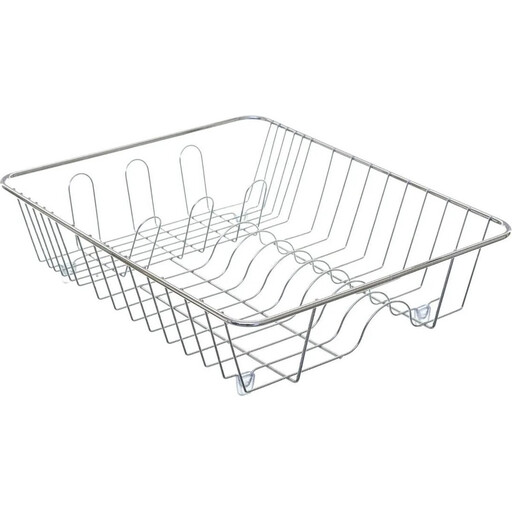
Why this fits the profile: This compact dish drainer is suitable for a small kitchen, student room or camping spot. The product information states it has room for 10 plates and a cutlery basket.
The dimensions of 39 × 33.5 × 10.5 cm make the required worktop space clear. According to the product description, the raised edge is designed to keep water inside the rack.
Steel rack with ABS plastic, cutlery basket and a weight of 610 grams. According to the product details, this model is also intended for use while camping.

Why this fits the profile: This single-tier model combines steel with a removable PP drip tray and is designed for daily use next to the sink.
The product description mentions a removable drip tray and a water outlet. This means you can empty and clean the tray separately. Check for yourself whether the spout connects to your sink.
Stainless steel and PP listed as the materials; dimensions of approximately 42 × 29 × 12.7 cm; no assembly required according to the product specifications.
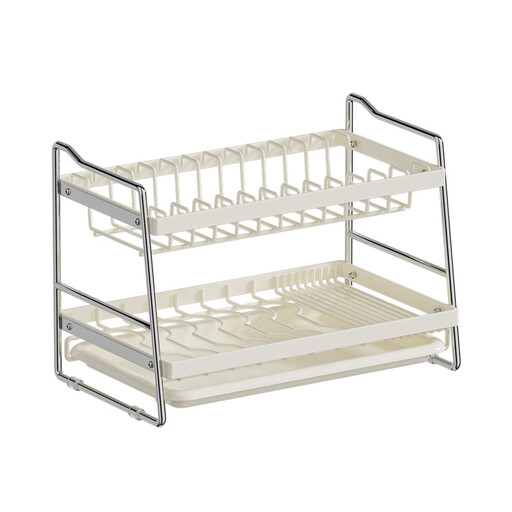
Why this fits the profile: The two tiers are designed for households that regularly dry multiple plates, glasses, bowls and kitchen utensils at the same time.
The product information mentions built-in drip trays that direct water to the sink or a collection point. After assembly, check that the water really doesn’t end up on the worktop.
Two tiers, dimensions of approximately 40 × 23.6 × 28.7 cm and a freestanding setup. Assembly is required according to the product details.
We’ve put together a full, up-to-date list of products that fully meet these strict selection criteria and comply with current European safety regulations.
Choose a dish drainer with a drip tray and check that the tray sits properly under the rack. For a model with a spout, the drainage point must be above the sink or a suitable collection tray. Empty the drip tray regularly and also clean the underside of the rack.
The lifespan depends on the material, how much it’s used and how well it’s maintained. A metal or stainless steel version can be suitable for daily use, but check regularly for rust, bent parts or damaged coatings. Plastic models need to be replaced when they crack or warp. Always follow the manufacturer’s care instructions.
It can be, as long as you have enough vertical space. Measure the height between the worktop and any wall cupboards before you buy. A two-tier model saves worktop space per item, but it does take up more height than a single-tier plate rack.
