
Vandaag of morgen in huis

Kwaliteit gegarandeerd

Welkomstaanbiedingen ontgrendelen: GRATIS bezorging | Tot 80% korting | Gratis 30 dagen JoyPlus-proefperiode
Download de app
A good kitchen dish drainer doesn’t need to be large or complicated. Above all, it should suit the space you have, the amount of washing-up you do each day and the way you wash your dishes. A student room has different needs from a family home or a camping kitchen.
When comparing options, don’t just look at how many plates the packaging says a drainer can hold. A dish drainer might seem spacious on paper, but in practice it could become unstable, leave water on the worktop or not have enough room for glasses and cutlery.
A high plate capacity doesn’t mean much if there are no separate sections for bowls, mugs or glasses. Check whether the design includes a cutlery holder, cup holders or an extra tier. Otherwise, smaller items may end up loose among the larger plates.
A dish drainer without a good drip tray can leave wet patches on your worktop every day. A dish drainer with a drip tray is more practical if you don’t have a drainage outlet beside the sink. If the tray has a drainage plug or channel, check that you can position it over the sink.
A two-tier dish drainer takes up less worktop space, but it might be too tall to fit under your kitchen cupboards. So measure not only the length and width of your worktop, but also the available height. For a small kitchen or student room, a compact dish drainer is often more useful than a model with maximum capacity.
Measure the space beside or above your sink. Bear in mind:
A worktop dish drainer is a good choice if you have enough worktop space. If your worktop is narrow, an adjustable over-sink dish drainer can free up space by letting the water drain straight into the sink.
A drip tray collects excess water, but it needs to be emptied and cleaned regularly. Look for a slightly sloping base, a drainage hole or a design that can sit over the sink. Standing water can cause limescale and dirt to build up.
A separate kitchen organiser or cutlery tray beside the dish drainer can be useful, but check that the whole setup is still easy to clean. Lots of narrow corners can make everyday cleaning more difficult.
The most common options are:
Always check the stated dimensions, maximum load and care instructions. A brand’s claims about durability or hygiene aren’t a guarantee for every use; the product specifications and your day-to-day care are what matter.
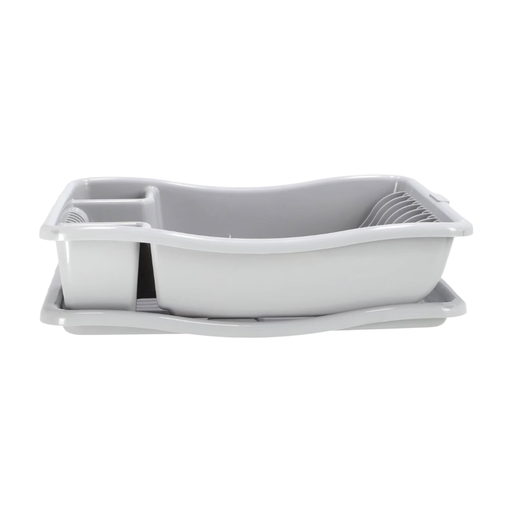
Why it suits this shopper: This plastic dish drainer is a handy size for a smaller household and holds up to 12 plates. The included drip tray catches water before it reaches the worktop.
The dimensions are clearly stated, and the drainer has two built-in cutlery sections. That means you won’t need to buy a separate organiser to dry your cutlery separately.
38 x 29 x 8.5 cm, holds up to 12 plates and comes with a separate drip tray.

Why it suits this shopper: This metal dish drainer fits in or over the sink and adjusts from 29 to 44 cm. It’s a practical option if you want to keep your worktop clear or have a sink of a less common width.
Water drains straight into the sink, so you won’t have to empty a full drip tray from the worktop. Be sure to measure the inside of your sink first.
304 stainless steel, adjustable length from 29–44 cm and a mesh base for drainage.
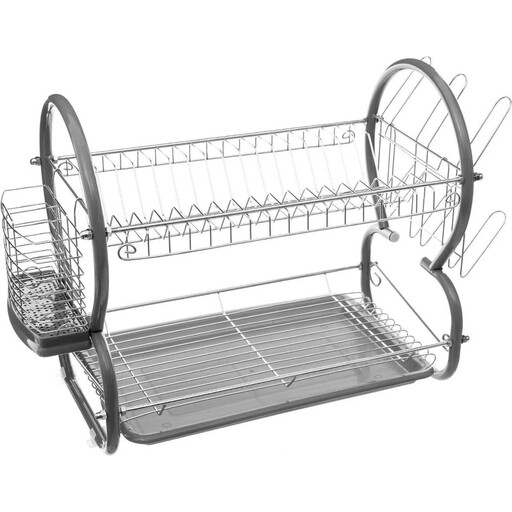
Why it suits this shopper: The two-tier layout is designed for households that dry several types of dishes every day. This model has separate holders for cutlery and glasses.
The layout keeps glasses, plates and cutlery from becoming one jumbled pile. Just be sure to respect the maximum load of 1.3 kg.
44 x 24 x 38 cm, space for dishes and glasses, plus a separate cutlery basket.
We’ve put together a complete, up-to-date list of products that meet these strict selection criteria and the current European safety regulations.
Choose a model with a compact footprint, a single tier or a design that fits in the sink. Measure the available space beforehand and check that cupboard doors can still open fully. An adjustable over-sink dish drainer can keep your worktop clear.
Empty the drip tray regularly and rinse the drainer with warm water and a mild cleaning product. Dry metal parts thoroughly and remove limescale before it builds up. Always follow the manufacturer’s care instructions, especially for bamboo or plastic.
Its lifespan depends on the material, load, moisture and how well it’s maintained. Overloading can warp a plastic or metal frame. Check regularly for cracks, loose joints, rust spots or a damaged coating, and replace the drainer if it becomes less stable.
