
Viewers moving between the kitchen and dining table
You won’t always be sitting directly in front of the screen. Check the picture from both spots and consider the incoming light.


Start by considering where you’ll watch from: measure the distance and assess daylight, reflections and picture quality from both the kitchen and the dining table. An LCD TV is worth comparing if you often watch in daylight; OLED may suit you better if film contrast and viewing from different positions matter more. Also check the playback options and sound for each model, and choose a spot away from heat and moisture.
You won’t always be sitting directly in front of the screen. Check the picture from both spots and consider the incoming light.
You want a screen that’s comfortable to watch from the dining table and fits your space. Measure the viewing distance and the available width and height.
You’re looking for a cinematic picture, clear dialogue and playback options that suit the way you watch. Check these points for each TV and source.
| What to consider | What should you check? | Who is this important for? |
|---|---|---|
| Daylight, reflections and viewing angle | Watch the same picture from the table and the kitchen in lighting similar to your home. Look out for reflections and check whether colour and contrast still look good from the side. | If I watch from both spots, I want to assess the picture without having to sit directly in front of the TV. Around 28% of consumers say daylight and viewing angle are their main concerns. |
| Screen size and positioning | Measure the distance from both viewing spots and the available space, including the stand. The Dutch Consumers’ Association suggests using around 2.4 times the screen diagonal as a starting point for a comfortable viewing distance (5 May 2026); treat this as a guideline, not a fixed measurement. | If the TV needs to work from both the dining table and the kitchen, I want to weigh up viewing distance and furniture space together. Around 22% of consumers prioritise size and set-up. |
| Film playback and dialogue | Check that your preferred app or input works with the exact model. Also listen for whether speech is clear from your usual viewing spot. | If I want to start short films without any fuss and follow the dialogue easily, I check both the source and the sound. Around 22% of consumers say playback and speech clarity are their main concerns. |
| Film contrast | Compare a familiar scene with light and dark areas in the lighting you usually watch in. The Dutch Consumers’ Association describes differences between LCD and OLED; results also depend on the specific model and viewing position. | If dark scenes in films matter to me, I want to assess the detail in my own viewing light. Around 17% of consumers prioritise film contrast. |
| Energy use and running costs | Compare the energy label on a like-for-like basis, such as kWh per 1000 hours for SDR and, where relevant, HDR. Milieu Centraal and Energielabel.nl explain that the label shows consumption per 1000 hours; your own usage also depends on settings and viewing time. | If I use the TV often, I want to take its energy use into account without comparing different label values as if they were the same. Around 11% of consumers say energy use and running costs are their main concerns. |
The picture may look different from the kitchen or another seat. Incoming light can also affect how it looks.
Check the viewing angle and reflections from the positions where you’ll actually watch, in lighting similar to your home.
The Dutch Consumers’ Association points out that not all 4K TVs offer good picture quality. The technology name alone won’t tell you how a particular model displays films.
Compare reviews of the specific model and watch a familiar film scene rather than relying on the resolution or technology name alone.
According to LG, the LG OLED42C5ELB.DS60T is a bundle with a DS60T soundbar. It’s not the same product as a standalone OLED42C5ELB.
Check the full model code and what’s included in the bundle before comparing different versions.
Samsung lists the 43-inch Q7F2 as a QLED 4K TV. This makes it an LCD option to compare for a bright kitchen-diner.
Philips lists the 43PUS9000/12 as a 43-inch 4K QLED screen with Ambilight. This is worth considering if you’d also like integrated mood lighting.
LG lists the OLED42C5ELB.DS60T as a 42-inch OLED TV bundled with a soundbar. This may be relevant if you want to consider film contrast and a separate sound solution together.
This selection focuses on watching short films in a kitchen-diner, with 42- and 43-inch LCD and OLED models to compare for size, viewing light, playback and sound.
 Image unavailable
A 42-inch OLED TV to compare if film contrast and a compact screen size matter to you.
Specifications: 4K, webOS, Dolby Vision, HDR10, Dolby Atmos and HDMI 2.1.
Avoid direct heat, extreme humidity and splashes. Keep the ventilation clear and follow the installation instructions for this model.
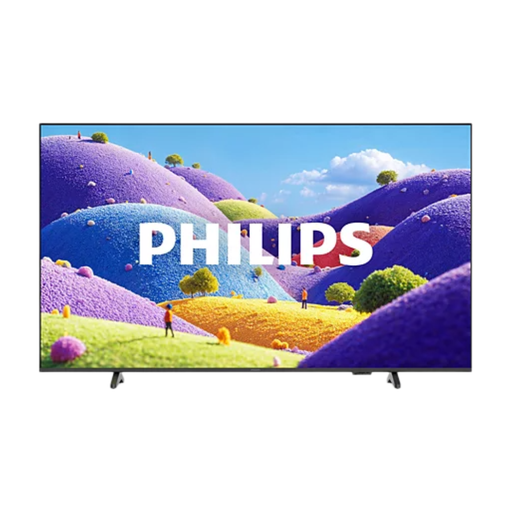 Image unavailable
A 43-inch TV to consider when weighing up screen space, film playback and clear dialogue.
Specifications: 4K, Titan OS, Dolby Atmos and IntelliSound with voice enhancement.
Avoid direct heat, extreme humidity and splashes. Keep the ventilation clear and follow the installation instructions for this model.
 Image unavailable
A 43-inch LCD option to compare if you’re looking for a smart TV platform and film viewing in the kitchen-diner.
Specifications: 4K UHD, 60 Hz, Dolby Vision, VIDAA and Filmmaker Mode.
Avoid direct heat, extreme humidity and splashes. Keep the ventilation clear and follow the installation instructions for this model.
 Image unavailable
A 43-inch QLED model to compare if you want to consider both a smart TV platform and a dedicated film viewing mode.
Specifications: 4K UHD, VIDAA, HDR10+ and 3 HDMI 2.1 ports.
Avoid direct heat, extreme humidity and splashes. Keep the ventilation clear and follow the installation instructions for this model.
 Image unavailable
A 43-inch smart TV to compare if you want to stream films and match the connections to your devices.
Specifications: 4K Ultra HD, Google TV, HDR10, Dolby Audio, triple tuner (DVB-C/T/T2/S/S2) and dual-band Wi-Fi.
Avoid direct heat, extreme humidity and splashes. Keep the ventilation clear and follow the installation instructions for this model.
Measure both viewing distances and the available space. The Dutch Consumers’ Association suggests using around 2.4 times the screen diagonal as a starting point for a comfortable viewing distance; don’t automatically choose one size for two different viewing spots.
Choose a spot where the TV won’t be exposed to direct heat, extreme humidity or splashes, and leave enough room for ventilation. Philips warns about heat and extreme humidity on a support page for certain older models; also check the installation and safety instructions for the model you choose.
Check the picture at home in your usual lighting, rather than relying on a brighter shop setting. The Dutch Consumers’ Association recommends using a familiar scene with light and dark areas, then adjusting the picture settings to suit.
Compare the energy label figures in kWh per 1000 hours on the same SDR or HDR basis. Your own energy use also depends on viewing time and settings; Milieu Centraal and Energielabel.nl explain that label values are given per 1000 hours.
No. According to ACM ConsuWijzer, your statutory guarantee applies alongside a manufacturer’s or retailer’s warranty. If a product breaks down too soon during normal use, the retailer is responsible for providing a suitable solution at no cost; there is no single fixed statutory guarantee period that applies to every TV.