
Vandaag of morgen in huis

Kwaliteit gegarandeerd

Welkomstaanbiedingen ontgrendelen: GRATIS bezorging | Tot 80% korting | Gratis 30 dagen JoyPlus-proefperiode
Download de app
Cutting vegetables, bread, cheese and meat is quicker with the right tool. However, not every kitchen cutting tool is suitable for daily use. A compact vegetable chopper might seem handy, but can become impractical if parts are difficult to clean. An electric slicer can save time, but takes up more space and requires extra attention to safety.
This guide helps home chefs, hobby cooks and households compare products on objective points. That way, you avoid paying for marketing jargon while the features don't match your kitchen routine.
A multi-function food processor or mandoline often comes with several blades and attachments. That sounds appealing, but first check which parts you actually need. A set with five cutting techniques is less practical if you have to store most accessories separately or wash them by hand.
Also pay attention to the difference between a vegetable slicer, kitchen grater and chopper. A slicer makes even slices, a grater works for finer textures, and a chopper cuts ingredients into smaller pieces. One product doesn't always replace these functions completely.
Sharp blades, rotating drums and moving cutting edges require a good hand guard or food pusher. With an electric slicer, you also need a stable surface, a safety on/off switch and a safe way to clean it.
Check whether the product includes clear instructions for use. With electrical appliances, always unplug them from the socket before removing blades or cleaning parts.
A bread slicer with a foldable design is easier to store than a large fixed appliance. Alongside dimensions, also check the weight, cord length and available worktop space.
For manual models, the cleaning method is important. Some products, according to their description, cannot go in the dishwasher. A damp cloth may then be the recommended maintenance method. Also check whether collection trays, blades and holders are easy to detach.
For slicing and grating, stainless steel is a practical material for blades. It withstands regular daily use and can be easily dried after cleaning. The housing is often made of plastic. That keeps the product light, but check that the construction is sturdy enough for the ingredients you want to process.
A kitchen grater with a collection tray prevents grated cheese or vegetables from falling straight onto the worktop. With a mandoline, the combination of a sharp blade, hand guard and stable base is particularly important.
If you want to slice bread, cheese or meat in different ways, an adjustable slice thickness is beneficial. The FRITEL models in this selection, for example, offer a range of 0 to 15 mm. That is relevant for both thin slices and thicker pieces of bread.
With a vegetable chopper, you should look more at the number of cutting techniques and the blades included. Check whether the product description actually states which thicknesses or shapes are possible. A larger number of accessories does not automatically mean a wider adjustment range.
With a chopper or electric food processor, compare the bowl capacity and power. A 600 ml bowl is suitable for smaller portions, while a 2 litre capacity is better for larger quantities. The motor power gives a technical indication, but does not on its own tell you how quickly or evenly an appliance works.
Follow the stated maximum capacity and, if necessary, cut large ingredients into smaller pieces first. For the Bear Chopper QSJ-D03W5, for example, it states that ingredients should be cut into cubes of about 2 cm beforehand and that the appliance should not run continuously for longer than 30 seconds.
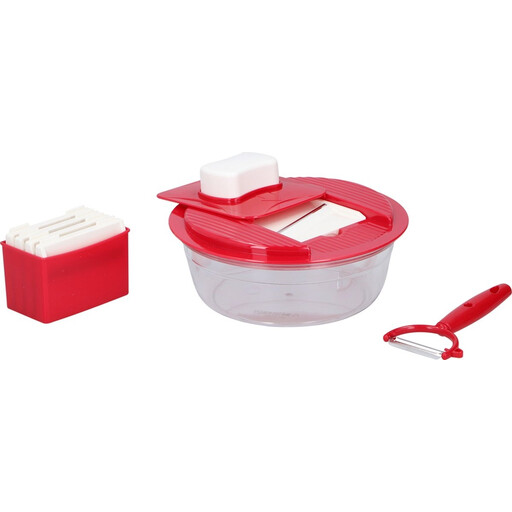
Why this fits the profile: This manual set combines grating and slicing in seven parts and includes a collection tray. That suits smaller kitchens and users who don't need an electrical appliance.
The included parts are clearly described: two slice thicknesses, a flat slicing blade, a grater, collection tray, holder and safety handle. Do check whether hand washing fits your routine.
Set of 7 parts; plastic housing with stainless steel blades; suitable for coarse and fine grating.
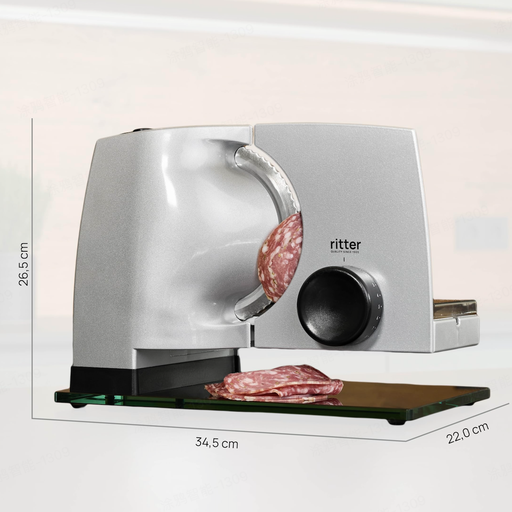
Why this fits the profile: This electric slicer is designed for those who regularly cut bread, fruit, vegetables or cheese in different thicknesses.
The product description mentions a removable carriage, a serrated blade and adjustable slice thicknesses from thin up to 20 mm. This makes the relevant features clearly verifiable.
Removable carriage; shock-resistant glass base plate; electric operation with pulse and continuous switch.
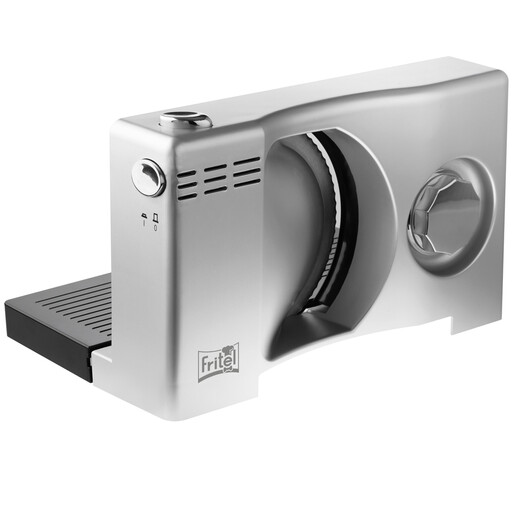
Why this fits the profile: Suitable for households that often slice bread, cold meats or cheese and want a foldable appliance for storage.
The slice thickness is adjustable from 0 to 15 mm. The blade and carriage are, according to the description, removable, making maintenance less fiddly.
Serrated stainless steel blade; foldable design; child-safe on/off switch; collection tray for scraps.
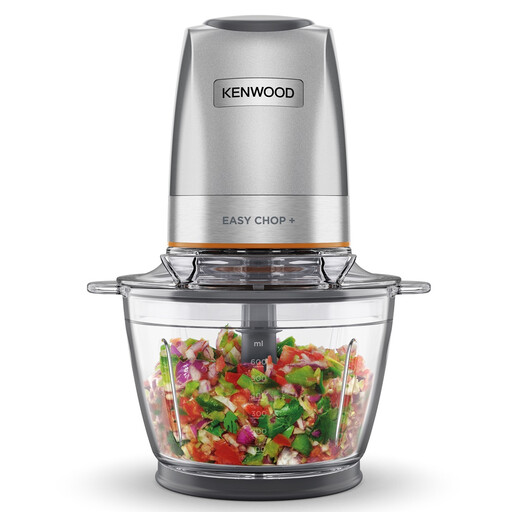
Why this fits the profile: A practical choice for anyone who wants to quickly chop onions, herbs, vegetables or other ingredients into smaller portions.
The specifications mention a 600 ml bowl, two speeds and four stainless steel blades. This lets you match the capacity and operation to your portions in advance.
Glass bowl of 600 ml; two speeds; non-slip ring; removable parts, several of which are described as dishwasher-safe.
We have compiled a full, up-to-date list of products that fully meet these strict selection criteria and current European safety regulations.
A manual vegetable chopper doesn't need electricity and is usually compact. That makes it suitable for everyday small tasks. An electric slicer requires more space and power, but can be worthwhile if you often slice bread, meat or cheese into even pieces. Compare the purchase price, cleaning time and how often you'll use it.
First use the hand guard and don't touch the cutting blade with bare fingers. Follow the manufacturer's maintenance instructions. If dishwasher use is not recommended, clean the part by hand or with a damp cloth and dry it immediately. Store sharp accessories out of reach of children.
The lifespan depends on the material, frequency of use, maintenance and storage. Stainless steel blades can last a long time with careful use, but will become less sharp over time. With electrical appliances, also check the warranty terms. In the European Union, many consumer products have a minimum legal warranty of two years; additional terms may vary by product and seller.
