
Vandaag of morgen in huis

Kwaliteit gegarandeerd

Welkomstaanbiedingen ontgrendelen: GRATIS bezorging | Tot 80% korting | Gratis 30 dagen JoyPlus-proefperiode
Download de app
A kitchen cleaver can be handy for vegetables, meat, poultry and sturdy ingredients. However, not every cleaver is suited to the same task. A heavy bone cleaver, for example, requires a different construction to a Chinese cleaver used for everyday chopping. Likewise, an appealing product description boasting terms like “ultra-sharp”, “professional” or “lifetime” doesn’t tell you much about how it actually performs.
So focus on verifiable details: material, dimensions, construction, handle and maintenance. That way, you’ll avoid buying a knife that’s too heavy for daily cooking, rusts quickly, or doesn’t suit your chopping board and cooking style.
Many kitchen knives are described as multi-purpose. That doesn’t automatically mean they’re suitable for hard bones. A thin meat knife or vegetable knife can be damaged if you use it to chop through bones, frozen food or tough joints.
Always check the intended use. For chicken wings, ribs and small joints, a sturdy cleaver can be appropriate. For large or very hard bones, professional butcher’s equipment is often more suitable than a standard kitchen cleaver.
According to some brands’ own product information, their knives have a very sharp or professionally ground edge. That’s a claim from the brand, not a guarantee for every user or every cutting task. Practical usability also depends on blade geometry, thickness, balance and sharpening options.
A thin blade often cuts pleasantly through vegetables and meat. A thicker, heavier blade is better suited to chopping, but may be less comfortable for fine cutting work.
A kitchen cleaver with a smooth or poorly fitting handle can give you less control, especially with damp hands. Check whether the product has a full tang, secure fixing or ergonomically shaped grip, when this information is available.
Also pay attention to maintenance. Stainless steel is not the same as completely maintenance-free steel. Hand washing, drying immediately and not leaving it to soak for long periods will help limit stains, corrosion and damage to the handle.
A stainless steel kitchen knife is practical for daily use because the material is generally more resistant to moisture than untreated carbon steel. However, check whether the product information mentions a specific type of steel. Some models, for example, mention 9Cr steel or another steel variant; others just say “stainless steel”.
A forged kitchen knife can have a sturdy construction, but “forged” alone doesn’t tell you how well the knife cuts. Also look at the blade thickness, weight and handle attachment. Brand product texts may emphasise properties like durability or long-lasting sharpness. Treat such statements as information from the manufacturer and compare them with the listed specifications.
The length determines how manoeuvrable the knife is. A cleaver of around 170 to 190 mm is often easier to handle with vegetables, meat and poultry. A 280 mm model offers more cutting surface, but also requires more space and control.
Don’t just look at the blade length. A heavy, forward-balanced blade can be useful for chopping, while a lighter Chinese cleaver may be more pleasant for daily slicing and mincing. So choose based on your work surface, strength and how often you’ll use it.
The selection below is based on available product information, such as material, length, construction and described use. Claims about sharpness, comfort or lifespan come from the product description of the relevant brand.
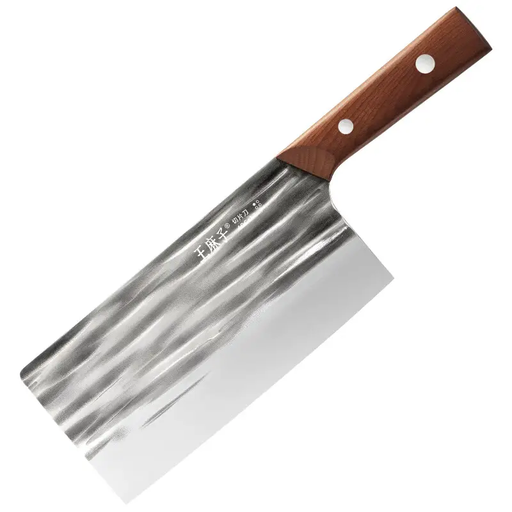
Why this fits the profile: According to the product information, this model is intended for cutting meat, slicing vegetables and everyday home cooking. That makes it a logical choice for anyone looking for one simple kitchen knife without needing a heavy bone cleaver straight away.
The described use is clearly defined: daily slicing and food preparation, not chopping large bones. That helps prevent misuse.
Stainless steel blade; suitable for meat, vegetables and daily cooking; hand washing and drying recommended.
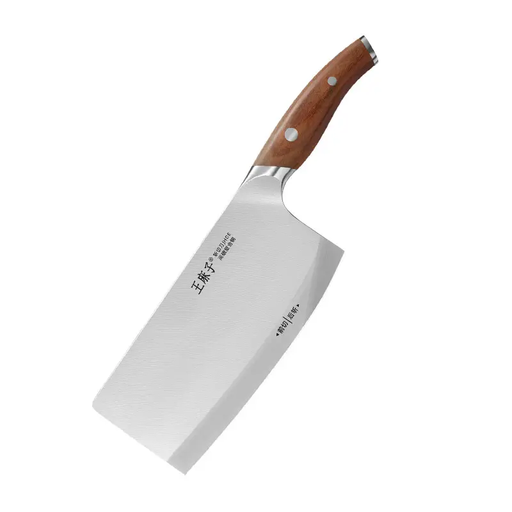
Why this fits the profile: This model is described with a three-layer 9Cr steel construction, a rosewood handle and a design for both slicing and chopping. That suits home cooks who value material build and a traditional appearance.
The product description mentions the steel construction and handle rather than just general sharpness claims. Do check the exact dimensions and permitted use before purchasing.
Three-layer 9Cr steel according to the product information; intended for slicing and chopping; riveted rosewood handle.
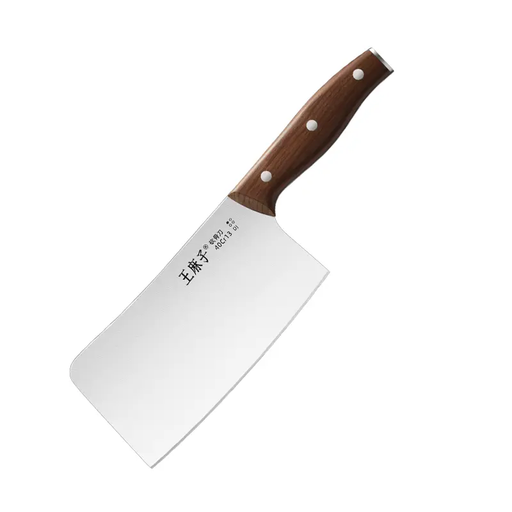
Why this fits the profile: According to the product description, this is a forged cleaver for bones, ribs, poultry and sturdy ingredients. It is therefore aimed at users who regularly carry out heavier preparation tasks.
The described use distinguishes between chopping bones and ordinary cutting work. Use it on a stable chopping board and not on hard surfaces like stone or glass.
Forged construction according to the product information; designed for bones, ribs and poultry; forward weight for chopping motions.
We’ve put together a full, up-to-date list of products that fully meet these strict selection criteria and comply with current European safety regulations.
Yes, but it depends on the model. A medium-sized Chinese cleaver or multi-purpose kitchen knife is often more practical for vegetables than a very heavy bone cleaver. Check the blade length, weight and described use.
That depends on how often you use it, your chopping board and the ingredients. Cutting on glass, stone or ceramic speeds up wear. Use a suitable sharpening stone or have the knife sharpened when the edge no longer glides smoothly through food. A honing steel doesn’t replace a proper sharpening when material needs to be removed from the edge.
With normal household use, the ongoing costs are limited to hand washing and possibly a sharpening stone or professional sharpening service. The lifespan is mainly influenced by the type of steel, usage, storage and maintenance. A stainless steel kitchen knife generally requires less attention for rust, but cleaning and drying are still advisable.
