
Vandaag of morgen in huis

Kwaliteit gegarandeerd

Welkomstaanbiedingen ontgrendelen: GRATIS bezorging | Tot 80% korting | Gratis 30 dagen JoyPlus-proefperiode
Download de app
A kitchen cleaver can take a lot of the hard work out of food preparation, but not every model is suited to the same task. A thin Chinese chef’s knife is handy for vegetables and meat, whereas a heavy bone chopper is designed for joints, ribs and poultry. If you only look at a low price, a shiny coating or the word “sharp”, you could quickly end up buying a knife that doesn’t suit your daily cooking needs.
A multi-purpose kitchen knife sounds practical, but a thin slicing knife and a heavy cleaver have very different functions. A light kitchen knife is more pleasant for herbs, vegetables and prepared meat. For bones and hard joints, you need a thicker blade with more weight. Don’t use a standard meat knife on hard bones: the edge can become damaged and the knife may slip.
A sharp kitchen knife cuts well, but sharpness doesn’t tell you everything about its usefulness. Also check:
A very thin blade can cut precisely, but is generally less suitable for heavy chopping. A heavy model offers more power, but also requires more control and a suitable chopping board.
Terms like “professional”, “lifetime” or “hand-ground” are not automatically a guarantee of a certain performance. Instead, look at verifiable details such as stainless steel, high-carbon steel, a stated full-tang construction, the size and the intended use. When a brand talks about long-lasting sharpness or exceptional durability, this should be seen as a manufacturer’s claim, not a guaranteed result.
For everyday cutting of vegetables, meat and herbs, a Chinese chef’s knife or a medium-weight cleaver around 175 to 190 mm is often practical. A wider blade can also be used as a scoop to lift chopped ingredients from the board.
For a cleaver for meat and vegetables, a stable, straight edge is important. For bones and poultry, choose a model that the product description says is specifically intended for this work. A bone chopper usually has a more robust design than a meat knife for thin slices.
Stainless steel kitchen knives are practical for daily use because they are more resistant to moisture and discolouration than steel types that react more quickly with food and water. High-carbon steel can, according to the product description, offer a hard edge, but requires extra care: rinse immediately, dry by hand and do not leave it wet for long periods.
A forged kitchen knife is formed from a single piece or a composite steel construction. Always check the product to see which construction is actually stated. A wooden handle can feel comfortable in the hand, but should not be soaked for long periods or placed in the dishwasher.
A well-fitting handle should feel sturdy without any sharp edges. A full-tang construction means the blade material extends through the handle. This can contribute to stability, but always check the specific product details.
Balance is a personal thing. A forward-weighted cleaver helps with downward chopping motions, while a more evenly balanced knife can be more pleasant for slicing and fine preparation work. When doing heavy chopping, use a stable, thick chopping board and keep your free hand away from the cutting line.
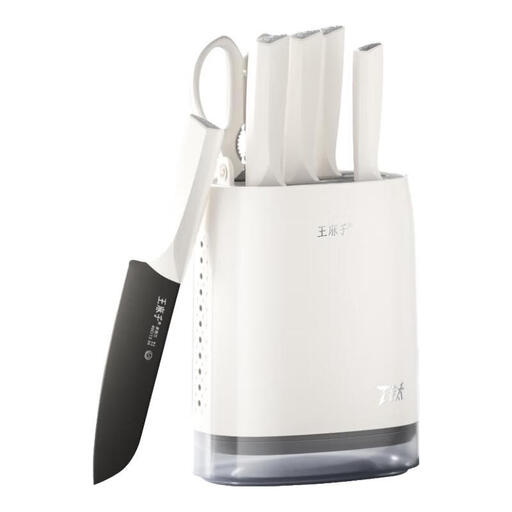
Why this fits the profile: A kitchen knife set offers multiple knives for daily preparation and can be practical for a new kitchen or as a housewarming gift.
You don’t have to use one unsuitable knife for all tasks. Check before purchase which knives are included in the set and whether there is a suitable cleaver among them.
Combination for everyday cooking; according to the product name, finished with a titanium-gold coating. Check the exact set contents on the product page.
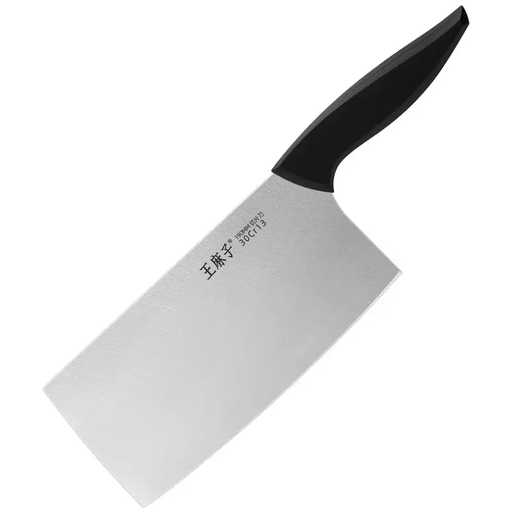
Why this fits the profile: The 190 mm size suits users who want one medium-weight knife for vegetables, meat, herbs and regular chopping.
The product description mentions stainless steel, a full-tang construction and an ergonomic handle. These are more concrete purchase details than just a claim about sharpness.
190 mm blade; according to the product description, suitable for meat, vegetables and herbs; stainless steel version.
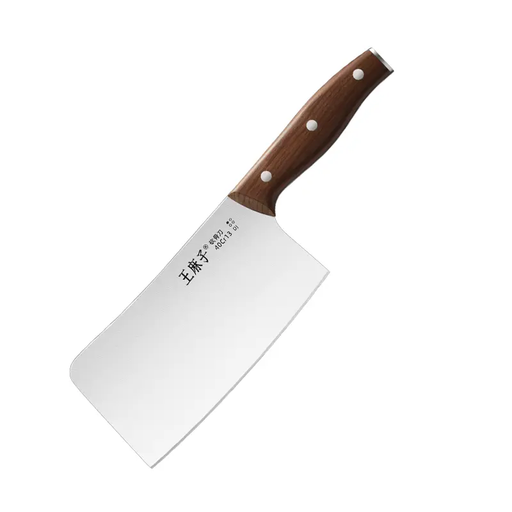
Why this fits the profile: According to the product description, this model is intended for bones, ribs, poultry and other tough ingredients.
It is more clearly specified for heavy chopping than a standard meat knife. However, only use it on a suitable chopping board and with controlled movements.
Forged high-carbon steel according to the product description; designed for bones, ribs and poultry; full-tang construction is stated.
We have compiled a full, up-to-date list of products that fully meet these strict selection criteria and comply with current European safety regulations.
A knife sharpener can maintain the edge, but not every sharpening system suits every knife. Check whether the sharpener is suitable for the hardness and cutting angle of your kitchen knives. A three-stage sharpener is designed for sequential maintenance steps; a quick sharpener can be simpler for occasional use.
Use a sharpener on a stable surface and follow the manufacturer’s instructions. Do not press hard on the blade. A damaged or bent edge sometimes requires professional repair rather than additional sharpening. Wash the knife by hand after use, dry it immediately and store it out of reach of children.
Only when the model is designed for bones or poultry according to the product information. Do not use a thin kitchen knife or meat knife on hard bones. For smaller joints, a suitable bone chopper is safer to handle than a general-purpose slicing knife.
That depends on the steel, the chopping board, the technique used and how often you use the knife. Cutting on glass, stone or ceramic accelerates wear. A wooden or plastic chopping board, hand washing and regular maintenance with a suitable knife sharpener help keep the edge usable for longer.
No. A Chinese chef’s knife is usually intended for vegetables, meat, herbs and general preparation work. A bone chopper typically has a heavier and more robust design for bones, ribs and poultry. Therefore, always check the stated use and dimensions before you order.
