
Vandaag of morgen in huis

Kwaliteit gegarandeerd

Welkomstaanbiedingen ontgrendelen: GRATIS bezorging | Tot 80% korting | Gratis 30 dagen JoyPlus-proefperiode
Download de app
A cluttered countertop, not enough storage, or simply an awkward layout—many kitchens suffer from a lack of functional space. A kitchen cart seems like the perfect, flexible solution. However, an impulse buy often leads to disappointment. Before you invest in extra work and storage space, it's crucial to understand the common pitfalls.
Many carts that look great online turn out to be impractical in reality. The most common problems are:
A good kitchen cart is an asset; a bad one is just an obstruction. Let's look at the specifications that truly matter.
To avoid a bad buy, it's wise to look beyond the marketing and focus on three tangible qualities. These will determine if a kitchen storage cart is worth your money.
The material determines the cart's durability, maintenance, and intended use.
Always check the specifications for the maximum weight capacity per shelf. A low capacity (5-10 kg) is fine for spice jars and light dinnerware, but insufficient for kitchen appliances, heavy pans, or a stack of plates. For more serious use, a capacity of 15 kg or more per tier is recommended.
Measure the available space in your kitchen beforehand. Also, consider the ideal height. Do you want to use the rolling cart in the kitchen as an extension of your countertop? Then make sure the height matches.
A kitchen cart on wheels should move smoothly and quietly. Its functionality hinges on the quality of the wheels.
Based on these objective criteria, we have selected several models that suit different user profiles.
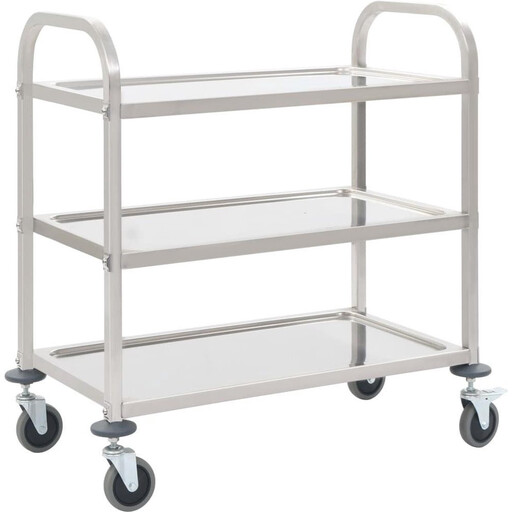
Why This Fits Their Persona: This cart is built for performance. Its generous size and robust stainless steel construction make it an ideal mobile workstation for those who love to cook and need extra, hygienic workspace.
The stable stainless steel frame and high weight capacity (20-25 kg per shelf) avoid the pitfall of a wobbly structure. The material is perfect for intensive kitchen use.
Robust stainless steel frame, smooth-rolling casters with a braking function, and a spacious 96.5 x 55 cm worktop.
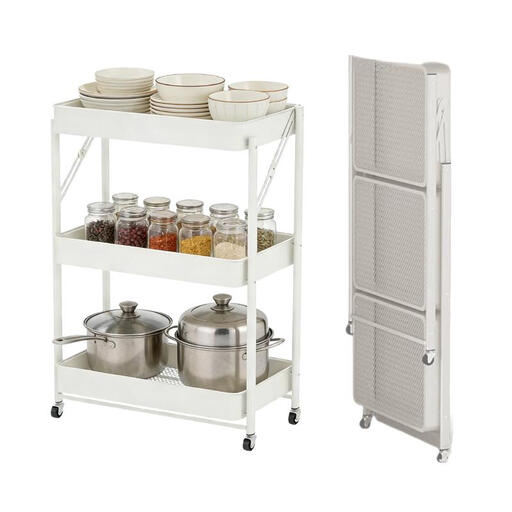
Why This Fits Their Persona: Perfect for those who need flexibility in a smaller home. This cart provides instant extra storage and can be easily folded and stored away when not in use.
This model requires no assembly, eliminating the risk of an unstable structure from incorrect setup. Its foldable design solves the "wrong dimensions" problem.
Ready to use out of the box (no assembly), foldable for compact storage, and equipped with locking casters.
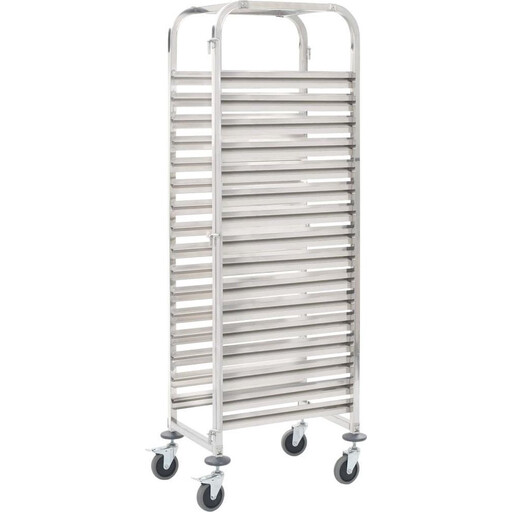
Why This Fits Their Persona: Designed for the hospitality industry, but also ideal for the serious home baker or caterer. This cart offers maximum storage capacity for baking sheets and trays on a small footprint.
This is the antithesis of a wobbly cart. The professional-grade stainless steel construction is designed for heavy loads and intensive daily use, guaranteeing stability.
Massive storage capacity with 16 tiers, a professional stainless steel frame, and locking casters for stability.
We have compiled a complete, up-to-date list of products that fully meet these strict selection criteria and quality standards.
This varies greatly by model. Always check the specifications for the weight capacity per shelf. Simple models for light storage can often handle 5 to 10 kg per tier. In contrast, a robust stainless steel kitchen cart designed for heavier work can support 20 kg or more per shelf. Consider what you plan to store beforehand to avoid disappointment.
It is not recommended to cut directly on the cart's worktop. Even a stainless steel surface is not designed for this; it will quickly dull your knives. A wooden top can be damaged and is less hygienic. Always use a separate cutting board, which you can, of course, place on the cart.
Maintenance depends on the material. Stainless steel and coated metal can be easily cleaned with a damp cloth and a mild detergent. An untreated wood worktop requires a periodic coat of mineral oil to prevent drying out and stains. Additionally, occasionally check that the screws on the casters are still tight to ensure the cart remains stable.
