
Vandaag of morgen in huis

Kwaliteit gegarandeerd

Welkomstaanbiedingen ontgrendelen: GRATIS bezorging | Tot 80% korting | Gratis 30 dagen JoyPlus-proefperiode
Download de app
A bowl might seem like a simple kitchen item, but the wrong size, material or care routine can quickly lead to frustration. A dish that is too shallow lets sauce and dressing spill over the edge. A heavy ceramic bowl takes up a lot of cupboard space. A wooden chip and dip bowl may look lovely on the table, but it is not suitable for the dishwasher.
With this guide, you can compare kitchen bowls and serving dishes based on use, dimensions, material and care. This way, you can make a targeted choice for everyday cooking, baking, dinner parties or food storage.
A striking pattern or trendy colour says little about everyday use. Always check whether a bowl is suitable for the microwave, oven, fridge and dishwasher. These properties vary greatly depending on the material.
Ceramic bowls are often suitable for hot dishes, but sudden temperature changes can cause damage. Wooden bowls are usually intended for serving and require hand washing. Stainless steel bowls are practical for preparation but cannot be used in the microwave.
A bowl with a large capacity is not automatically right for your recipes. A wide, shallow bowl works well for pasta, salad and oven dishes. For soup, noodles or breakfast cereals, a slightly deeper shape is often more convenient.
So pay attention to diameter, height and capacity. A ceramic pasta bowl roughly 21.5 cm wide and 6 cm high offers a different use than a deep soup bowl of 15 cm.
"Easy to clean" does not always mean a product is dishwasher-safe. Look at the official product information and also check whether the lid, silicone base or hand-finished details can withstand the same treatment.
With a wooden serving bowl, prolonged soaking can damage the material. With stainless steel bowls, hand washing is sometimes recommended to keep a silicone base looking good for longer, even if the bowl itself is dishwasher-safe.
For everyday use, a combination can be handy:
A set of three or four different sizes is practical for home bakers. If you mainly serve food, you may be better off with a uniform ceramic salad bowl or a decorative serving dish.
Choose products with clear information about material, food contact, care and the responsible party within the EU. An indication such as BPA-free or food-grade safety must be evident from the product information. Do not use a bowl in an oven or microwave unless this is explicitly stated.
Also look out for warnings about hot contents, thermal shock and damaged glaze or enamel finishes. Replace a damaged bowl, lid or seal if cracks, splinters or warping appear.
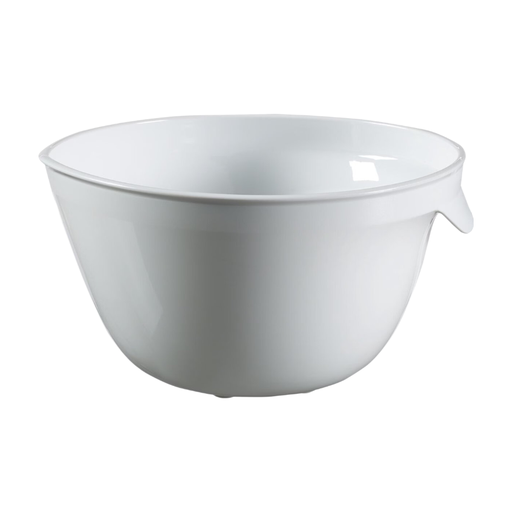
Why this fits the profile: The 2.5-litre capacity is useful for batter, marinades and medium-sized salads. The handle supports controlled pouring, and the feet help keep the bowl stable during mixing.
The product description provides concrete information about capacity, handle, stability feet, BPA-free plastic and dishwasher use. This means you do not have to rely on appearance alone.
2.5-litre capacity, microwave and fridge safe according to the product information, dishwasher-safe and fitted with a handle.
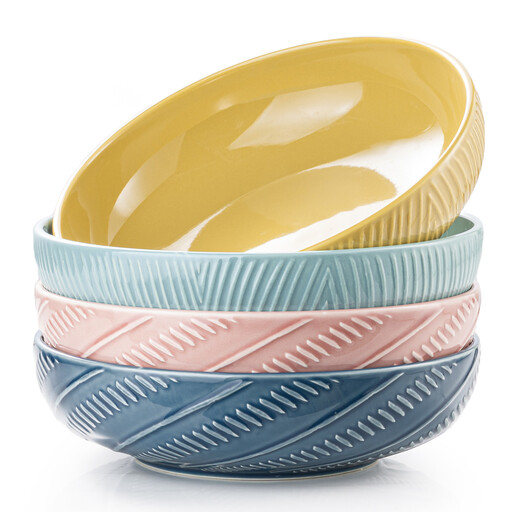
Why this fits the profile: These wide 8.5-inch bowls are intended, according to the product description, for pasta, salad, soup, fruit and oven dishes. The set is ideal for families and dinner parties where multiple portions are needed at once.
The product details mention dimensions of approximately 21.6 × 21.6 × 6.1 cm, stackability and use in microwave, fridge, oven and dishwasher. Always check the current instructions before use.
Set of four, wide shape, stackable design and ceramic for serving and preparation according to the product description.
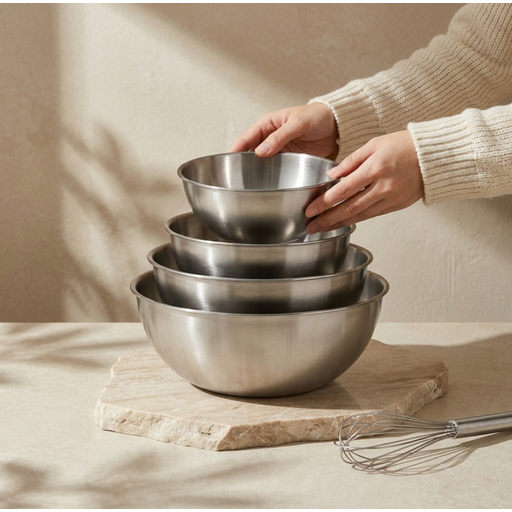
Why this fits the profile: The four sizes of 19, 22, 25 and 28 cm are designed for mixing, whisking, kneading, marinating, washing and serving. This suits heavy use by home bakers and cooking enthusiasts.
The product information states food-grade 304 stainless steel, nesting sizes and a smooth, burr-free rim. It also clearly states that the bowls cannot be used in the microwave.
Four nesting sizes, 304 stainless steel, dishwasher use according to the product description and suitable for both hot and cold preparations.
Use this short checklist when comparing kitchen bowls and serving dishes:
For food storage, well-sealing food storage containers with matching lids are also important. Check whether the lid is separately suitable for the dishwasher, fridge or microwave. With metal storage containers, the lid often needs to be removed before heating.
We have compiled a full, up-to-date list of products that fully meet these strict selection criteria and current European safety regulations.
A combination of medium-sized ceramic bowls and stainless steel mixing bowls works well for many households. Ceramic is suitable for serving; stainless steel is handy for batter, dressing and marinades. If cupboard space is limited, choose nesting bowls.
No. Dishwasher safety and microwave suitability are different properties. Stainless steel cannot be used in the microwave. Always check the specific product instructions for ceramic, plastic and bowls with silicone parts.
The lifespan depends on the material, use and care. Stainless steel can last a long time with normal use, while ceramic remains sensitive to knocks and sudden temperature changes. Wooden bowls retain their appearance longer if you do not soak them and dry them immediately. Do not use damaged bowls for food if cracks, splinters or peeling layers are visible.
