
Vandaag of morgen in huis

Kwaliteit gegarandeerd

Welkomstaanbiedingen ontgrendelen: GRATIS bezorging | Tot 80% korting | Gratis 30 dagen JoyPlus-proefperiode
Download de app
A suitable bowl might seem like a simple purchase, but the difference between a handy kitchen helper and a poor buy often comes down to the details. A lid that doesn’t close properly, a size that won’t fit in your fridge or a material that isn’t microwave-safe could mean you hardly use it.
This guide will help you compare kitchen bowls by size, material, seal, stackability and use. That way, you can find the right bowl for food storage, meal prep, mixing, washing up or a specific household task.
A bowl for salad, dough, leftovers and washing up sounds practical, but not every material is suitable for all these uses. A washing-up bowl, for example, isn’t designed for food storage. So always check whether the product information confirms that it’s suitable for food contact, microwave use and the dishwasher.
An oven dish and a food storage bowl also have different properties. A metal oven dish is designed for high temperatures, while a plastic food container usually isn’t suitable for the oven.
A capacity of 2 litres doesn’t tell you everything. The shape and dimensions determine whether the bowl will fit in your kitchen cupboard, fridge or sink. A wide, shallow bowl is handy for salad or leftovers. A tall bowl can save space, but may be less practical for stirring.
When choosing storage bowls and meal prep containers, check:
A clip-on seal or sturdy rim can help reduce spills during normal transport. However, no container can withstand unlimited shaking or pressure, or lids that aren’t fitted properly. It’s best to transport soup and sauces upright, even when the product description mentions a leakproof seal.
According to PURECOOK’s product information, the round storage containers have clips and a silicone sealing ring. The manufacturer advises transporting liquid food upright. This is specific usage advice, not a guarantee for every transport situation.
Polypropylene is lightweight and practical for the fridge, freezer and everyday use. According to the product information, Mepal Cirqula bowls are made from polypropylene and are suitable for microwave use without the lid. They’re also dishwasher-safe.
304 stainless steel is sturdy and suitable for the fridge and freezer. For the PURECOOK containers, only the metal bowl without its lid can be heated in a bain-marie. The plastic lids, clips and silicone rings aren’t designed for this. Don’t use these containers over an open flame.
A sturdy base is important for mixing bowls. A non-slip base can help prevent the bowl from moving while you whisk or mix. Also check whether the bowls are listed as BPA-free and whether the manufacturer provides care instructions.
An airtight or odour-proof seal is particularly useful for soup, pasta, sauces and leftovers with a strong smell. Don’t just look at the description; check the design too:
A lid with several separate parts can seal well, but it needs more care. Clean the sealing ring separately if the product information advises you to do so. This helps prevent food residue or odours from lingering.
For everyday use, you can use this guide:
A round bowl is handy for mixing and serving. Rectangular kitchen bowls often make more efficient use of space in the fridge and freezer. Just check that the set you choose is actually stackable or nestable. Product information may vary between versions.
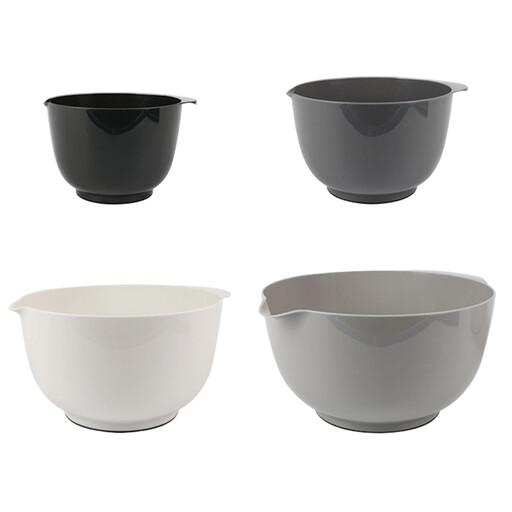
Why it suits this need: A set of four sizes is handy for baking, salads, preparing ingredients and simple meal prep. According to the product information, the bowls are BPA-free, reusable and stackable.
The different sizes reduce the chance of using one bowl that’s too large or too small for every task.
Four bowls, a non-slip base according to the product description, and suitable for reuse.
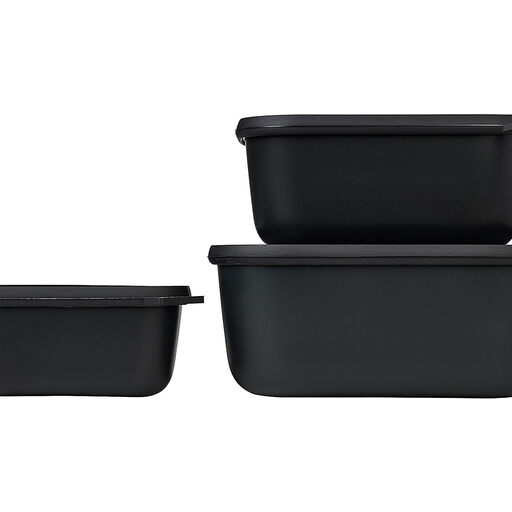
Why it suits this need: The set includes 750, 1,500 and 3,000 ml bowls, making it a good fit for households that store, freeze, reheat and take leftovers on the go.
The transparent, airtight lids let you see what’s inside and help prevent containers being left open in the fridge.
Polypropylene, suitable for the fridge, freezer, dishwasher and microwave without the lid; the set includes three capacities.
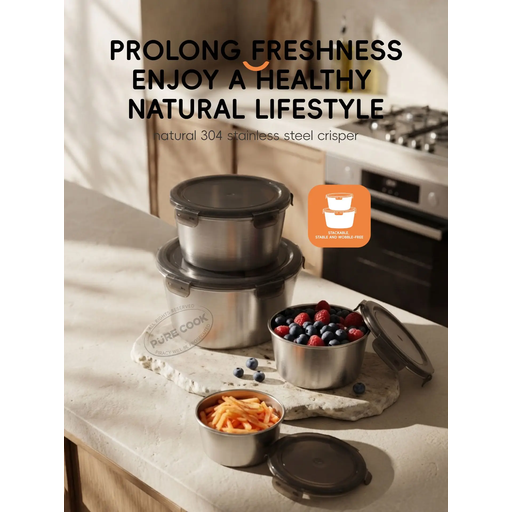
Why it suits this need: This set is designed for households that often prepare portions and prefer a metal interior to plastic.
The four sizes make portions easy to organise. The product information also clearly advises transporting liquids upright.
304 stainless steel, four capacities from 350 to 2,000 ml, clip-on lids and dishwasher-safe parts according to the product information.
For washing up, Curver washing-up bowls in 6, 6.3, 10 or 10.5 litres make more sense than food bowls. Check the dimensions of your sink, the handles and the maximum fill weight. The product information states that these bowls aren’t intended for food storage or food preparation.
Baking and cooking call for different choices. A metal oven dish is suitable for oven cooking when the manufacturer says so. A cast-iron cooking pot, such as a 6.7-litre round casserole, is designed for larger stews and, according to the product information, works on various heat sources, including induction. Always check the care instructions; some enamelled pans aren’t dishwasher-safe.
A dog bowl needs to be stable, easy to clean and the right size for your pet. An adjustable feeding stand with a stainless-steel bowl can be handy for households with a growing dog or pets that need different feeding heights. Features such as “slow feeder” should be seen as part of the product design; according to the brand’s own product information, the structure is intended to slow down eating. This isn’t a medical claim.
We’ve put together a full, up-to-date list of products that meet these strict selection criteria and the applicable European safety regulations.
Choose a set with several sizes, a secure-fitting lid and clear information about use in the fridge, freezer, microwave and dishwasher. For individual portions, 750 to 1,000 ml is often practical; for family leftovers, 1,500 to 3,000 ml is a better fit.
No. Stainless steel must not be used in a microwave. With some sets, only the metal bowl without its lid can be heated in a bain-marie. Always follow the specific instructions for your product.
Their lifespan depends on the material, use and care. Avoid exposing a bowl to heat it isn’t designed for, check silicone rings for wear and replace a container if it cracks, becomes misshapen or the lid no longer closes properly. A higher purchase price doesn’t automatically mean every part will last as long.
