
Vandaag of morgen in huis

Kwaliteit gegarandeerd

Welkomstaanbiedingen ontgrendelen: GRATIS bezorging | Tot 80% korting | Gratis 30 dagen JoyPlus-proefperiode
Download de app
Kitchen bowls may seem simple, but the difference between a useful set and a bad buy often comes down to small details. A bowl that doesn’t stack neatly takes up unnecessary cupboard space. A lid that simply rests loosely on the container is less suitable for soup or meal prep on the go. And a bowl that appears to be dishwasher-safe but comes without clear care instructions may wear out sooner than expected.
That’s why it’s worth looking beyond the colour or number of pieces before you buy. Pay particular attention to the material, capacity, seal and intended use. Below, you’ll find the key things to consider, along with some kitchen bowls to suit different households.
A set with several bowls sounds practical, but the sizes determine whether you’ll actually use them. Small bowls are handy for toppings, herbs and snacks. Medium-sized mixing bowls are better for batter, salad or a portion of meal prep. For leftovers or family-sized portions, you’ll need larger storage bowls.
So check the capacity in millilitres or litres. A set with 500 ml, 1,000 ml and 2,000 ml, for example, offers more variety than three bowls that are almost the same size.
Not every lid is airtight or leakproof. With airtight food storage containers, check the sealing method, such as clips and a silicone sealing ring. A transparent lid is also useful, as you can check what’s inside without opening the container.
Careful handling is still important when carrying liquid dishes. Even if the product information says the seal is secure, keeping the container upright is a sensible choice.
A bowl that’s microwave-safe isn’t automatically suitable for the oven. Also check whether you need to remove the lid. For example, the Mepal Cirqula containers are listed as microwave-safe without the lid. According to the product information, the PURECOOK containers are suitable for chilling and freezing; to heat them in a water bath, remove the lids, clips and silicone rings.
For oven-safe bowls, the material is key. A metal baking dish with a non-stick coating is designed for oven use, but needs different care from plastic food storage containers or glass bowls.
BPA-free polypropylene bowls are lightweight and practical for the fridge, freezer and everyday use. They’re often suitable for meal prep and add very little weight to a lunch bag. However, check the product specifications to see whether the bowl is suitable for the microwave and dishwasher.
Stainless steel food storage containers are sturdy and generally have a smooth interior. According to the product information, the PURECOOK sets use 304 stainless steel for the container, with PP lids and silicone sealing rings. Metal must not be used in the microwave, and when heating, you should follow the instructions and remove any plastic parts.
For baking and oven dishes, look for oven-safe metal or another material explicitly stated as suitable. By contrast, don’t use a washing-up bowl to prepare food if the manufacturer advises against it.
Round bowls are handy for mixing, serving and storing salads. Rectangular storage bowls often make more efficient use of space in the fridge or freezer. If you’re unsure, measure the available shelf height and depth.
These sizes are practical for everyday use:
A set of bowls with lids is particularly useful when each lid fits its bowl properly. Also check whether the bowls nest inside each other or can only be stacked. The terms “stackable” and “nestable” aren’t always used in the same way in product information.
When checking care instructions, look for:
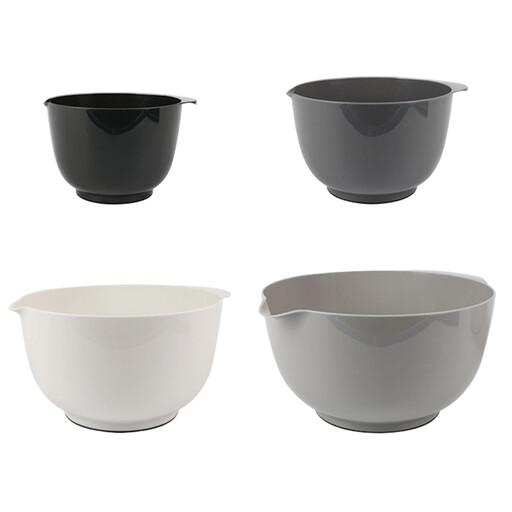
Why it suits this profile: This four-piece set is designed for baking, meal prep and salads. The different colours and sizes make it easy to put together a basic set for everyday use.
The product information specifies BPA-free material, non-slip bases and a stackable design. Before use, be sure to check the exact sizes and care instructions.
Four bowls, BPA-free product specification, non-slip bases, and suitable for baking, meal prep and salads.
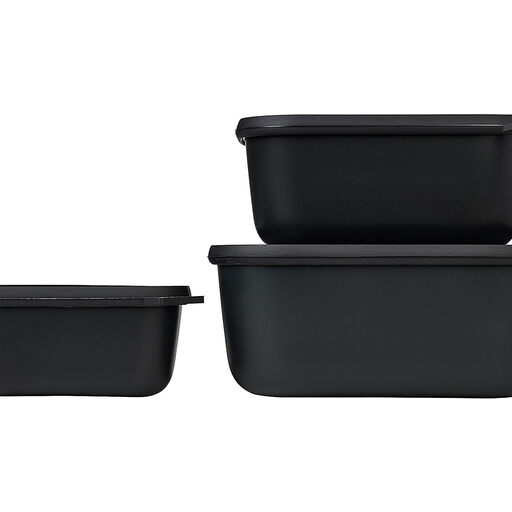
Why it suits this profile: With 750 ml, 1,500 ml and 3,000 ml containers, this set suits households looking to store leftovers, lunch and larger meal portions in one range.
The product information specifies an airtight, odour-resistant seal, a viewing window, and suitability for the fridge, freezer and dishwasher, as well as microwave use without the lid.
Polypropylene, BPA-free according to the product specification, three useful sizes and transparent lids.
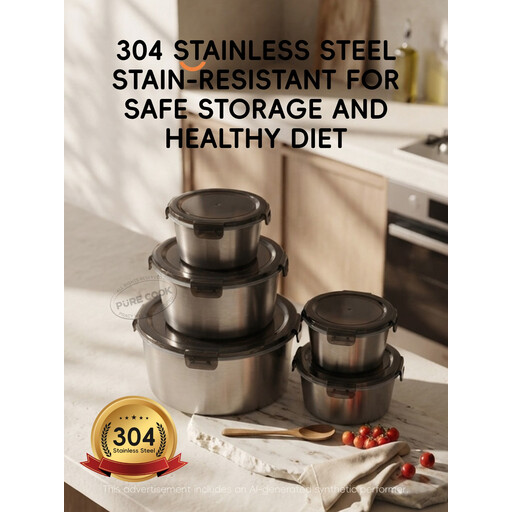
Why it suits this profile: Meal preppers and families get five sizes, from 350 ml to 3,500 ml, for portions, leftovers and lunches.
The 304 stainless steel interior avoids any uncertainty about plastic in the container itself. Four clips and a silicone ring help secure the lid; carry liquids upright.
Five sizes, a smooth uncoated interior, a stackable design according to the product information, and a product specification stating that they are dishwasher-safe.
We’ve put together a complete, up-to-date list of products that meet these strict selection criteria and the applicable European safety regulations.
Choose storage bowls in several sizes, with well-fitting lids and clear information about fridge, freezer and dishwasher use. A sealing ring and clips are handy for soup and sauces. Always check whether they can only be heated without the lid.
No. BPA-free describes the plastic specification, but doesn’t automatically mean the bowl is heat-resistant. Look for separate information about microwave use, and check whether the lid needs to be removed.
Their lifespan depends on the material, how they’re used and how they’re cared for. Wash silicone rings and lids carefully, avoid temperatures the product isn’t designed for, and replace a bowl if it develops cracks or becomes misshapen, or if the lid no longer seals properly. Clear product specifications and correct use can help you avoid replacing it unnecessarily.
