
Vandaag of morgen in huis

Kwaliteit gegarandeerd

Welkomstaanbiedingen ontgrendelen: GRATIS bezorging | Tot 80% korting | Gratis 30 dagen JoyPlus-proefperiode
Download de app
Buying a lovely bowl seems simple, until you find it’s too small, can’t go in the microwave or takes up an awkward amount of cupboard space. When choosing kitchen bowls, it’s not just about colour and shape. The material, capacity, care requirements and intended use all affect how well a bowl works day to day.
A breakfast bowl of around 50 cl is suitable for yoghurt, fruit or granola, but less practical for a generous portion of soup or pasta. A deep soup bowl, on the other hand, can be awkward for small snacks. So don’t just look at the diameter: check the capacity in millilitres or litres too.
Sets of four or more bowls are practical for families. If you mainly bake, you’re more likely to need large mixing bowls or a nesting set in different sizes.
Not every ceramic bowl is automatically oven-safe. And even if a bowl is microwave-safe, that doesn’t mean it can go straight from the freezer into a hot oven. Check the instructions for each product and avoid sudden temperature changes with ceramic and porcelain.
Stainless steel bowls have a different limitation: metal must not go in the microwave. Some models can withstand high temperatures or are suitable for the oven, but check the stated specifications first.
Wide rims, textured surfaces and unusual shapes can look appealing, but they take up extra space. Stackable bowls or nesting mixing bowls are more practical in a smaller kitchen. Check the height of your cupboard shelf too: a deep bowl won’t always fit beneath a low shelf.
Ceramic bowls and porcelain bowls are suitable for serving and feel sturdy on the table. However, they’re more fragile than metal and can be heavy when you’re carrying several at once. Glaze gives the surface a smooth finish and helps with cleaning, but damage and sudden temperature changes are still worth bearing in mind.
Stainless steel bowls are lightweight, suitable for mixing and generally resistant to drops. A 304 stainless steel bowl is often chosen for food preparation, marinating and storage. According to the product information for the models mentioned, some versions are dishwasher-safe, but they’re not suitable for the microwave.
Plastic mixing bowls are lightweight and handy for children or everyday baking. Check whether they’re suitable for the microwave, fridge and dishwasher. For example, a product may be microwave-safe but not suitable for a conventional oven or freezer.
Use these guidelines as a starting point:
The usable capacity depends on the shape. A wide, shallow bowl gives you more room for pasta or salad; a deeper bowl is better suited to soup and noodles.
Look specifically for the terms dishwasher-safe bowls, microwave-safe bowls and oven-safe bowls. These features should be stated in the product information; don’t assume them based on the material alone.
Also check any accessories. With bowls that come with plastic lids, the bowl itself may be oven-safe while the lid is only suitable for limited microwave use. Always remove the lid if the product instructions say to. Use oven gloves when handling hot ceramic bowls, and let the material cool before rinsing it.
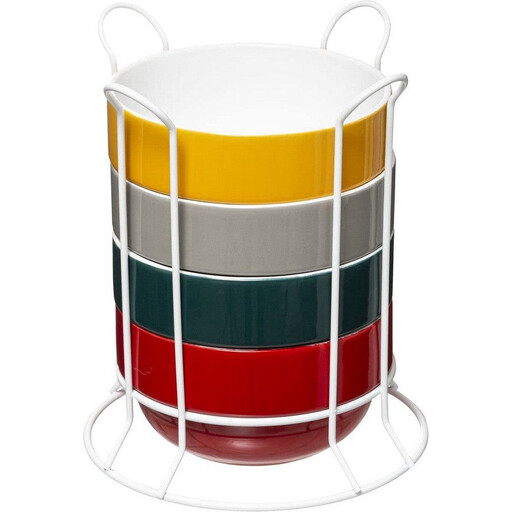
Why it suits this profile: This set of four porcelain bowls has a capacity of 50 cl, making it a good fit for breakfast, yoghurt, fruit and small desserts. It’s a suitable starter set if you don’t want to buy large quantities straight away.
The stated capacity and set of four make it easy to choose the right option. According to the product information, the bowls are dishwasher- and microwave-safe.
Four matching porcelain bowls; 50 cl capacity; suitable for breakfast and small portions; dishwasher- and microwave-safe according to the product listing.
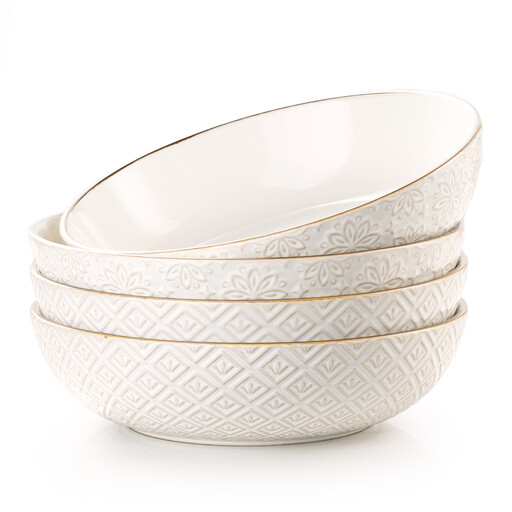
Why it suits this profile: The wide, deep shape is designed for pasta, salad, soup and main courses. With four bowls, this set is suitable for families and anyone who likes serving meals at the table.
The product information gives a diameter of 8.5 inches, a capacity of 36 oz and a stackable design. Always check the latest instructions and packaging before use.
Ceramic with a glazed surface; set of four; stackable; described as suitable for the dishwasher, microwave and conventional oven.
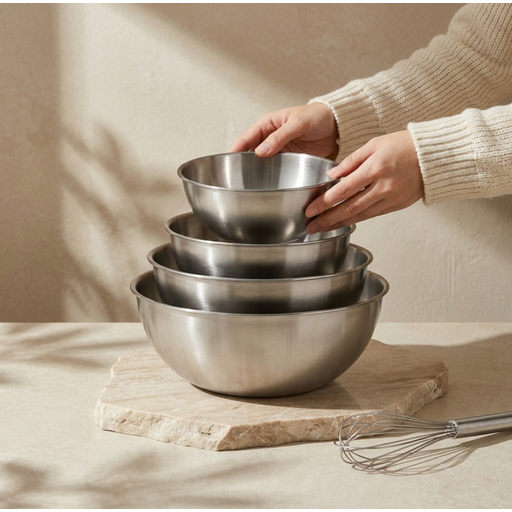
Why it suits this profile: The four sizes are designed for mixing, whisking, marinating, washing and serving. Their nesting design is handy if you cook often but have limited storage space.
Choosing this material helps you avoid putting metal in the microwave: according to the product information, this set is specifically not microwave-safe.
304 stainless steel; four sizes from 19 to 28 cm; nesting design; described as dishwasher-safe.
We’ve put together a complete, up-to-date list of products that meet these strict selection criteria and the current European safety requirements.
Around 50–75 cl is practical for a standard portion of soup. If you like to add noodles, toppings or bread, choose a deeper bowl with a larger capacity. Also check that the bowl is stable when full.
No. Check the specific product information. Some ceramic bowls are described by the manufacturer as oven-safe, while others are intended only for serving or microwave use. Also avoid large temperature changes to reduce the risk of cracks caused by thermal shock.
Lifespan depends on the material, how you use the bowls and how you care for them. Stainless steel bowls are generally less likely to break, while ceramic and porcelain can be damaged if dropped. Avoid abrasive cleaners on glazed surfaces and always follow the product’s care instructions.
